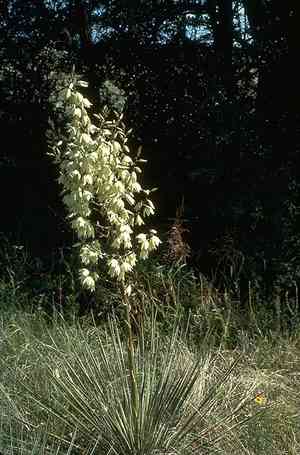
Small Soapweed (Yucca glauca)
Also known as: Great Plains Yucca, Beargrass, Plains Yucca
Small Soapweed (Yucca glauca), native to North America, is well-adapted to desert environments. A key ecological interaction involves yucca moths, which are the exclusive pollinators of its flowers. In return, the moth larvae feed on the plant's seeds, creating a mutually beneficial relationship.
The plant's leaves have practical applications, such as being woven into mats, cushions, and decorative items. Additionally, the roots are rich in saponins and can be processed into a lather, making them useful for natural soap or shampoo.
In This Article
Attributes of Small Soapweed
Lifespan
Perennial
Plant Type
Herb
Plant Height
61 cm to 91 cm
Spread
60 cm to 90 cm
Leaf Color
Green Blue Gray
Flower Size
15 cm
Flower Color
White Green
Images of Small Soapweed

Quickly Identify Small Soapweed
1
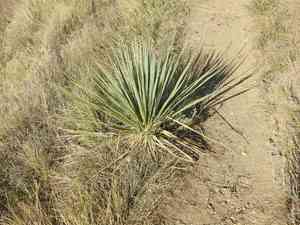
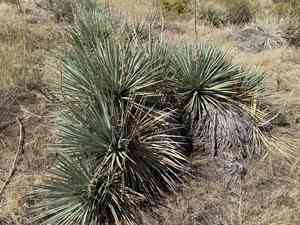
Rosette of stiff, upright, pale green leaves with fibrous hairs and sharp tips (9 inches to 2 1/4 feet)
2
Greenish-white, bell-shaped pendulous flowers with six petal-like tepals (3 to 4.5 feet)
3
Elongated capsule fruit (1.6 to 2.4 inches) with glossy black seeds upon dehiscence
4
Stem typically narrow and unbranched, reaching 2-3 feet with rough surface and light brown color
5
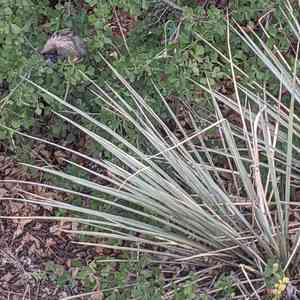
Sharp-pointed leaves clustered low, 1-2.5 feet, in bluish-green with inrolled margins adorned with white filaments
Scientific Classification of Small Soapweed
Phylum
Vascular plants
Class
Monocotyledons
Order
Asparagales
Family
Asparagus
Genus
Yuccas
Species
Small Soapweed
Planting and Growing of Small Soapweed
Care Difficulty
Easy
Watering Schedule
Every day
Sunlight Requirements
Full sun
Sunshine Duration
4-8 hours
Ideal Temperature
65-75℉
Soil Type
Potting Mix, Peat Mix
Soil pH
6.5-7.5
Fertilizer Type
Balanced
Pruning Season
Spring, Summer
Pruning Area
Branches, Leaves
Pruning Frequency
2 times a year
Repotting Season
Spring
Pot Type
Terracotta, Plastic
 How to Water Small Soapweed?
Yucca glauca, a drought-tolerant plant, requires watering only until the soil feels moist but not soggy. It's essential to ensure good drainage as stagnant water can be detrimental. A careful approach is to water around 250 ml each time, allowing excess to drain away.
What are the symptoms of an underwatered Small Soapweed?
›
What should I do if my Small Soapweed is not getting enough water?
›
What are the symptoms of an overwatered Small Soapweed?
›
How to save an overwatered Small Soapweed?
›
 What Are the Sunlight Requirements for Small Soapweed?
Yucca glauca thrives in full sun environments, benefiting most from daily, uninterrupted sun exposure. This ensures robust growth, dense foliage, and optimum health for the plant.
More About Sunlight Requirements Techniques→
What is the best location for Yucca glauca?
›
How to ensure my Yucca glauca gets ideal sunlight?
›
Why is adequate sunlight essential for Yucca glauca?
›
 What Is the Ideal Temperature Range for Small Soapweed?
The ideal temperature range for Yucca glauca is between 65 and 75 degrees Fahrenheit. This range ensures optimal growth and health, as it mimics the plant's natural arid and semi-arid environments. Within this zone, the plant can perform photosynthesis efficiently, utilize water effectively, and minimize stress.
 What Soil is Best for Small Soapweed?
Yucca glauca thrives in well-drained soil, preventing root rot and ensuring strong root development. It is crucial for the plant to avoid waterlogged conditions, which can be detrimental to its health. The plant prefers soil with moderate fertility. Overly rich soils can encourage excessive growth, making the plant weaker. Balanced nutrient levels support sustainable growth and flowering. Yucca glauca does well in soils with low organic matter, as this mimics its natural environment. This condition helps to maintain adequate soil aeration and drainage, supporting a healthy root system.
 How to Fertilize Small Soapweed?
When fertilizing Yucca glauca, moderation is essential. Use a diluted solution of a balanced 10-10-10 liquid fertilizer, applying no more than half the recommended concentration. For slow-release fertilizers, a light top dressing with granules is sufficient. Avoid over-fertilizing as it can lead to nutrient burn.
 How to Prune Small Soapweed?
Start by cutting off any dead or damaged leaves at the base of the plant. Hold the leaf with one hand and cut it as close to the trunk as possible with your other hand using sharp shears. Carefully trim the leaves to create the desired shape. This step is mainly aesthetic but helps prevent the plant from growing too bushy or unruly, making it easier to manage in your garden. It is crucial to sterilize your tools before and after pruning to prevent the spread of disease. Use a mixture of water and bleach or rubbing alcohol for effective sterilization.
More About Pruning Techniques→
 How to Propagate Small Soapweed plant?
1
Collect seeds from mature Yucca glauca plants. Before sowing, it is beneficial to scarify the seeds lightly and soak them in warm water for 24 hours to enhance germination.
2
Select healthy stems from the plant for cuttings. Cut a segment of about 4-6 inches and remove the lower leaves. Dip the cut end in rooting hormone to promote rooting.
3
Carefully divide the plant using a clean, sharp tool, ensuring each division has the roots intact. Replant each division promptly to prevent the roots from drying out.
 How to Repot Small Soapweed plant?
1
Yucca glauca shows signs of needing repotting when the roots begin wrapping around the inside of the pot or growing out of drainage holes. The ideal time is during the active growing season, to minimize stress on the plant. Repotting every 2-3 years typically suffices to provide fresh soil and adequate space.
2
Selecting the right pot is crucial for Yucca glauca. Choose a pot that's just a size bigger than the current one with ample drainage holes. A slightly larger pot helps prevent overwatering and allows roots to naturally expand, promoting healthier growth and mitigating potential root-bound issues.
3
Opt for a well-draining cactus mix to avoid water retention. Such soil is crucial for Yucca glauca, which is adapted to arid environments. It provides good aeration, which prevents root rot by facilitating quick drying after watering, thus mimicking the plant’s natural habitat efficiently.



