How to Propagate Urn plant?
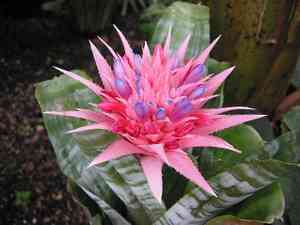
The favored method for multiplying urn plant is through separation, ideally occurring in the Spring or Autumn seasons. The plant presents a moderate challenge for propagation. The emergence of new sprouts signifies successful propagation. Optimal outcomes are achieved by sustaining elevated moisture levels.
Optimal Time for Urn Plant Propagation
Propagation Method
Splitting
Propagation Period
Spring, Autumn
Tools Required for Urn Plant Propagation
Sharp, sterile knife or scissors
These instruments are utilized to carefully detach the offsets (young plantlets) from the parent urn plant. Sharpness ensures a clean cut, preventing harm to both the offset and the parent plant. Sterilization is vital to prevent the introduction of disease-causing agents that could lead to infection at the cut sites.
Gloves
Wearing gloves safeguards the propagator's hands from the plant's sharp edges and ensures that natural skin oils do not contaminate the cut areas, which could hinder healing and elevate the risk of disease.
Rooting hormone powder
This substance is sometimes applied to the severed ends of urn plant offsets to stimulate rapid root formation and reduce the likelihood of rot. While not always essential for urn plant, it can enhance the success rate of propagation.
Pot with drainage holes
A container is necessary for planting the separated offsets. Drainage holes are crucial to prevent waterlogging, which could cause rot in the developing roots of the urn plant.
Well-draining potting mix
A potting medium suitable for urn plant, such as a blend of orchid bark, coarse perlite, and peat, ensures proper air circulation and moisture balance to support healthy root development in the new plants.
Watering can with a gentle pour
This tool is essential for providing even, soft watering that does not disturb the substrate or newly planted offsets. Proper watering aids in settling the roots and supplying the necessary moisture for growth without causing erosion or compaction of the potting medium.
How to Propagate Urn Plant?
Propagation Type
Division
Difficulty Level
Easy
How to Care for Your Newly Propagated Urn Plant?
How to Care for Your Newly Propagated Urn Plant?
Once propagated, care for urn plant by providing bright, indirect illumination and maintaining a warm indoor temperature. Water sparingly, allowing the growing medium to dry out slightly between waterings. Fill the central 'vase' or 'urn' of the plant with water, emptying and refreshing it periodically to prevent stagnation and bacterial growth. Fertilize with a diluted, balanced, liquid fertilizer during the active growth period, but avoid over-fertilizing. Finally, monitor for pests and diseases, treating as needed while ensuring not to overwater the plant, as it is susceptible to root rot.
Common Mistakes to Avoid When Propagating Urn Plant
Overwatering
Excessive watering of urn plant can lead to root rot, which compromises the health and growth of the offsets, commonly known as pups.
Ignoring pups
Neglecting the pups that emerge at the base of urn plant represents a missed propagation opportunity; these are the primary means of propagating this species.
Premature separation
Detaching the pups from urn plant too early can result in weak and unsustainable young plants that may fail to thrive.
Inadequate lighting
Providing either insufficient or excessive light for urn plant can stress the plant, impacting the development of robust pups suitable for propagation.
Incorrect soil mix
Utilizing a soil mix that does not drain effectively can cause water to accumulate, hindering the proper development of urn plant's root system.
Improper humidity
Maintaining an unsuitable level of humidity can negatively affect urn plant's ability to produce healthy pups for propagation.
Tips For Propagating Urn Plant
Monitoring pups growth
Wait until the pups of urn plant are at least one-third the size of the mother plant before separating, to ensure they are hardy enough to survive independently.
Gentle separation
Use a clean, sharp tool to separate the pups of urn plant from the mother plant to minimize damage and stress on both the pup and the parent.
Suitable potting mix
Plant the separated pups of urn plant in a well-draining potting mix, such as those containing orchid bark or perlite, to encourage strong root growth.
Balanced moisture
Water the pups of urn plant evenly and allow the soil to dry slightly between waterings to promote healthy root development without overwatering.
Indirect light
Provide bright, indirect light for urn plant to facilitate the growth of robust pups that are capable of photosynthesis once separated.
Humidity control
Maintain moderate humidity for the pups of urn plant by occasionally misting the air or using a humidity tray, especially in drier climates.



