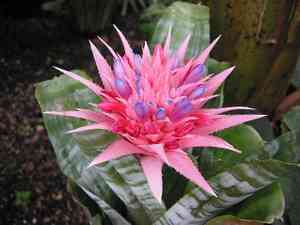
Urn plant (Aechmea fasciata)
Also known as: Silver vase
The silver vase plant, or Aechmea fasciata, is a type of flowering bromeliad. It prefers shaded environments and well-drained soil for optimal growth. Handling this plant should be done with care, as it can cause skin irritation. Additionally, water that collects in its leaves may attract insects.
In This Article
Attributes of Urn plant
Lifespan
Perennial
Plant Type
Herb
Plant Height
30 cm to 90 cm
Spread
60 cm
Leaf Color
Silver Green Gray
Flower Size
2.5 cm
Flower Color
Pink Purple Blue Red
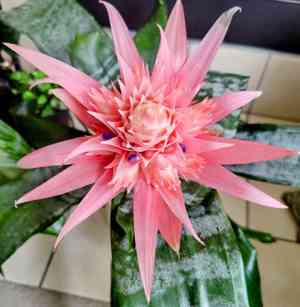
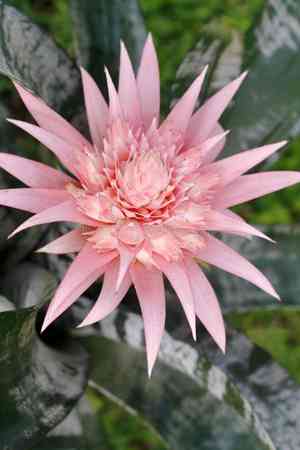
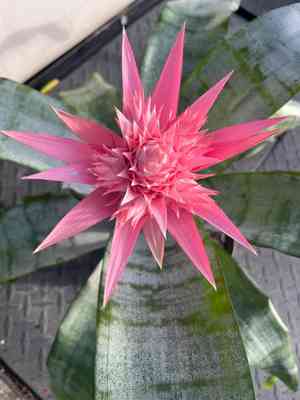
Images of Urn plant
Quickly Identify Urn plant
1
Look for stiff, silver-green leaves with transverse bands of darker green, arranged in a rosette pattern forming a central tank. The plant produces a tall pink flower spike with blue and purple flowers.
Scientific Classification of Urn plant
Phylum
Vascular plants
Class
Monocotyledons
Order
Poales
Family
Bromeliad
Genus
Aechmea
Species
Urn plant
Planting and Growing of Urn plant
Care Difficulty
Easy
Watering Schedule
Every 3 days
Sunlight Requirements
Partial sun
Sunshine Duration
6-10 hours
Ideal Temperature
65-75℉
Soil Type
Potting Mix, Peat Mix
Soil pH
6.5-7.5
Fertilizer Type
Balanced
Pruning Season
Spring, Summer
Pruning Area
Branches, Leaves
Pruning Frequency
2 times a year
Repotting Season
Spring
Pot Type
Plastic, Terracotta
 How to Water Urn plant?
For Aechmea fasciata, watering is focused on the central cup rather than the soil. Pour approximately 250 ml of water into the central rosette and ensure it is always partially filled, mimicking its natural habitat where it traps water.
More About Watering Techniques→
What are the symptoms of an underwatered Urn plant?
›
What should I do if my Urn plant is not getting enough water?
›
What are the symptoms of an overwatered Urn plant?
›
How to save an overwatered Urn plant?
›
 What Are the Sunlight Requirements for Urn plant?
Aechmea fasciata thrives in partial sunlight. An ideal light balance ensures the plant's foliage remains vibrant, encourages flowering, and maintains overall health, making it visually appealing and robust.
More About Sunlight Requirements Techniques→
What is the ideal location for Aechmea fasciata?
›
How can I ensure Aechmea fasciata gets enough light?
›
What happens if Aechmea fasciata gets the right amount of light?
›
 What Is the Ideal Temperature Range for Urn plant?
The ideal temperature range for Aechmea fasciata lies between 65°F and 75°F (18°C to 24°C). Maintaining these temperatures ensures optimal growth and flowering and mimics the plant’s native, tropical environment. This stable, warm climate supports healthy photosynthesis and nutrient uptake.
 What Soil is Best for Urn plant?
Aechmea fasciata thrives in well-draining soil to prevent root rot. This requirement ensures that water doesn't stagnate around the roots, thereby maintaining plant health and promoting robust growth. This plant requires a soil that is rich in organic matter, providing essential nutrients for its growth. Nutrient-rich soil supports vibrant foliage and enhances the plant's ability to produce its striking blooms. A loose, aerated soil structure allows the roots of Aechmea fasciata to breathe, enhancing oxygen uptake. This supports healthy root development and ensures the plant obtains necessary air for enzymatic and respiratory processes.
More About Soil→
 How to Fertilize Urn plant?
Aechmea fasciata should be fertilized sparingly. Typically, you should use a diluted liquid fertilizer solution at 1/4 strength to avoid over-fertilization, as this plant is sensitive to excess nutrients.
More About Fertilizing Techniques→
 How to Prune Urn plant?
To maintain the aesthetic appeal of Aechmea fasciata, regularly trim brown or dead leaves. This not only improves its appearance but also allows more resources for the healthy parts of the plant, promoting robust growth and vitality. Once Aechmea fasciata's stunning flower starts wilting, it's time to carefully remove spent blooms. Use sharp scissors or shears to cut the flower stalk near its base, taking care not to damage nearby foliage, ensuring the plant can redirect energy towards producing new shoots and pups.
More About Pruning Techniques→
 How to Propagate Urn plant plant?
1
Choose healthy and mature sections from the parent plant for propagation. Ensure that these sections are disease-free and have no visible damage. Selecting healthy sections increases the success rate of propagation.
2
Prepare a potting medium with good drainage to encourage root development. A mixture of peat moss, perlite, and bark is often suitable, allowing air circulation around the roots to prevent excess moisture.
3
Carefully plant the prepared divisions or cuttings into the potting medium. Ensure that the base is inserted properly and the section is stable in the new medium. Lightly water the newly planted sections to provide initial moisture.
 How to Repot Urn plant plant?
1
Repot your Aechmea fasciata when you see roots creeping out of the drainage holes or the plant appears top-heavy. This usually indicates that the root system has outgrown its current pot. Additionally, if the soil appears compacted or water isn't draining well, consider repotting as fresh soil can improve moisture management and aeration.
2
Select a pot that is only slightly larger than the current one. A good rule of thumb is a pot that is 1-2 inches larger in diameter. This prevents over-watering issues as excess soil can retain way too much moisture. Ensure the pot has drainage holes to allow excess water to escape, which helps prevent root rot.
3
Opt for a well-draining potting mix, ideally one formulated for bromeliads. The soil should hold moisture, but not remain soggy. Consider including materials like orchid bark or perlite to improve drainage. This mix will mimic the plant's natural epiphytic conditions, promoting healthy root growth and plant vitality.
Toxicity
Ingestion
WARNING
The judgment on toxicity and danger is for reference only. We DO NOT GUARANTEE any accuracy of such judgment. Therefore, you SHALL NOT rely on such judgment. It is IMPORTANT TO SEEK PROFESSIONAL ADVICE in advance when necessary.



