How to Propagate Wild blue phlox?
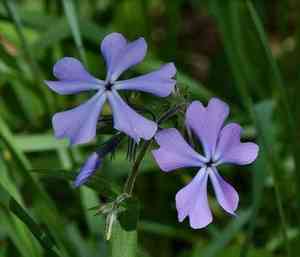
Wild blue phlox reproduces most effectively via cuttings taken in spring or summer. This method is relatively straightforward, and the emergence of new foliage signifies successful propagation. Ensure cuttings remain damp and receive diffused light.
When Is the Optimal Time to Propagate Wild Blue Phlox?
Propagation Method
Cutting
Propagation Period
Spring, Summer
What Tools Are Utilized for Wild Blue Phlox Propagation?
Sharp Pruning Shears
Crucial for taking cuttings, sharp pruning shears ensure a clean, precise cut without harming the stems of wild blue phlox. Non-serrated blades are preferred to minimize plant stress and reduce infection risk.
Rooting Hormone Powder or Gel
Applied to the cut end of stem cuttings, rooting hormone stimulates root development, increasing the likelihood of successful propagation. For wild blue phlox, which roots relatively easily, using rooting hormone can accelerate rooting speed and uniformity.
Sterilizing Agent (e.g., Isopropyl Alcohol)
Before taking cuttings, sterilizing pruning shears with an agent like isopropyl alcohol prevents pathogen transfer, which is vital for limiting potential disease in new wild blue phlox plants.
Potting Mix
A well-draining, soilless potting mix offers an ideal medium for wild blue phlox cuttings. This medium supports aeration and moisture retention, both essential for new root formation. Peat or coco coir-based mixes are commonly used.
Propagation Tray or Containers
Trays with adequate drainage holes or small containers are used to hold wild blue phlox cuttings. The size and material should promote good moisture retention while allowing excess water to drain.
Humidity Dome or Plastic Wrap
To maintain a high-humidity environment for wild blue phlox cuttings, a dome or wrap creates a mini greenhouse effect. This reduces water loss from the cuttings, aiding in the establishment of new roots.
Heat Mat (Optional)
While not always necessary for wild blue phlox, a heat mat can provide consistent bottom heat, promoting root growth in cooler environments. This tool can be particularly beneficial if propagating in a less than ideal temperature setting.
Watering Can with a Fine Rose
To water wild blue phlox cuttings gently without disturbing new roots, a watering can with a fine rose attachment is recommended. It provides a soft, rain-like flow that adequately hydrates the potting mix.
How to Propagate Wild Blue Phlox?
Propagation Method
Cutting
Difficulty Level
Easy
How to Care for Your Newly Propagated Wild Blue Phlox?
How to Care for Your Newly Propagated Wild Blue Phlox?
After propagation, continue to ensure that wild blue phlox has well-draining soil and is kept moist but not waterlogged. Provide the plant with partial to full shade, as it prefers dappled sunlight. Fertilize wild blue phlox sparingly as over-fertilization can lead to excessive foliage at the expense of flowering. Pay attention to signs of pests or disease, and treat accordingly. As wild blue phlox matures, it will benefit from being divided every few years to maintain its vigor and to prevent overcrowding. Deadhead spent flowers to encourage additional blooming and to keep the plant tidy.
Common Mistakes to Avoid When Propagating Wild Blue Phlox
Overwatering
After planting, overwatering can lead to root rot in wild blue phlox, as they prefer well-drained soils. Excess moisture around the roots may cause fungal infections, weakening or killing young plants.
Deep planting
Planting wild blue phlox too deeply can bury the crown of the plant, which could lead to rot or prevent the plant from establishing properly. The crown should be at soil level.
Ignoring soil ph
Wild blue phlox prefers a slightly acidic to neutral soil pH. Ignoring soil pH levels can hinder its growth and nutrient absorption, leading to poor propagation results.
Neglecting soil amendment
Failing to amend heavy clay or sandy soils can restrict root growth and water retention. Wild blue phlox needs loose, well-draining soil rich in organic matter for optimal growth.
Overlooking pest management
Neglecting to monitor for pests may result in infestations that can damage or stunt the growth of wild blue phlox.
Tips For Propagating Wild Blue Phlox
Softwood cuttings
Propagate wild blue phlox using softwood cuttings in early summer. These cuttings root more successfully than hardwood cuttings due to active growth.
Humidity for cuttings
Maintain a high humidity environment for cuttings of wild blue phlox to encourage rooting. Use a humidity dome or plastic wrap to create the right conditions.
Root division
Divide wild blue phlox in early spring or fall. Carefully separate the root ball into smaller sections, ensuring each has several shoots for successful transplanting.
Layering
Encourage wild blue phlox to root naturally through layering by pinning down a healthy, flexible stem to the soil in early spring. Once rooted, the new plant can be severed from the parent.
Fungicide for disease management
Use a fungicide to treat cuttings and divided plants of wild blue phlox to prevent fungal diseases that can hamper rooting and growth.



