The Russian olive Plant Advantage: Maximizing Home and Office Appeal and Wellness
1
Russian olive flourishes in challenging environments, making it a superb option for diverse settings.
2
This plant is recognized for its ability to withstand dry spells, lessening the demand for regular irrigation.
3
Russian olive aids in soil enrichment through nitrogen fixation, boosting the ground's overall nutrient content.
Ecological Advantages of Russian olive
How Does Russian olive Enhance Soil Fertility?
Russian olive functions as a nitrogen-fixing plant. This means it possesses the capacity to transform atmospheric nitrogen into a form readily available for soil microorganisms. This process naturally enriches the soil, boosting its fertility and enabling it to support a broader array of plant life. Furthermore, Russian olive thrives in poor soils, making it especially useful for restoring degraded environments.
Can Russian olive Aid in Preventing Soil Loss?
Indeed, Russian olive is highly effective at mitigating soil erosion. Its extensive root system stabilizes the ground, preventing it from being washed away by water or carried off by wind. This positions Russian olive as a valuable plant for areas susceptible to erosion, such as riverbanks, slopes, and coastal regions. Its ability to grow in diverse soil conditions also means it can be utilized across various terrains, offering a versatile solution to erosion issues.
Practical Applications of Russian olive in Garden Design
How Does Russian olive Improve Garden Visuals?
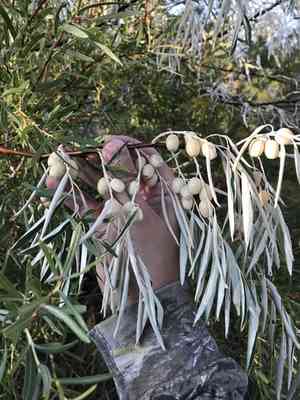
Russian olive is prized for its appealing look, featuring silvery-green foliage and small, fragrant blossoms. It can serve as an ornamental plant to introduce visual interest and texture to gardens and landscapes. Whether planted as a solitary specimen, part of a mixed border, or even as a hedge, Russian olive offers year-round beauty and charm.
Is Russian olive Suitable for Creating Wildlife Sanctuaries?
Russian olive is excellent for attracting and sustaining wildlife. Its flowers provide nectar for pollinators like bees and butterflies, while its berries offer sustenance for birds and small mammals. Additionally, its dense foliage provides cover and nesting spots, making it a crucial element of any wildlife-friendly garden or ecological restoration effort.
Effortless Upkeep and Durability
Why Is Russian olive Considered an Easy-Care Plant?
One of the most attractive features of Russian olive is its minimal maintenance requirement. Once established, it needs little attention, making it an ideal choice for gardeners seeking a simple-to-grow plant. Russian olive is drought-tolerant and can endure prolonged periods without water, reducing the need for constant irrigation. Moreover, it resists many pests and diseases, further lowering upkeep demands.
Can Russian olive Adapt to Diverse Climates?
Absolutely, Russian olive is remarkably adaptable to various weather conditions. It can withstand harsh winters and hot, arid summers, making it suitable for a wide range of geographical locations. This adaptability not only makes Russian olive a versatile addition to different types of landscapes but also ensures its survival and growth in less-than-ideal circumstances.
Nutritional and Culinary Uses
Are the Fruits of Russian olive Edible?
Yes, the fruits of Russian olive are edible and can be utilized in various cooking applications. They are small, olive-like drupes that can be consumed fresh or processed into preserves, jellies, and even wine. The fruits are not only flavorful but also packed with beneficial compounds, making them a nutritious addition to one's diet.
How to Incorporate Russian olive into Recipes?
The fruits of Russian olive can be integrated into cooking in several ways. They can be used as a flavoring ingredient in baked goods, added to smoothies for a nutritional boost, or even used in savory dishes as a distinctive garnish. Creative cooks can discover numerous methods to use these fruits, leveraging their unique taste and nutritional profile.
Economic and Community Benefits
Can Russian olive Contribute to Local Economies?
Yes, Russian olive can have a positive economic impact, particularly in regions where it is cultivated for its edible fruits and ornamental value. The fruits can be sold fresh or processed into various products, generating income for local communities. Additionally, the plant's ability to thrive in poor soils can make otherwise unproductive land valuable once more.
Is Russian olive Useful in Urban Green Spaces?
Russian olive is increasingly being employed in urban landscaping due to its aesthetic appeal, low maintenance needs, and environmental advantages. Its capacity to enhance soil quality and control erosion makes it an excellent option for urban gardens, parks, and other green areas. As cities aim to incorporate more green infrastructure, Russian olive offers an effective solution for sustainable urban landscaping.



