Polka dot begonia(Begonia maculata)

Polka dot begonia (Begonia maculata)

Also known as: Angel Wing Begonia, Polka Dot Begonia

The polka dot begonia is a striking plant that adds charm to any space. It thrives in warm environments with plenty of bright, indirect light. While its leaves have a tart flavor and are sometimes consumed, they can be toxic in large quantities. To keep it healthy, ensure it gets the right balance of light and humidity, and avoid exposing it to direct sunlight.

Attributes of Polka dot begonia

Lifespan
Perennial
Plant Type
Herb
Plant Height
50 cm to 1 m
Spread
10 cm to 50 cm
Leaf Color
Green Red White
Flower Size
2.5 cm
Flower Color
White Pink

ForwardPlant - Identify plants with a snap

Identify and diagnose plants, get toxicity alerts, and explore safety guides for all types of fungi.

Try for Free

Images of Polka dot begonia

Polka dot begonia(Begonia maculata)

Quickly Identify Polka dot begonia

1
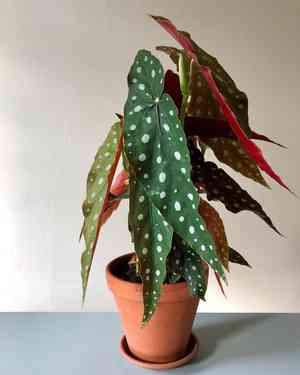
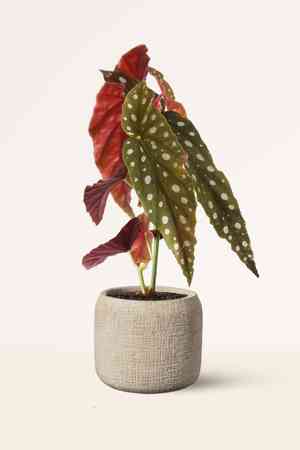
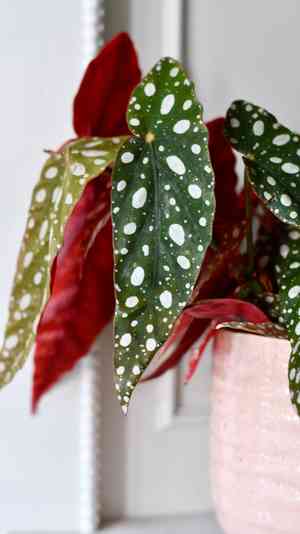
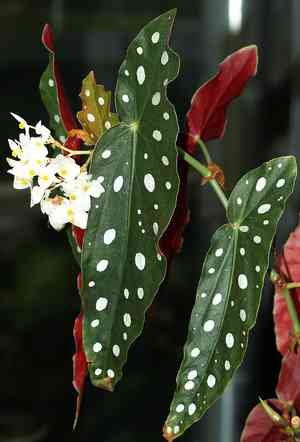
To identify Begonia maculata, look for its unique wing-shaped leaves with silver polka dots and a dark red underside. The plant typically has a cane-like stem structure and produces white or pink flowers in clusters.

Scientific Classification of Polka dot begonia

Phylum
Vascular plants
Class
Dicotyledons
Order
Cucurbitales
Family
Begonia
Genus
Begonias
Species
Polka dot begonia

Planting and Growing of Polka dot begonia

Care Difficulty
Moderate
Watering Schedule
Every 4 days
Sunlight Requirements
Partial sun
Sunshine Duration
6-10 hours
Ideal Temperature
65-75℉
Soil Type
Potting Mix, Peat Mix
Soil pH
6.5-7.5
Fertilizer Type
Balanced
Pruning Season
Spring, Summer
Pruning Area
Branches, Leaves
Pruning Frequency
2 times a year
Repotting Season
Spring
Pot Type
Plastic, Ceramic

water icon How to Water Polka dot begonia?

For Begonia maculata, the watering amount per session should be about 250 milliliters. This ensures the soil is adequately moistened without becoming waterlogged. It's important to ensure water reaches the root zone while avoiding water accumulation in the saucer.
What are the symptoms of an underwatered Polka dot begonia?
What should I do if my Polka dot begonia is not getting enough water?
What are the symptoms of an overwatered Polka dot begonia?
How to save an overwatered Polka dot begonia?
More About Watering Techniques

sunlight icon What Are the Sunlight Requirements for Polka dot begonia?

Sunlight Requirements: Partial sun
Duration of light: 2 to 6 hours daily
Partial sunlight is ideal, balancing light needed for photosynthesis while protecting against burns. Ideal light ensures robust growth and enhanced leaf coloration.
What is the ideal lighting condition for Begonia maculata?
How can you achieve this ideal lighting condition?
What are the benefits of providing the ideal lighting conditions?
More About Sunlight Requirements Techniques

temperature icon What Is the Ideal Temperature Range for Polka dot begonia?

Ideal Temperature: 65 ~ 75℉
The ideal temperature range of 65-75°F ensures optimal growth conditions for Begonia maculata. Within this range, the plant can effectively carry out photosynthesis and other metabolic processes, resulting in healthy foliage and vibrant spotting patterns. Consistent temperature minimizes stress and helps maintain robust plant health, promoting lush growth and strong stems.

soil icon What Soil is Best for Polka dot begonia?

Soil type: Loam, Sandy loam
Soil PH: 6.5 ~ 7.5
Begonia maculata thrives in well-draining soil, which prevents waterlogging that could lead to root rot. This enhances root aeration, allowing the plant to absorb nutrients efficiently. Incorporating organic matter into the soil is crucial. It improves soil fertility, maintains moisture balance, and supports beneficial microbial activity, all essential for healthy plant growth. The soil should retain moisture moderately to ensure the plant doesn't dry out quickly. This balance is important to keep the leaves lush and vibrant without making the soil soggy. More About Soil

fertilize icon How to Fertilize Polka dot begonia?

Fertilizer type: Balanced
The amount of fertilizer for Begonia maculata should be moderate, as this plant tends to be sensitive to over-fertilization. Use a balanced, water-soluble fertilizer at half strength for liquid fertilizers. For slow-release fertilizers, follow the manufacturer's instructions, usually applying around a tablespoon scattered evenly over the soil surface. More About Fertilizing Techniques

prune icon How to Prune Polka dot begonia?

Pruning Time: Spring, Summer, Autumn
Start by inspecting the plant and trimming off any dead, yellowing, or damaged leaves as close to the stem as possible. Doing this will help prevent potential diseases and encourage new growth. To maintain an aesthetically pleasing shape, trim back long stems to promote bushy growth. Identify any leggy stems and cut just above a leaf node to stimulate branching. Pinching back the new growth tips can encourage a denser appearance. Gently pinch between your fingers and thumb, removing just the soft tip to help the plant grow laterally rather than vertically. More About Pruning Techniques

propagate icon How to Propagate Polka dot begonia plant?

Propagate Time: Spring, Early spring, Summer
1
Choose a healthy stem from the plant, ideally one that is at least 4-6 inches long and has several leaf nodes. Cut just below a node using sharp, sterilized pruners.
2
Remove the leaves from the bottom half of the cutting to expose the nodes, as these will form the roots. Optionally dip the end in rooting hormone.
3
Place the cutting in a pot filled with well-draining soil or a mixture of soil and perlite. Ensure that at least one node is buried under the soil.
More About Propagating Techniques

repot icon How to Repot Polka dot begonia plant?

Repotting frequency: Once every 2 years
1
Repot Begonia maculata when you notice roots coming out from the drainage holes, or if the plant seems top-heavy or isn't growing well. Early spring or summer is an ideal time, ensuring the plant is actively growing and can quickly adapt to its new environment.
2
Select a pot that is only slightly larger than the current one, ensuring it has a drainage hole. This helps avoid overwatering and promotes healthy root growth. A smaller increase limits the potential shock to the plant and allows for proper aeration and moisture control.
3
Opt for a well-draining soil mix rich in organic matter with peat, perlite, or vermiculite. This type of soil ensures good aeration, prevents waterlogging, and supplies essential nutrients, ensuring healthy growth and lush foliage.
More About Repotting Techniques

ForwardPlant - Identify plants with a snap

Find the best spots for them to optimize their health, simply using your phone.

Try for Free

Toxicity of Polka dot begonia

Is Polka dot begonia toxic to cat?

The polka dot begonia is known to be harmful to cats. If any part of this plant is accidentally consumed by these animals, it can lead to poisoning. Initial signs of toxicity in cats can manifest as discomfort, gastrointestinal disturbances, or distress. Although there are no specific toxins identified, it is essential to quickly recognize these negative reactions. Cat guardians must remain alert and ensure that polka dot begonia is stored in areas inaccessible to their feline companions. Should ingestion occur, it is crucial to obtain prompt veterinary care to manage any potential health concerns resulting from contact with polka dot begonia.

Is Polka dot begonia toxic to dog?

The polka dot begonia is known to be toxic to canines. If a dog consumes any part of this plant, given that all its components are harmful, it can result in poisoning. Dogs might inadvertently eat polka dot begonia out of curiosity or if they encounter it in their surroundings. Symptoms of poisoning in dogs can include vomiting, diarrhea, excessive drooling, and indications of oral discomfort. It is essential for dog owners to remain alert and prevent their pets from accessing the polka dot begonia plant. If a dog does ingest any portion of this plant, it is crucial to obtain prompt veterinary attention to secure the best possible outcome for the animal.

Identify toxic plants for your safety

Learn which plants are harmful to you and your pets, and make informed choices for a safer home!

Try for Free
WARNING
The judgment on toxicity and danger is for reference only. We DO NOT GUARANTEE any accuracy of such judgment. Therefore, you SHALL NOT rely on such judgment. It is IMPORTANT TO SEEK PROFESSIONAL ADVICE in advance when necessary.
More About Toxic Techniques