How Often Should You Water Your Ghost plant?
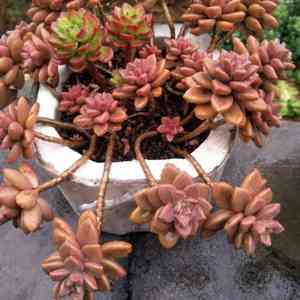
1
Irrigate your Ghost plant bi-weekly, making sure the substrate fully dehydrates between sessions to deter root decay.
2
Excessive watering poses a greater threat to Ghost plants than insufficient watering, potentially causing root rot and fungal growth.
3
Utilize water at ambient temperature and refrain from employing softened water, as its salt content can harm the plant.
Deciphering the Hydration Requirements of Ghost Plants
Recognizing Indicators of Adequate Moisture
The Ghost plant is a robust succulent, celebrated for its lovely rosette leaves that alter hues based on sun exposure. To confirm your Ghost plant is sufficiently hydrated, observe for leaves that are plump and firm. These leaves will appear vibrant and may display colors ranging from light blue-gray to subtle pink, yellow, or even purple in suitable conditions. If the leaves are soft, drooping, or shriveling, it generally signals insufficient water.
Ramifications of Excessive and Insufficient Watering
Grasping the proper watering equilibrium for your Ghost plant is vital. Over-watering can result in root rot, a condition where roots become soft and discolored due to too much moisture. You'll notice the plant's leaves yellowing and dropping off. Conversely, under-watering will cause the leaves to become arid and brittle, leading to defoliation. To prevent these issues, adhering to a biweekly watering regimen and adjusting as necessary is important.
Optimal Strategies for Watering Your Ghost Plant
Seasonal Adjustments to Watering Practices
The water demands of Ghost plants vary with the seasons. During the active growth period in spring and summer, the plant might require more frequent hydration, approximately every 2 weeks or when the potting medium is entirely dry. In the dormant periods of autumn and winter, decrease watering to once per month. Considering environmental factors, such as humidity and indoor heating, can aid in fine-tuning the watering schedule.
Selecting Appropriate Water and Watering Equipment
Regarding watering your Ghost plant, the correct instruments can be pivotal. Utilize water at room temperature to avoid shocking the plant's root system. An excellent tool is a watering can featuring a narrow spout to ensure precise application around the plant's base. Steer clear of softened water as the salts can harm the plant over time. Tap water is generally acceptable, but if you observe white mineral deposits, it's advisable to switch to collected rainwater or demineralized water.
Methods for Monitoring and Sustaining Ideal Soil Moisture
Employing Moisture Meters for Accurate Readings
Using moisture meters can provide an exact measurement of soil moisture levels, eliminating guesswork from watering. Insert the sensor into the soil near the roots, and the device will indicate the moisture content. Aim for a reading signifying dry-moderate before re-watering.
Visual and Manual Soil Assessments
In addition to using moisture meters, performing visual and tactile soil examinations is a practical method. Simply insert your finger about 2.5 cm (1 inch) into the soil. If the soil feels arid, it's time to water. You can also observe the soil's color – if it's dark, it's likely still moist; if it's light brown, it's probably time to water again. These straightforward checks ensure your Ghost plant maintains peak health.



