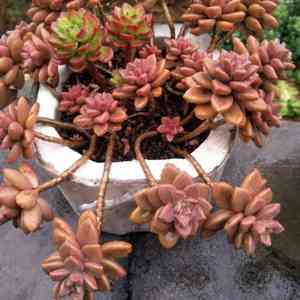
Ghost plant (Graptopetalum paraguayense)
Also known as: Mother of pearl plant
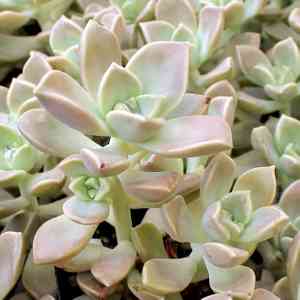
Graptopetalum paraguayense, also known as the Ghost Plant, is a succulent native to Tamaulipas, Mexico. This plant is popular both indoors and in gardens for its attractive trailing rosettes. Depending on sunlight exposure, its leaves can change from yellow-pink in bright light to greenish-blueish-gray in shade. It is often mistaken for an Echeveria due to their similar appearance.
In This Article
Attributes of Ghost plant
Lifespan
Perennial
Plant Type
Succulent, Herb
Plant Height
15 cm to 30 cm
Spread
60 cm to 90 cm
Leaf Color
Green White
Flower Size
1.5 cm
Flower Color
White
Images of Ghost plant
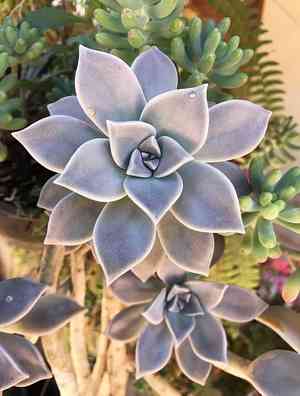
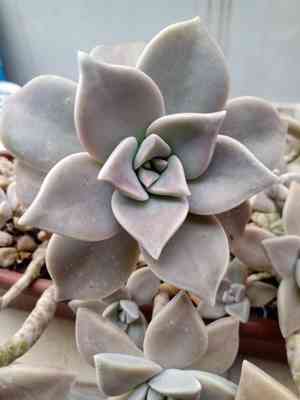
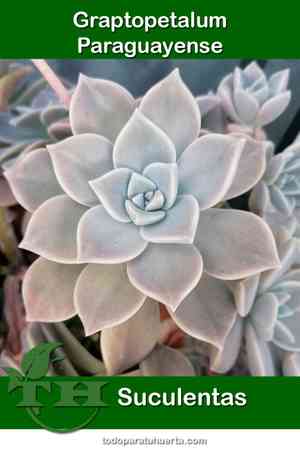
Quickly Identify Ghost plant
1
Rosette of fleshy, triangular leaves ranging from pale blue to light purple.
2
Star-shaped white flowers with small red specks, clustered for visual impact.
3
Round, grayish succulent stem, branching for new rosettes, up to 20 cm long.
4
Distinctive red specks on 5-petaled white blossoms, creating unique patterns.
5
Leaves with pointed tips, 1-3 inches long, whitish green to blue-gray in color.
Scientific Classification of Ghost plant
Phylum
Vascular plants
Class
Dicotyledons
Order
Saxifrages, stonecrops and allies
Family
Stonecrop
Genus
Leatherpetal
Species
Ghost plant
Planting and Growing of Ghost plant
Care Difficulty
Easy
Watering Schedule
Every 2 days
Sunlight Requirements
Partial sun
Sunshine Duration
6-8 hours
Ideal Temperature
65-75℉
Soil Type
Potting Mix, Peat Mix
Soil pH
6.5-7.5
Fertilizer Type
Balanced
Pruning Season
Spring, Summer
Pruning Area
Branches, Leaves
Pruning Frequency
Once a year
Repotting Season
Spring
Pot Type
Plastic, Ceramic
 How to Water Ghost plant?
For Graptopetalum paraguayense, it is essential to aim for a watering amount around 250 ml at a time. The key is to water thoroughly but allow the soil to dry out between watering sessions. The general rule of thumb is to ensure water reaches the root zone but does not leave the plant sitting in water.
More About Watering Techniques→
What are the symptoms of an underwatered Ghost plant?
›
What should I do if my Ghost plant is not getting enough water?
›
What are the symptoms of an overwatered Ghost plant?
›
How to save an overwatered Ghost plant?
›
 What Are the Sunlight Requirements for Ghost plant?
Graptopetalum paraguayense thrives with partial to full sun exposure, ideally receiving 4 to 6 hours of sunlight daily. It ensures strong, vibrant growth and prevents legginess.
More About Sunlight Requirements Techniques→
What is the best location for Graptopetalum paraguayense?
›
How to ensure Graptopetalum paraguayense gets the right amount of light indoors?
›
What are the signs that Graptopetalum paraguayense is receiving ideal light?
›
 What Is the Ideal Temperature Range for Ghost plant?
The ideal temperature range for Graptopetalum paraguayense, also known as Ghost Plant, is between 65°F to 75°F. This ensures healthy growth and optimal development. Maintaining this temperature range allows the succulent to stay vibrant and prevents stress-induced issues, enabling proper photosynthesis and nutrient uptake.
 What Soil is Best for Ghost plant?
Graptopetalum paraguayense thrives in well-drained soil to prevent root rot. Good drainage allows excess water to escape, ensuring roots remain healthy and oxygen-rich. Nutrient-rich soil is crucial for healthy growth and vibrant foliage. This plant benefits from organic matter that provides the essential nutrients required for photosynthesis and energy storage. While Graptopetalum paraguayense does not need excessively fertile soil, moderate fertility supports its growth cycle. Too much fertility can lead to overgrowth and weak stems, while moderate levels ensure balanced development.
More About Soil→
 How to Fertilize Ghost plant?
When fertilizing Graptopetalum paraguayense, it is important to provide just the right amount. Over-fertilization can lead to burned roots and poor plant health. Use a diluted 1/4 strength liquid fertilizer for all-purpose cacti or succulents to prevent root damage.
 How to Prune Ghost plant?
Start by identifying stems that appear stretched or leggy. These are usually longer, with more space between leaves, indicating less than optimal light conditions. Make your cuts just above a healthy leaf node. This encourages new growth from that node, maintaining a fuller and more vibrant appearance. Prune away any dead or discolored leaves. This not only improves the plant's appearance but also helps prevent pests and diseases. Trim back any unruly branches that disrupt the desired shape of the plant. Evenly distribute cuts to maintain a balanced appearance.
 How to Propagate Ghost plant plant?
1
Choose plump and healthy-looking leaves from the mother plant. Avoid damaged or diseased leaves as this decreases the chances of successful propagation.
2
After cutting the leaves, allow them to dry and callous over for a few days. This prevents rotting when they are placed on the soil.
3
Once calloused, place the leaves on a well-draining soil mixture gently. Don't bury them, as they need sufficient air exposure for roots to develop.
 How to Repot Ghost plant plant?
1
Look for signs like roots poking out from drainage holes or slowed growth indicating your Graptopetalum paraguayense needs repotting. Spring and autumn, when the plant is actively growing but not stressed are ideal.
2
Opt for a pot that's 1-2 inches larger in diameter. This prevents overwatering and root rot. The pot must have drainage holes to ensure excess moisture escapes, maintaining healthy root conditions.
3
Select a well-draining cactus soil mix rich in sand and perlite. This mixture mimics the plant's natural environment, reducing the risk of root rot by ensuring excess water drains effectively.



