How to Propagate Ghost plant?
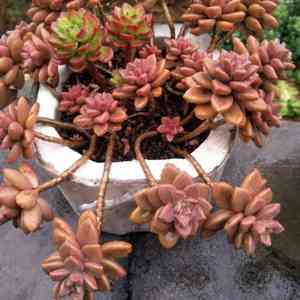
The ghost plant reproduces most successfully from spring through summer using cuttings, a fairly straightforward technique. Observe for the emergence of new roots and foliage as indicators of successful propagation. Guarantee adequate hydration and a growing medium that drains efficiently.
Optimal Time for Ghost Plant Propagation
Propagation Type
Cutting
Propagation Season
Spring, Summer
Tools for Ghost Plant Propagation
Sharp Scissors or Pruning Shears
These instruments are employed for making precise cuts when taking leaf or stem cuttings from ghost plant. A keen blade ensures a swift and clean incision, minimizing the chance of infection and harm to both the parent plant and the cutting. This is especially crucial for ghost plant, as succulents can be susceptible to rot if the cut surface is uneven or if the cutting process causes undue stress to the plant tissues.
Tray or Container
A shallow tray or receptacle is utilized for allowing ghost plant cuttings to form a callus before potting. This step is vital in preventing rot once the cuttings are placed in soil. The tray offers ample room for air circulation around each cutting, which is essential for the drying of the cut surface and is particularly beneficial for ghost plant, which requires good airflow to prevent moisture accumulation on its leaves.
Cactus or Succulent Potting Mix
A well-draining potting medium, specifically formulated for cacti and succulents, is essential for the successful rooting of ghost plant cuttings. This mix often contains ingredients like perlite, sand, and volcanic rock, which promote drainage and prevent water from saturating the soil, a condition that could lead to root rot for the moisture-sensitive ghost plant.
Rooting Hormone
This is a specialized product that stimulates the development of new roots from the base of ghost plant cuttings. While not strictly necessary, it can enhance the likelihood of successful propagation, particularly aiding in quicker root formation and greater rooting consistency across a batch of cuttings.
Tweezers or Tongs
These implements are particularly useful for handling small or delicate ghost plant cuttings, enabling their placement in soil without causing damage or exposing fingers to potential plant irritants. Given that ghost plant likely has small leaves and fragile stems, a precise tool like tweezers can be indispensable.
Spray Bottle
A bottle equipped with a misting nozzle offers a gentle method to water the delicate ghost plant cuttings without dislodging them from the rooting medium. Misting with a spray bottle can help maintain the appropriate level of soil moisture for cuttings, which is critical for ghost plant given its vulnerability to root rot in excessively wet conditions.
Grow Light or Shade Cloth
These tools regulate the amount of light received by ghost plant cuttings. A grow light can provide a consistent light source necessary for photosynthesis if natural sunlight is insufficient, while a shade cloth can shield young cuttings from excessive direct sunlight, preventing sunburn and dehydration. Proper light management is key after cutting to ensure ghost plant develops healthy roots and foliage.
How to Propagate Ghost Plant?
Propagation Type
Cutting
Difficulty Level
Easy
Caring for Your Newly Propagated Ghost Plant
How to Care for Your Newly Propagated Ghost Plant?
Maintain the new ghost plant in a location with bright, indirect sunlight and water when the soil feels dry to the touch, approximately every one to two weeks depending on environmental factors. Ensure adequate drainage in their containers to prevent waterlogged conditions. Fertilize during the active growth period with a balanced, diluted succulent fertilizer to supply nutrients for robust development. Avoid exposing ghost plant to extreme temperatures and protect it from frost.
Common Mistakes to Avoid When Propagating Ghost Plant
Overwatering
Excessive watering of ghost plant during propagation can lead to root rot, as cuttings and offsets require time for callus formation and have limited water needs until roots develop.
Too much direct sunlight
Exposing ghost plant cuttings to intense direct sunlight can cause scorching and dehydration, which hinders root development and may kill the propagules.
Using contaminated tools
Cutting ghost plant with unclean tools can introduce pathogens, leading to infections that impede rooting and growth.
Planting cuttings too deep
Inserting ghost plant cuttings too far into the soil can cause them to rot before they have a chance to establish roots, as the stems need good air circulation while they heal and begin to root.
Ignoring humidity requirements
Failing to maintain a moderately humid environment for ghost plant cuttings may lead to desiccation before the cutting has a chance to root.
Tips For Propagating Ghost Plant
Proper severance
Make a clean cut on ghost plant using sterile snippers to remove a leaf or offset, ensuring minimal damage and a smooth healing process.
Callousing
Allow the cuttings of ghost plant to form a callus for several days before placing them in soil to reduce the risk of rotting.
Indirect sunlight
Position ghost plant in bright, indirect light to encourage root growth without the danger of sunburn.
Well-draining soil
Utilize a well-draining soil mix for ghost plant to mimic their natural growing conditions and prevent waterlogging.
Gentle watering
Water ghost plant sparingly and only when the soil is dry to the touch, providing sufficient moisture for growth without causing rot.



