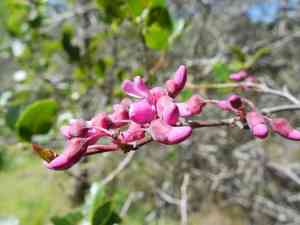
Western redbud (Cercis occidentalis)
Also known as: Western Redbud
Western redbud (Cercis occidentalis) has been traditionally used by California's indigenous peoples in several ways. Its flexible branches were prized for basket weaving due to their durability. The bark and twigs were also valuable, as they could be processed to create a reddish dye. Additionally, the plant held ornamental value and was often incorporated into native gardens for its aesthetic appeal. The seeds and young pods were sometimes utilized as a food source, either consumed raw or cooked.
In This Article
Attributes of Western redbud
Lifespan
Perennial
Plant Type
Shrub, Tree
Plant Height
3 m to 4.5 m
Spread
3 m to 4.5 m
Leaf Color
Green Blue
Flower Size
1.3 cm
Flower Color
Pink Purple
Images of Western redbud
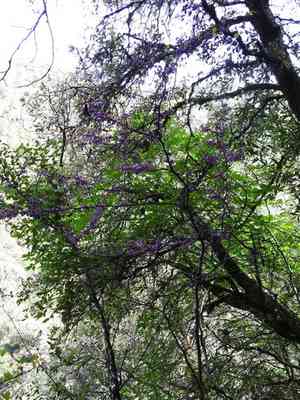
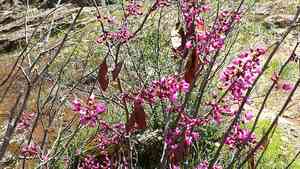
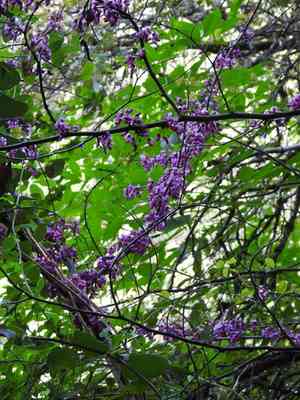

Quickly Identify Western redbud
1
Heart-shaped pale-green leaves with red tinge, turning yellow in autumn.
2
Spring display of magenta pea-shaped blossoms on bare stems.
3
Multiple trunks, reaching up to 15 feet (4.57 meters) in height and width.
4
Flattish reddish seed pods, 4 to 6 inches (10 to 15 cm) long.
5
Blossoms followed by light brown seed pods persisting into winter.
Scientific Classification of Western redbud
Phylum
Vascular plants
Class
Dicotyledons
Order
Fabales
Family
Legume
Genus
Redbuds
Species
Western redbud
Planting and Growing of Western redbud
Care Difficulty
Easy
Watering Schedule
Every 2 days
Sunlight Requirements
Full sun
Sunshine Duration
6-8 hours
Ideal Temperature
60-75℉
Soil Type
Potting Mix, Peat Mix
Soil pH
6.5-7.5
Fertilizer Type
Balanced
Pruning Season
Spring, Summer
Pruning Area
Branches, Leaves
Pruning Frequency
Once a year
Repotting Season
Spring
Pot Type
Plastic, Ceramic
 How to Water Western redbud?
For Cercis occidentalis, also known as the western redbud, watering should follow the principle of deep soaking. This means when you water, it should be enough to penetrate down to the root zone without leaving the soil soggy. Aim for about 500 milliliters per watering to ensure the soil is evenly moist but not waterlogged.
What are the symptoms of an underwatered Western redbud?
›
What should I do if my Western redbud is not getting enough water?
›
What are the symptoms of an overwatered Western redbud?
›
How to save an overwatered Western redbud?
›
 What Are the Sunlight Requirements for Western redbud?
Cercis occidentalis prefers full sun exposure with some tolerance for partial sun. Ideal light promotes lush growth and abundant flowering. Proper sunlight allocation enhances photosynthetic efficiency, supporting a healthy plant structure and robust seasonal blooms.
More About Sunlight Requirements Techniques→
How much light does Cercis occidentalis need?
›
What are the solutions for achieving ideal lighting for Cercis occidentalis?
›
What are the benefits of ideal sunlight for Cercis occidentalis?
›
 What Is the Ideal Temperature Range for Western redbud?
The ideal temperature range for growing Cercis occidentalis is between 60°F and 75°F. This range provides optimal conditions for the plant's growth and development, ensuring proper blooming and foliage health.
 What Soil is Best for Western redbud?
Cercis occidentalis thrives in well-draining soils that prevent water from sitting around the roots, reducing the risk of root rot. This condition helps maintain healthy root systems and prevents diseases caused by excess moisture. It prefers a nutrient-rich substrate that ensures a steady supply of essential minerals. Adequate nutrients help promote lush foliage and robust flowering in the springtime. Soils with moderate moisture retention are ideal, providing enough moisture for the plant's needs without causing saturation. It helps to sustain the plant in its natural habitat where occasional dry spells occur.
More About Soil→
 How to Fertilize Western redbud?
Cercis occidentalis, or the Western Redbud, does not require heavy feeding. When applying fertilizer, aim for a balanced type like 10-10-10. For liquid fertilizers, use about 1 tablespoon per gallon of water, applied gently around the root zone.
More About Fertilizing Techniques→
 How to Prune Western redbud?
To prune a Cercis occidentalis, you'll need pruning shears, loppers, and possibly a pruning saw for thicker branches. The best time to prune this tree is during late winter to early spring before new growth begins. This ensures the tree can focus its energy on new healthy growth. Begin by removing any dead, diseased, or damaged branches, cutting them back to the base or the main trunk. Next, thin out crossing branches to improve air circulation. Avoid cutting the central leader unless necessary. Shape the tree to maintain a balanced and open structure, allowing light to reach the inner branches.
More About Pruning Techniques→
 How to Propagate Western redbud plant?
1
Collect mature seeds from the seed pods and scarify them to enhance germination rates. Scarification can be done by soaking the seeds in hot water for 24 hours.
2
Select healthy, non-flowering stems around 6-8 inches long and remove the leaves from the lower half. Dip the cut ends in rooting hormone to promote root development.
3
Plant the seeds or cuttings in well-draining soil and keep them in a warm environment with indirect sunlight. Water them lightly but do not allow the soil to dry out completely.
 How to Repot Western redbud plant?
1
Repotting Cercis occidentalis is essential when you see roots coming out of the drainage holes or if growth seems stunted, as this indicates that the roots have outgrown their current space. Aim for spring or autumn to give the plant time to recover and establish roots in milder weather conditions.
2
Select a pot that is 1-2 inches larger in diameter than the current one. Ensure it has ample drainage holes to prevent waterlogging. A slightly larger pot allows room for growth while not overwhelming the plant, balancing moisture retention with drainage.
3
Opt for a well-draining loamy soil enriched with organic matter. This ensures sufficient aeration for the roots while holding enough moisture to sustain the plant during periods of dry weather. Such soil offers an ideal environment for cercis occidentalis to flourish.



