How to Prune Sand cherry?
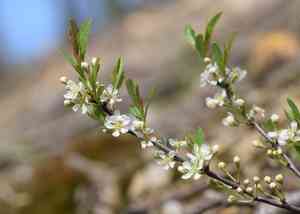
A versatile deciduous bush, sand cherry thrives in sandy substrates, showcasing its vivid blossoms and berries. To ensure peak vitality and flowering, yearly trim away any deceased or crossing limbs subsequent to blooming in late spring or early summer. Strategic thinning cuts enhance air movement and light exposure, thereby boosting development and fruit excellence. Aggressive trimming encourages robust new growth, yet might diminish the subsequent year's floral display. Perform pruning to preserve its form and eliminate basal shoots, guaranteeing a dense, thriving plant with heightened resilience to ailments.
Advantages of Trimming Sand Cherry
Advantages of Trimming Sand Cherry
Trimming sand cherry promotes abundant flowering and helps deter pests and illnesses, leading to a healthier, more robust shrub.
Optimal Period for Pruning Sand Cherry
Optimal Period for Pruning Sand Cherry
Pruning sand cherry in late spring and early summer is ideal as it coincides with the conclusion of its blooming cycle, generally avoiding the flowering phase. Pruning at this time fosters vigorous growth and recovery, minimizes stress on sand cherry, and allows for shaping new growth without sacrificing the current year's blooms. Furthermore, this timing lowers the risk of disease infection that can occur with fall or winter pruning when cuts heal more slowly. Avoiding dormant season pruning helps ensure strong spring growth and preserves the aesthetic and structural integrity of sand cherry.
Required Tools for Pruning Sand Cherry
Hand Pruners
Perfect for making precise cuts on stems and small branches of sand cherry, ensuring rapid healing and minimal harm.
Loppers
Offer increased leverage to cut through thicker branches of sand cherry that hand pruners cannot manage, typically up to 1½ inches in diameter.
Pruning Saw
Essential for removing mature or large branches from sand cherry that are too thick for loppers, ensuring accurate and clean cuts without tearing the bark.
Hedge Shears
Useful for shaping the denser foliage of sand cherry, allowing for uniform trimming of the shrub's outline.
Gloves
To safeguard the gardener's hands from thorns and rough branches while pruning sand cherry.
Pruning Sealer
Applied to larger cuts of sand cherry to protect against disease and pests after pruning.
How to Prune Sand Cherry
Remove Diseased Parts
Identify and eliminate any diseased leaves and branches from sand cherry to prevent the spread of illness. Use sterilized pruning shears to make clean cuts, severing the affected parts well below the diseased tissue.
Trim Withered Elements
Trim off withered leaves and flowers from sand cherry. Make cuts at a 45-degree angle just above a healthy leaf or bud to encourage new growth.
Clear Dead Branches
Remove all dead branches from sand cherry, cutting at the point where they join with a living branch or at the base of the plant. Make sure to cut close to the trunk or main branch to promote healing and avoid stubs that can harbor pests.
Control Growth
Prune away excessive growth branches to shape sand cherry and ensure good air circulation. Thin out crowded areas by removing entire branches at their point of origin to maintain the natural form of the plant.
Clean Up
Dispose of all removed material by properly discarding diseased and dead plant parts. Clean and sterilize pruning tools after use to prevent the transfer of any potential diseases to other plants or parts of sand cherry.
Common Pruning Errors with Sand Cherry
Over-Pruning
Removing too much foliage can stress sand cherry and reduce its ability to photosynthesize, leading to reduced vigor and potential dieback.
Improper Cut Location
Sand cherry may struggle to heal and become susceptible to disease if cuts are made too far from a bud or not on a slant away from the bud, which can lead to water accumulation and rot.
Pruning Young Shoots
Trimming the current seasonâs growth too early can prevent flowering, as sand cherry blooms on old wood.
Using Dull Tools
Dull pruning implements can cause crushing or tearing of sand cherry's branches, increasing vulnerability to pests and diseases.
Neglecting Sanitation
Not sanitizing tools before and after use can spread pathogens to sand cherry from infected plant material.
General Pruning Advice for Sand Cherry
Cutting Technique
Make clean cuts at a 45-degree angle about 1/4 inch above outward-facing buds to encourage outward growth and prevent water from collecting on the cut surface.
Removal Of Dead Wood
Regularly removing dead, diseased, or damaged branches from sand cherry will improve air circulation and reduce the chance of disease.
Thinning
Thin out crowded branches to allow light and air to penetrate sand cherry, which stimulates healthy growth and reduces the risk of disease.
Maintaining Shape
Prune sand cherry to maintain a pleasant shape and prevent overgrowth; this involves selective branch removal rather than shearing.
Tool Maintenance
Keep pruning tools sharp and clean to make precise cuts, which will ensure faster healing and reduce stress on sand cherry.



