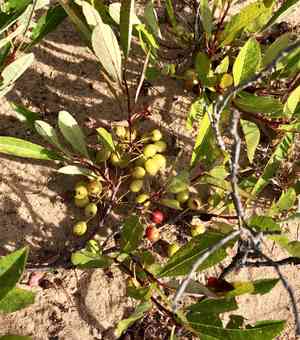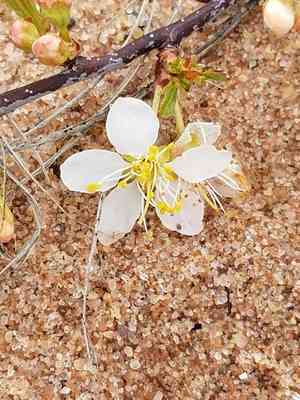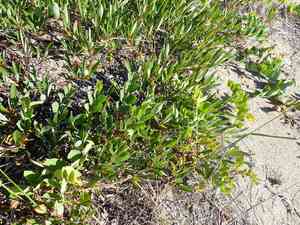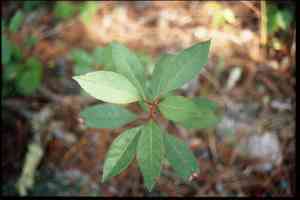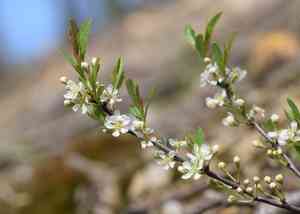
Sand cherry(Prunus pumila)

Sand cherry (Prunus pumila)

Also known as: Sandcherry, Eastern Sandcherry , Low sand cherry, Susquehana cherry

Sand cherry (Prunus pumila), part of the rose family, tends to grow in sandy environments like dunes and beaches. After the blossoms fade, purplish fruit appears in the summer. Although the cherries are edible, they aren't as flavorful as other varieties. This plant is also known as dwarf sand plum.

Attributes of Sand cherry

Lifespan
Perennial
Plant Type
Shrub
Plant Height
61 cm to 1.8 m
Spread
1 m
Leaf Color
Green Orange
Flower Size
1.5 cm to 2.5 cm
Flower Color
White

ForwardPlant - Identify plants with a snap

Identify and diagnose plants, get toxicity alerts, and explore safety guides for all types of fungi.

Try for Free

Images of Sand cherry

Sand cherry(Prunus pumila)

Quickly Identify Sand cherry

1
Look for a small woody shrub with thin, elongated leaves that are finely toothed. In spring, the plant produces small white or pinkish flowers, followed by dark purple to black drupes.

Scientific Classification of Sand cherry

Phylum
Vascular plants
Class
Dicotyledons
Order
Roses, elms, figs, and allies
Family
Rose
Genus
Prunus
Species
Sand cherry

Planting and Growing of Sand cherry

Care Difficulty
Easy
Watering Schedule
Every 2 days
Sunlight Requirements
Full sun
Sunshine Duration
4-6 hours
Ideal Temperature
60-75℉
Soil Type
Potting Mix, Peat Mix
Soil pH
6.5-7.5
Fertilizer Type
Balanced
Pruning Season
Spring, Summer
Pruning Area
Branches, Leaves
Pruning Frequency
2 times a year
Repotting Season
Spring
Pot Type
Plastic, Ceramic

water icon How to Water Sand cherry?

Prunus pumila prefers to have its soil kept moderately moist, but not waterlogged. Watering should be deep enough to saturate the root zone, around 500 ml, allowing the excess to drain away completely. This ensures that the roots receive sufficient moisture but prevents root rot by not leaving the soil overly saturated.
What are the symptoms of an underwatered Sand cherry?
What should I do if my Sand cherry is not getting enough water?
What are the symptoms of an overwatered Sand cherry?
How to save an overwatered Sand cherry?

sunlight icon What Are the Sunlight Requirements for Sand cherry?

Sunlight Requirements: Full sun, Partial sun
Duration of light: 6-8 hours daily
Prunus pumila benefits from full sun to partial sun exposure, ideally receiving 6-8 hours of sunlight daily. This encourages healthy growth, vibrant leaves, and enhances flowering and berry production, maximizing its ornamental and ecological value.
What is the ideal light condition for Prunus pumila?
How can I ensure Prunus pumila gets the right amount of light?
What benefits does Prunus pumila gain from ideal lighting?
More About Sunlight Requirements Techniques

temperature icon What Is the Ideal Temperature Range for Sand cherry?

Ideal Temperature: 60 ~ 75℉
Prunus pumila thrives in temperatures ranging from 60°F to 75°F. This range supports optimal growth and health, ensuring that the plant can efficiently undergo photosynthesis, nutrient absorption, and flowering. Maintaining this temperature range helps prevent stress, thus fostering robust and vibrant growth.

soil icon What Soil is Best for Sand cherry?

Soil type: Sandy soil, Loam, Sandy loam
Soil PH: 6.5 ~ 7.5
Prunus pumila thrives in well-drained soil as it prevents root rot by allowing excess water to escape, ensuring that roots receive oxygen, which is crucial for their growth and health. This plant flourishes in nutrient-rich soils, which supply essential minerals that support photosynthesis, flower production, and overall robust foliage, leading to a more resilient plant. Maintaining moderate moisture without waterlogging is key. It provides a consistent supply of water to the plant, supporting steady growth without compromising root integrity.

fertilize icon How to Fertilize Sand cherry?

Fertilizer type: Balanced
For Prunus pumila, it's recommended to use a balanced fertilizer at half strength. This amounts to roughly 10g of slow-release fertilizer per plant annually. The liquid fertilizer can be applied at a concentration of 1/4 strength every month during the growing season.

prune icon How to Prune Sand cherry?

Pruning Time: Spring, Summer
Begin by identifying the branches that need pruning. Focus on removing dead or diseased branches as they can hinder the plant's growth and spread disease. Also, prune any branches that cross or rub against each other to prevent damage and ensure sunlight penetrates the inner foliage. When shaping Prunus pumila, consider the plant's natural form. Start by removing the less desirable stems and branches, and aim for a balanced and open structure. This will not only enhance the plant's appearance but also support better air circulation and sunlight penetration. More About Pruning Techniques

propagate icon How to Propagate Sand cherry plant?

Propagate Time: Early spring, Late spring, Summer
1
Collect ripe seeds from the Prunus pumila fruit. Clean and dry them thoroughly to prevent mold growth. Stratify the seeds in a refrigerator for 3-4 months to break dormancy before sowing.
2
Select healthy, new growth from the plant for cuttings. Cut 6-8 inch sections with at least two nodes and remove lower leaves. Dip the cut end in rooting hormone to enhance root development.
3
For both seeds and cuttings, use a well-draining, sterile potting mix. Place seeds or cuttings into the soil, water lightly, and cover with plastic to maintain humidity. Keep in a warm, bright location but out of direct sunlight.
More About Propagating Techniques

repot icon How to Repot Sand cherry plant?

Repotting frequency: Every 2-3 years
1
Recognizing when to repot Prunus pumila involves noticing signs such as roots circling the pot, reduced growth, or water not soaking properly. Spring or early summer is ideal when the plant is naturally in an active growth phase, ensuring successful establishment in the new pot.
2
Select a pot that is 1-2 inches larger in diameter than the current one. This encourages adequate growth space without overwhelming the roots, helping to prevent root rot by avoiding excessive moisture retention. Terra cotta pots are excellent choices for their breathability and natural drainage capabilities.
3
Opt for a well-draining, loamy soil mix. This type of soil helps prevent waterlogging while retaining necessary nutrients. A balanced mixture of peat, perlite, and sand ensures that Prunus pumila roots remain healthy and oxygenated, fostering robust growth.

ForwardPlant - Identify plants with a snap

Find the best spots for them to optimize their health, simply using your phone.

Try for Free

Toxicity of Sand cherry

Is Sand cherry toxic to humans?

Sand cherry contains a relatively mild toxicity for humans, primarily resulting from ingestion. All parts of the plant are toxic, except for the fully ripe flesh, which is safe to eat. When other portions of the plant are consumed, they may release hydrogen cyanide, a substance recognized for its potential to induce poisoning. Symptoms of sand cherry poisoning can encompass breathing difficulties, dizziness, headaches, and nausea. In extreme cases, ingestion may result in convulsions or even coma owing to hydrogen cyanide's interference with the body’s capacity to utilize oxygen. It is essential for individuals to refrain from consuming any part of the sand cherry beyond the ripe flesh to avert accidental poisoning.

Is Sand cherry toxic to cat?

The sand cherry presents a mild toxicity risk to cats, as all components except for the ripe fruit can be harmful. If accidentally consumed, the plant has the potential to release hydrogen cyanide, leading to symptoms of discomfort. Should cats display signs of illness following contact with the sand cherry, it is essential to obtain prompt veterinary assistance to safeguard their health and safety.

Is Sand cherry toxic to dog?

Sand cherry presents a moderate toxicity hazard for dogs. These animals may inadvertently consume parts of the plant, resulting in poisoning. The whole plant is toxic, except for the ripe fruit. If a dog ingests any portion of sand cherry, it may show signs such as breathing difficulties, excessive panting, and red gums, which are attributed to hydrogen cyanide found in the plant's tissues. It is vital for dog owners to keep a close eye on their pets and restrict their access to sand cherry. If ingestion is suspected, seeking immediate veterinary care is crucial for timely and proper treatment.

Identify toxic plants for your safety

Learn which plants are harmful to you and your pets, and make informed choices for a safer home!

Try for Free
WARNING
The judgment on toxicity and danger is for reference only. We DO NOT GUARANTEE any accuracy of such judgment. Therefore, you SHALL NOT rely on such judgment. It is IMPORTANT TO SEEK PROFESSIONAL ADVICE in advance when necessary.
More About Toxic Techniques