How to Prune California buckwheat?
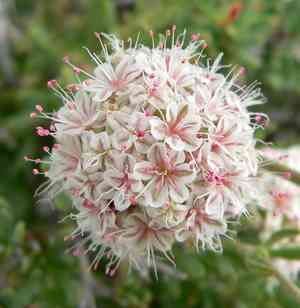
This arid-adapted bush showcases groupings of blossoms and slender, needle-like leaves. To effectively prune California buckwheat, remove faded blooms to encourage subsequent flowering and trim back elongated branches to preserve its structure. The ideal period for pruning is in late spring or early summer, following the primary flowering phase. Pruning at this juncture fosters more compact growth and deters a sparse appearance. It is crucial to refrain from severe cutting to safeguard the plant's inherent shape and well-being.
Advantages of Trimming California Buckwheat
Advantages of Trimming California Buckwheat
Trimming california buckwheat promotes robust development and helps maintain its desired form, leading to a more compact and visually appealing structure.
Optimal Period for Trimming California Buckwheat
Optimal Period for Trimming California Buckwheat
Trimming california buckwheat in late winter to early spring allows for the removal of any branches damaged by frost before new growth emerges. Pruning at this time encourages healthy development, as california buckwheat enters its active growth phase in spring and early summer. This timing avoids cutting during the summer flowering period and ensures the plant retains its natural shape and produces abundant blooms. Pruning too late in the season could result in the removal of developing flower buds, negatively impacting the plant's flowering potential.
Necessary Tools for Trimming California Buckwheat
Hand Pruners
Perfect for removing dead or damaged stems and for shaping california buckwheat, as they enable precise cuts without harming surrounding plant tissue.
Loppers
These offer increased leverage for cutting thicker stems that hand pruners cannot manage, useful for cutting back old growth on california buckwheat.
Pruning Saw
Beneficial for larger branches that are too thick for hand pruners and loppers to cut through.
Gloves
Protective gloves will help prevent any potential skin irritation from handling california buckwheat and also provide a better grip on the pruning tools.
Pruning Sealer
While not always essential, a pruning sealer can be used to cover large cuts to protect california buckwheat from diseases and pests.
How to Trim California Buckwheat
Clean Tools
Sanitize your pruning tools with isopropyl alcohol or a bleach solution to prevent the spread of disease to california buckwheat.
Cut Dead Stems
Identify and cut any dead stems at the base using sharp, clean pruning shears. Make the cut just above the ground level to promote healthy new growth for california buckwheat.
Prune Old Flowers
Trim off old flowers with bypass pruners to encourage further blooming and to maintain the visual appeal of california buckwheat. Cut back to the nearest set of leaves or branching point.
Shape Plant
Shape california buckwheat by selectively pruning overgrown or leggy branches. Aim for a natural mound shape that's typical for california buckwheat, being careful not to overprune as this can reduce resiliency and flowering.
Cleanup
Clean up and remove all pruning debris from around california buckwheat to discourage pests and diseases.
Common Trimming Errors with California Buckwheat
Over-trimming
Removing too much foliage or too many stems at once can shock california buckwheat and hinder its natural growth. It is important not to remove more than one-third of the plant in a single pruning session.
Incorrect Cutting Technique
Making cuts that are either too angled or too blunt can damage california buckwheat's stems, leading to poor healing and potential disease entry. Cuts should be clean and made at the appropriate angle to facilitate healing.
Trimming The Wrong Stems
Cutting healthy, flowering stems instead of older, non-flowering ones can reduce the california buckwheat's bloom potential. It's crucial to identify which stems need pruning for optimal health and blooming.
Ignoring Plant Structure
Failing to consider the natural shape and growth pattern of california buckwheat when pruning can result in an unnatural appearance and potentially harmful cuts that hinder the plant's structure and health.
Neglecting Tool Sanitation
Using dirty pruning tools can spread disease between plants. It is essential to clean and sterilize all pruning tools before and after working on california buckwheat.
General Trimming Advice for California Buckwheat
Selective Thinning
Remove selected branches and stems to improve air circulation and light penetration. This method encourages california buckwheat to develop a strong, healthy structure without drastically altering its natural form.
Cutting At the Nodes
Make cuts just above the nodes where leaves grow to ensure that california buckwheat heals quickly and to encourage new growth from those points.
Deadheading
Remove spent blooms to promote continued flowering and to keep california buckwheat looking tidy. This process allows the plant to focus its energy on new growth and flower production.
Renewal Pruning
To rejuvenate older california buckwheat plants, remove a few of the oldest stems at their base to encourage the growth of new stems. This helps to maintain the vitality and longevity of the plant.
Sanitary Measures
Dispose of all pruning debris to prevent the spread of pests and diseases. Keeping the area around california buckwheat clean is as important as the act of pruning itself.



