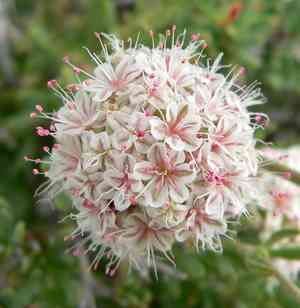
California buckwheat (Eriogonum fasciculatum)
Also known as: Yellow buckwheat
The primary source of honey in California is almond orchards. These trees require extensive pollination, and bees are brought in to facilitate this process, leading to substantial honey production.
In This Article
Attributes of California buckwheat
Lifespan
Perennial
Plant Type
Herb, Shrub
Plant Height
91 cm to 1.8 m
Spread
90 cm
Leaf Color
Green
Flower Size
2.5 cm
Flower Color
White Pink Green Cream Red Brown
Images of California buckwheat
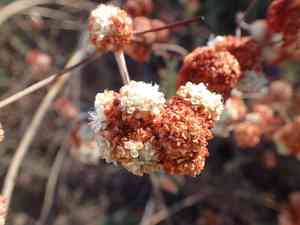
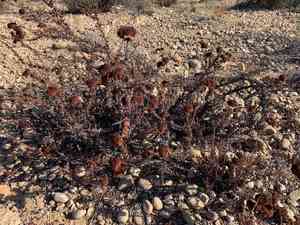
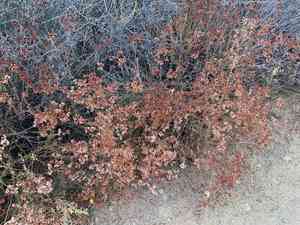
Quickly Identify California buckwheat
1
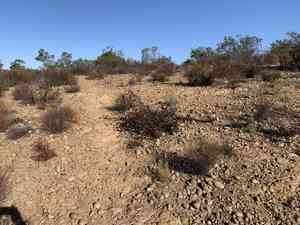
This plant can be identified by its dense, needle-like leaves and the flat-topped clusters of tiny flowers that turn rusty-brown as they age. It\'s often found in coastal and inland chaparral and desert habitats.
Scientific Classification of California buckwheat
Phylum
Vascular plants
Class
Dicotyledons
Order
Caryophyllales
Family
Buckwheat
Genus
Wild Buckwheat
Species
California buckwheat
Planting and Growing of California buckwheat
Care Difficulty
Easy
Watering Schedule
Every 2 days
Sunlight Requirements
Full sun
Sunshine Duration
6-10 hours
Ideal Temperature
60-75℉
Soil Type
Potting Mix, Peat Mix
Soil pH
6.5-7.5
Fertilizer Type
Balanced
Pruning Season
Spring, Summer
Pruning Area
Branches, Leaves
Pruning Frequency
2 times a year
Repotting Season
Spring
Pot Type
Plastic, Ceramic
 How to Water California buckwheat?
For Eriogonum fasciculatum, water deeply but infrequently to allow the soil to dry out between watering sessions. This is crucial to mimic its natural arid habitat. When you water, make sure the entire root zone is moist and not just the surface layer. Approximately 250 ml per water should suffice, but adjust based on the size of the plant and pot.
What are the symptoms of an underwatered California buckwheat?
›
What should I do if my California buckwheat is not getting enough water?
›
What are the symptoms of an overwatered California buckwheat?
›
How to save an overwatered California buckwheat?
›
 What Are the Sunlight Requirements for California buckwheat?
Eriogonum fasciculatum thrives best under full sunlight, which fosters healthy growth and increased flowering. Optimal light conditions enhance photosynthetic efficiency, resulting in a more resilient and attractive plant with vibrant blooms.
More About Sunlight Requirements Techniques→
What is the ideal light exposure for Eriogonum fasciculatum?
›
How to achieve ideal lighting for Eriogonum fasciculatum?
›
What are the benefits of ideal lighting for Eriogonum fasciculatum?
›
 What Is the Ideal Temperature Range for California buckwheat?
Eriogonum fasciculatum thrives best in a temperature range of 60 to 75°F. This range allows for proper metabolic activity and growth rate, ensuring the plant can photosynthesize efficiently and maintain healthy development. Temperatures within this range help the plant to maintain the ideal moisture levels in the soil and ambient air, necessary for nutrient absorption.
 What Soil is Best for California buckwheat?
Eriogonum fasciculatum thrives in well-drained soil. Proper drainage reduces the risk of root rot diseases and ensures healthy growth, enabling the plant to establish deep roots which are crucial for its survival in arid climates. This plant is adapted to grow in nutrient-poor soil conditions found in its native habitat. Limiting the nutrients minimizes the growth of competing weeds and emphasizes its natural ecological niche. Eriogonum fasciculatum benefits from soil that retains less moisture. Reduced soil moisture ensures lower humidity at the root level, preventing fungal infections and fostering a resilient plant structure.
 How to Fertilize California buckwheat?
For Eriogonum fasciculatum, use a balanced fertilizer with a ratio such as 10-10-10. For liquid fertilizers, dilute the solution to half strength to avoid over-fertilization. For solid fertilizers, distribute evenly around the base of the plant according to package instructions, ensuring not to exceed recommended quantities.
 How to Prune California buckwheat?
Although Eriogonum fasciculatum can be pruned year-round, the best time to do significant pruning is in early spring before new growth starts. This timing ensures the plant recovers quickly and grows healthily throughout the season. Regular trimming helps maintain the bushy, compact shape desired for Eriogonum fasciculatum. Focus on reducing length in overly long branches to foster more robust and balanced growth, which also enhances its floral display.
More About Pruning Techniques→
 How to Propagate California buckwheat plant?
1
Gather seeds from mature Eriogonum fasciculatum plants. Harvest them in late summer when the seed heads are dry. Store seeds in a cool, dry place until you're ready to plant.
2
Choose healthy stems for cuttings. Trim them to about 6 inches in length, ensuring at least one set of leaves is removed to expose nodes where roots will form.
3
For seeds, sow them directly into potting mix, covering lightly with soil. For cuttings, insert the cut end into the potting mix, ensuring it remains upright and stable.
 How to Repot California buckwheat plant?
1
Look for signs of Eriogonum fasciculatum being root-bound or when growth seems stagnated. Spring or early summer is ideal, as it promotes recovery and growth. Delay repotting if it's flowering, to avoid stress.
2
Select a pot slightly larger than its current one with good drainage holes. This ensures root expansion without water stagnation, which is crucial for the plant's well-being. Clay pots work well due to their porous nature.
3
Opt for a well-draining sandy soil mix. This choice mimics its natural arid habitat, helping to prevent root rot and ensuring the plant retains just enough moisture for optimal growth.
Learn More About California buckwheat Diseases
Anthracnose
Bacterial Leaf Spot
Bacterial Wilt
Black Spot
Chemical Injury
Crown Gall
Damping-off
Downy Mildew
Drought Stress
Fusarium Wilt
Gray Mold
Leaf Curl
Leaf Spot
Mosaic
Nutrient Deficiency
Nutrient Toxicity
Powdery Mildew
Root Rot
Root-knot Nematode
Rusts
Sooty Mold
Spider Mites
Temperature Stress
Thrips Damage
White Mold



