How to Propagate Lion's tail?
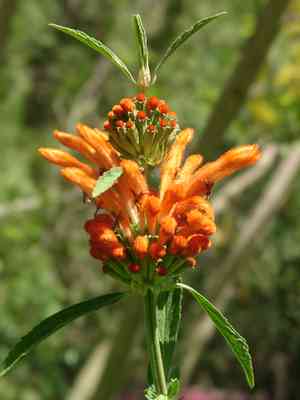
Lion's tail is most effectively multiplied via stem sections during the warmer periods of the year, specifically spring and summer. This propagation method is moderately straightforward, with new shoots and root development signaling successful establishment. Ensure the cuttings remain damp and are exposed to diffused light.
Optimal Period for Lion's Tail Propagation
Propagation Method
Cutting
Propagation Season
Spring, Summer
Tools Required for Lion's Tail Propagation
Sharp Pruning Shears
Utilized for obtaining clean, precise sections from lion's tail, sharp pruning shears minimize harm to the parent plant and create a neat cut which improves rooting potential. These should be sanitized prior to use to prevent disease spread.
Rooting hormone
Applied to the severed end of lion's tail cuttings to stimulate root development. Rooting hormone can significantly boost the likelihood of successful rooting by encouraging root cell formation.
Sterile Potting Mix
Offers a clean, pathogen-free environment for lion's tail cuttings to establish roots. The potting mix should be well-draining and light to ensure oxygen availability for the new roots.
Propagation Tray or Pots
Contain the soil and cuttings of lion's tail in a stable setting, promoting upright growth and simplifying the maintenance of consistent moisture levels during root development.
Clear Plastic Dome or Bags
Generates a mini greenhouse effect around lion's tail cuttings, maintaining high humidity levels which are vital for preventing the cuttings from drying out before roots can form.
Misting Bottle
Gently irrigates the cuttings of lion's tail without disturbing the soil or damaging the plant material. Regular misting helps keep the humidity elevated, aiding in preventing desiccation of the cutting.
Heat Mat (optional)
Provides a consistent warmth source and can accelerate root growth for lion's tail cuttings, particularly in colder climates or during winter months.
Pebble Tray (optional)
Creates additional humidity around lion's tail, which can be especially beneficial in dry indoor environments. Evaporation from the pebbles maintains moisture in the air surrounding the cuttings.
Labels and Markers
Labelling ensures accurate identification of lion's tail cuttings, particularly when propagating multiple varieties or species. This facilitates tracking progress and managing care routines.
How to Propagate Lion's Tail?
Propagation Method
Cutting
Difficulty Level
Easy
Caring for Your Newly Propagated Lion's Tail
Caring for Your Newly Propagated Lion's Tail
Once your lion's tail cutting has been successfully propagated and transplanted, provide it with appropriate care to ensure vigorous growth. Lion's tail thrives in full sun to partial shade and prefers well-draining soil. Water it moderately, allowing the soil to dry slightly between waterings. During the active growth period, fertilize your lion's tail with a balanced, slow-release feed to support healthy development. Remove spent flowers to encourage more blooms and prune the plant in late winter or early spring to promote bushier growth. Finally, be mindful of frost as lion's tail is sensitive to cold temperatures and may require protection or to be brought indoors if grown in pots in cooler climates.
Common Errors to Avoid When Propagating Lion's Tail
Overwatering cuttings
Maintaining excessively wet soil can cause the cuttings of lion's tail to rot before they have a chance to root. Excessive moisture fosters an environment conducive to fungi and other pathogens, ultimately hindering root development and potentially killing the cutting.
Taking cuttings from unhealthy plants
If a cutting is taken from a diseased or stressed part of lion's tail, it is less likely to root and develop into a healthy plant. This can also transmit disease to new plants, thereby reducing propagation success.
Cuttings too long or short
Cuttings that are excessively long may struggle to support themselves and fail to root, while those that are too short may lack sufficient nodes to initiate roots. An improper cutting length can lead to unsuccessful propagation.
Ignoring leaf placement
Leaves left on the lower part of the stem can rot when in contact with the soil, and too many leaves on the cutting of lion's tail can lead to excessive moisture loss. Proper leaf placement is crucial for the balance between respiration and root initiation.
Tips For Propagating Lion's Tail
Use healthy parent plants
Select cuttings from robust, disease-free parent plants to ensure the best chance of successful propagation. Healthy parent material contributes to the strength and vitality of lion's tail progeny.
Ideal cutting length
Cuttings should be of the optimal length, generally between 4 to 6 inches, with multiple nodes to increase the chances of rooting. Nodes are the points on the stem where roots are more likely to grow.
Proper soil medium
Use a well-draining, light soil mix to strike a balance between moisture and aeration for the cuttings. An optimal growing medium supports root growth without staying overly wet.
Correct stem orientation
Ensure that cuttings of lion's tail are planted with the correct orientation, as upside-down cuttings will not root properly. The end that was closest to the root zone on the parent plant should be put into the soil.



