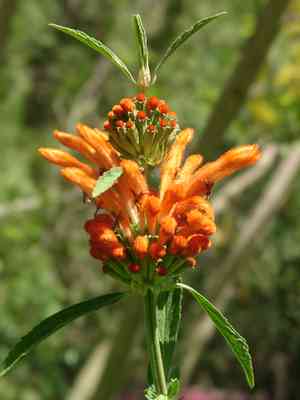
Lion's tail (Leonotis leonurus)
Also known as: Lion's ear, Minaret Flower
The Lion's Tail (Leonotis leonurus) is an evergreen shrub indigenous to southern Africa. Renowned for its striking orange blossoms, it thrives in hot, arid conditions and is grown globally. Its nectar is a magnet for hummingbirds, butterflies, and African sunbirds, whose beaks are perfectly adapted to access the curved flowers.
In This Article
Attributes of Lion's tail
Lifespan
Perennial
Plant Type
Herb
Plant Height
1.2 m to 2.5 m
Spread
1.2 m to 1.8 m
Leaf Color
Green
Flower Size
2 cm to 5 cm
Flower Color
Orange White
Images of Lion's tail
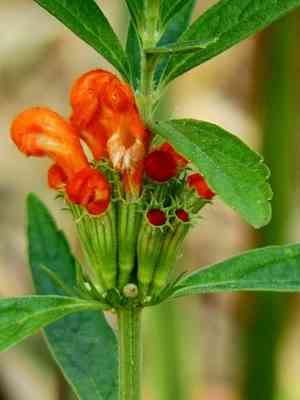
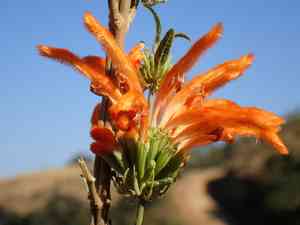
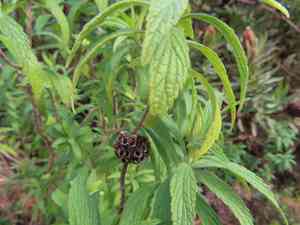
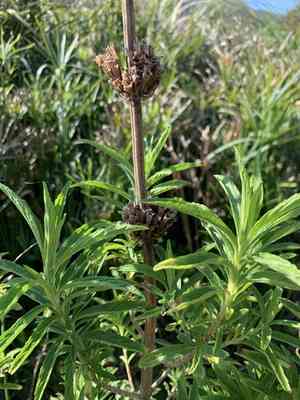
Quickly Identify Lion's tail
1
Erect shrub, 4-6 feet (1.2-1.8 meters) tall with herbaceous stems
2
Dark green lanceolate leaves, 4-6 inches (10-15 cm) long with serrated edges
3
Fuzzy, curved, tubular orange flowers in tiered whorls on upper stems
4
Orange tubular blooms, 1.5 inches (4 cm) long, with two-lipped structure
5
Distinctive vein pattern on smooth, dark green leaves for easy identification
Scientific Classification of Lion's tail
Phylum
Vascular plants
Class
Dicotyledons
Order
Lamiales
Family
Mint
Genus
Lion's ears
Species
Lion's tail
Planting and Growing of Lion's tail
Care Difficulty
Easy
Watering Schedule
Every 2 days
Sunlight Requirements
Full sun
Sunshine Duration
6-10 hours
Ideal Temperature
65-75℉
Soil Type
Potting Mix, Peat Mix
Soil pH
6.5-7.5
Fertilizer Type
Balanced
Pruning Season
Spring, Summer
Pruning Area
Branches, Leaves
Pruning Frequency
Once a year
Repotting Season
Spring
Pot Type
Plastic, Ceramic
 How to Water Lion's tail?
Water the Leonotis leonurus with around 500 milliliters each time. It is vital to moisten the soil thoroughly without leaving it soggy. Ensure the top 2-3 inches of soil are completely wet, then allow it to dry out slightly between waterings.
What are the symptoms of an underwatered Lion's tail?
›
What should I do if my Lion's tail is not getting enough water?
›
What are the symptoms of an overwatered Lion's tail?
›
How to save an overwatered Lion's tail?
›
 What Are the Sunlight Requirements for Lion's tail?
Leonotis leonurus thrives in full sun, and ideal light ensures maximum blooms, healthy foliage, and a strong, resilient structure that can withstand environmental stressors.
More About Sunlight Requirements Techniques→
How much sunlight does it need?
›
What is the best placement for ideal light?
›
How can you ensure optimal light conditions?
›
 What Is the Ideal Temperature Range for Lion's tail?
The ideal temperature range for Leonotis leonurus, also known as the Lion's Ear, is between 65°F to 75°F. This range allows the plant to thrive, promoting robust growth and vibrant blooms. Ensuring temperatures within this range helps the plant to maintain its health and vitality.
 What Soil is Best for Lion's tail?
Leonotis leonurus thrives in well-drained soils that prevent water from pooling around its roots, which could lead to rot. Ensuring good drainage helps the plant maintain healthy root systems and supports its robust growth. This plant benefits from soils that are moderately rich in organic matter, supplying essential nutrients that promote vigorous foliage and abundant flowering. The presence of organic material enhances the soil's fertility and contributes to the overall health of the plant. A soil with a lightweight structure, such as sandy or loam soils, allows for ease of root penetration, supporting deeper rooting and better access to moisture and nutrients. This enhances the plant's stability and resilience.
More About Soil→
 How to Fertilize Lion's tail?
Leonotis leonurus plants require a balanced approach to fertilization. During the growing season, use a water-soluble liquid fertilizer at half strength. This ensures that nutrients are available but not overwhelming, supporting healthy growth without risking nutrient burn.
More About Fertilizing Techniques→
 How to Prune Lion's tail?
Ensure your pruning shears or scissors are clean and sharp before starting. This helps make precise cuts and prevents the spread of diseases from plant to plant. If necessary, sterilize your tools with alcohol or a bleach solution. When pruning, it's crucial to make cuts just above a node or a set of leaves. This is where new growth will emerge. Identifying the right nodes ensures that your plant will grow back healthier and bushier. Make all cuts at a 45-degree angle to allow water to run off, reducing the chance of rot. This angle also encourages faster healing and prevents moisture accumulation, which can lead to disease.
More About Pruning Techniques→
 How to Propagate Lion's tail plant?
1
Choose disease-free, vigorous stems for cuttings or ripe seeds for propagation. This ensures that the new plants will have the best start.
2
Use a well-draining mix, such as a combination of potting soil and perlite, to promote healthy root growth in both seeds and cuttings.
3
Optionally, dip the cut end of a cutting into rooting hormone to enhance root growth and increase the success rate of propagation.
 How to Repot Lion's tail plant?
1
Leonotis leonurus requires repotting when you observe roots circling the pot's edge or growing out of drainage holes. These signs indicate that the plant is pot-bound and needs more space to thrive. Repotting during the growing season ensures that the plant quickly adapts to its new environment, allowing for robust development.
2
Select a pot that is one size larger than the current one and has good drainage. A terracotta pot works well as it allows airflow to the roots and prevents waterlogging. Opting for a pot with drainage holes ensures that excess water can escape, reducing the risk of root rot and keeping your plant healthier.
3
For Leonotis leonurus, use a well-draining loamy soil mix. This ensures proper air circulation around the roots and prevents water retention, which can lead to root rot. Including perlite or sand in the mix increases drainage, reducing excess moisture, beneficial for plants adapted to dry conditions.
Learn More About Lion's tail Diseases
Anthracnose
Bacterial Leaf Spot
Bacterial Soft Rot
Bacterial Wilt
Black Spot
Chemical Injury
Crown Gall
Damping-off
Downy Mildew
Drought Stress
Fusarium Wilt
Gray Mold
Leaf Curl
Leaf Spot
Mosaic
Nutrient Deficiency
Nutrient Toxicity
Powdery Mildew
Root Rot
Root-knot Nematode
Rusts
Sooty Mold
Spider Mites
Temperature Stress
Thrips Damage
White Mold



