How to Propagate Fan clubmoss?
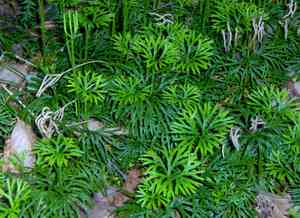
Fan clubmoss is most effectively multiplied in the Spring or Autumn seasons via separation and spore generation. Its propagation presents a moderate challenge. Observe emerging growth as an indicator of successful multiplication. Exercise caution during division to prevent harm.
Optimal Period for Fan Clubmoss Propagation
Propagation Method
Separation
Propagation Period
Spring,Autumn
Tools Required for Fan Clubmoss Propagation
Sterile sharp knife or scissors
These implements are crucial for severing the rhizomes of fan clubmoss during the division process. Sterilization prevents disease transmission, while sharpness ensures clean cuts, promoting better healing and minimizing tissue damage.
Spade or trowel
These instruments are employed to carefully extract fan clubmoss from the soil without causing excessive root disturbance. A spade is suitable for larger specimens, while a trowel is better for smaller or more delicate clumps.
Rooting hormone powder or gel
Rooting hormones can stimulate the development of roots on newly separated fan clubmoss sections. This improves the likelihood of successful establishment when the divisions are planted elsewhere.
Sterile potting mix
A well-draining and sterile potting medium offers an ideal environment for the divided fan clubmoss sections to develop new root systems. The sterile nature of the mix prevents disease and encourages robust growth.
Containers or pots
Divided fan clubmoss specimens need a place to be planted while they establish. Containers or pots should have adequate drainage and be large enough to accommodate the root system without overcrowding.
Watering can with a fine rose
For gently irrigating the newly planted fan clubmoss divisions, ensuring the plants are hydrated without disturbing the soil or nascent roots. The fine rose attachment helps distribute water evenly and softly.
Post-Propagation Care for Your Fan Clubmoss
Post-Propagation Care for Your Fan Clubmoss
Maintain consistent soil moisture without saturation, and shield fan clubmoss from direct afternoon sun. Limit fertilization, as fan clubmoss prefers nutrient-poor soils. Monitor for pests and diseases, though fan clubmoss has no significant issues. As a slow grower, fan clubmoss requires minimal upkeep once established.
Common Errors to Avoid When Propagating Fan Clubmoss
Overwatering
Excessive watering of fan clubmoss can lead to root rot and fungal infections because its natural habitat tends to be well-drained. Too much moisture can be detrimental to root health.
Incorrect soil type
Utilizing a soil medium that doesn't mimic fan clubmoss's native woodland floor, which is rich in organic matter and well-drained, can result in poor growth and root development.
Direct sunlight exposure
Fan clubmoss is accustomed to shaded environments; when exposed to direct sunlight, the plant may experience leaf scorch or dehydration.
Overlooking the importance of high humidity
Fan clubmoss thrives in high humidity environments, and not providing such conditions may reduce the plantâs vitality and ability to propagate.
Neglecting to divide properly
Improper division of fan clubmoss's underground rhizomes can damage the plant. This mistake can inhibit or prevent successful propagation.
Advice for Propagating Fan Clubmoss
Maintaining moisture balance
Ensure the soil is moist but well-drained to prevent root rot while providing adequate water for fan clubmoss's growth.
Soil composition
Use a rich, organic, and well-aerated soil mix to best replicate fan clubmoss's natural environment and support healthy root systems.
Shade provision
Protect fan clubmoss from direct sunlight by providing appropriate shade, which simulates its preferred natural habitat and prevents desiccation.
Create humid conditions
Increase humidity around fan clubmoss through methods such as misting, which assists in mimicking the plant's natural humidity levels and improves propagation success.
Careful rhizome division
Divide fan clubmoss's rhizomes gently and with precision to ensure each section has sufficient roots and shoots for successful propagation.



