How to Propagate Bunchberry dogwood?
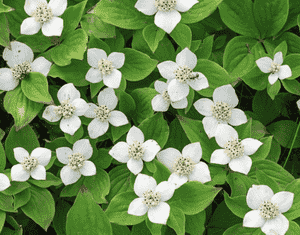
Cornus canadensis reproduces most effectively in the Spring via seeding. Its propagation presents a moderate level of challenge. Indicators of successful propagation encompass the emergence of foliage and the development of new shoots. Guarantee appropriate environmental factors and adequately draining substrate for peak development.
Optimal Period for Bunchberry Dogwood Propagation
Propagation Method
Seeding
Propagation Season
Spring
Tools Required for Bunchberry Dogwood Propagation
Seed tray
A shallow, sectioned container providing an ideal environment for seed germination. These trays maintain essential humidity and warmth for bunchberry dogwood seed sprouting.
Peat pots
Biodegradable containers that prevent transplant shock. Bunchberry dogwood seeds can be sown directly into these, then planted into the soil, minimizing root disturbance.
Misting bottle
A device that gently waters seeds without dislodging them. Proper moisture is vital for bunchberry dogwood seed germination, and a misting bottle ensures soft, even water distribution.
Perlite or vermiculite
Sterile, inorganic materials that help aerate the seed-starting mix, providing necessary air space for bunchberry dogwood's roots to properly develop.
Heat mat
An under-tray heating device that maintains consistent soil temperature, beneficial for bunchberry dogwood seeds needing a warm environment to begin germination.
Grow lights
These lights offer a sunlight-like spectrum and are useful if natural light is insufficient, ensuring bunchberry dogwood seedlings receive adequate light for healthy development.
How to Propagate Bunchberry Dogwood
Propagation Type
Sowing
Difficulty Level
Easy
Caring for Your Newly Propagated Bunchberry Dogwood
How to Care for Your Newly Propagated Bunchberry Dogwood?
After propagation, bunchberry dogwood should be placed in partial to full shade in well-drained, cool, acidic to neutral soil rich in organic matter. Consistent watering is crucial, especially during dry spells, to keep the soil uniformly moist. A layer of mulch will help retain soil moisture and regulate temperature. Fertilize in early spring with a balanced fertilizer for acid-loving plants, and prune to shape or remove damaged branches as needed. Bunchberry dogwood may spread via rhizomes, forming a ground cover; if desired, manage its spread by root pruning or installing barriers.
Common Errors to Avoid When Propagating Bunchberry Dogwood
Excessive watering
Overwatering is a frequent error when propagating bunchberry dogwood. It can lead to root rot, a condition where roots decay due to too much moisture, impairing the plant's nutrient absorption and increasing disease susceptibility.
Insufficient soil preparation
Propagating bunchberry dogwood without proper soil preparation can be harmful. Bunchberry dogwood prefers well-drained soil rich in organic matter. Neglecting soil preparation can result in poor root development and restrict plant growth.
Ignoring soil ph
Bunchberry dogwood thrives in acidic soil with a pH between 4.5 and 6. If this pH range is not maintained, bunchberry dogwood may struggle to absorb soil nutrients, leading to poor growth and vitality.
Incorrect planting depth
Planting bunchberry dogwood too deep or too shallow can negatively impact root development. Roots may not get enough oxygen if planted too deep, or they may dry out too quickly if planted too shallow, hindering the plant's growth.
Overcrowding
Placing bunchberry dogwood seeds or cuttings too close together can cause competition for light, nutrients, and air circulation. This can result in weaker plants more susceptible to disease and pest infestation.
Tips For Propagating Bunchberry Dogwood
Humidity control
Maintaining proper humidity levels is vital for bunchberry dogwood cuttings during propagation. A humidity dome or plastic wrap can create a microclimate that retains moisture and encourages rooting without waterlogging the soil.
Use of rooting hormones
Applying rooting hormones to bunchberry dogwood cuttings can stimulate root development and enhance propagation success. This is particularly important given bunchberry dogwood's modest root system.
Cold stratification
Bunchberry dogwood seeds often require cold stratification, simulating winter conditions to break dormancy and promote germination. This is achieved by storing seeds in cold, moist conditions for a period before sowing.
Gentle handling of roots
When transplanting or dividing bunchberry dogwood, it's crucial to handle roots gently to prevent damage. The fine roots are essential for water and nutrient uptake, and rough handling can impair the plant's ability to establish in a new location.
Adequate air circulation
Proper air circulation around bunchberry dogwood is essential to reduce the risk of fungal diseases during propagation. Ensuring sufficient space between each plant or cutting will help keep foliage dry and disease-free.



