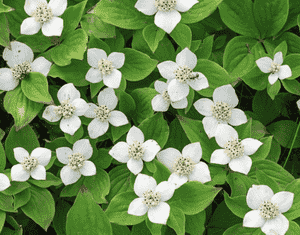
Bunchberry dogwood (Cornus canadensis)
Also known as: Canadian bunchberry, Canadian dwarf cornel, Quatre-temps, Pudding berries
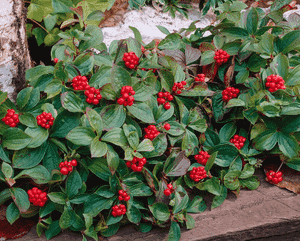
Bunchberry dogwood (Cornus canadensis) is a low-growing perennial that spreads via underground rhizomes. The flowers of this plant typically bloom in the spring, and are succeeded by red berries in the summer. Bunchberry dogwood is known to attract various wildlife, including birds and deer, and is often used in garden landscaping.
In This Article
Attributes of Bunchberry dogwood
Lifespan
Perennial
Plant Type
Herb
Plant Height
15 cm to 30 cm
Spread
15 cm to 30 cm
Leaf Color
Green
Flower Size
2.5 cm
Flower Color
White Green
Images of Bunchberry dogwood
Quickly Identify Bunchberry dogwood
1
Distinctive inflorescence: tiny greenish cluster of flowers surrounded by four petal-like white bracts.
2
Bright red berries in late summer offer striking visual contrast against foliage.
3
Oval, glossy leaves with prominent vein patterns located near stem tops.
4
Smooth, slender stems with green to reddish-brown color and minimal branching.
5
Scentless flowers in late spring to early summer bloom in an umbel arrangement.
Scientific Classification of Bunchberry dogwood
Phylum
Vascular plants
Class
Dicotyledons
Order
Cornales
Family
Dogwood
Genus
Dogwoods
Species
Bunchberry dogwood
Planting and Growing of Bunchberry dogwood
Care Difficulty
Hard
Watering Schedule
Every 4 days
Sunlight Requirements
Partial sun
Sunshine Duration
6-10 hours
Ideal Temperature
60-75℉
Soil Type
Potting Mix, Peat Mix
Soil pH
4-5.5
Fertilizer Type
Balanced
Pruning Season
Spring, Summer
Pruning Area
Branches, Leaves
Pruning Frequency
2 times a year
Repotting Season
Spring
Pot Type
Plastic, Ceramic
 How to Water Bunchberry dogwood?
Cornus canadensis prefers even and consistent moisture levels. Water it until the soil feels moist but not soggy, which usually requires about 500 milliliters of water per session depending on the soil's drainage capacity. The key is to thoroughly moisten the root zone without drowning the roots.
What are the symptoms of an underwatered Bunchberry dogwood?
›
What should I do if my Bunchberry dogwood is not getting enough water?
›
What are the symptoms of an overwatered Bunchberry dogwood?
›
How to save an overwatered Bunchberry dogwood?
›
 What Are the Sunlight Requirements for Bunchberry dogwood?
Cornus canadensis thrives in partial shade to full shade, benefiting from filtered light. Ideal lighting ensures vibrant foliage, consistent growth, and robust resistance to environmental stressors.
More About Sunlight Requirements Techniques→
Optimal Location for Light
›
Proper Seasonal Adjustments
›
Light Quality and Beneficial Effects
›
 What Is the Ideal Temperature Range for Bunchberry dogwood?
For Cornus canadensis, the ideal temperature range for growth is between 60°F and 75°F. This range supports optimal physiological processes such as photosynthesis and respiration, ensuring robust development and vibrant foliage. Maintaining this temperature range helps the plant thrive and resist pests and diseases.
 What Soil is Best for Bunchberry dogwood?
Cornus canadensis thrives in soils that retain moisture well without becoming waterlogged. Ensuring a consistent level of moisture helps support its lush growth and vibrant foliage, providing the conditions similar to its native woodland habitats. This plant benefits from a nutrient-rich substrate that supplies it with essential minerals. Adding organic matter like compost can enhance the soil's fertility, promoting healthy root development and robust flowering. Well-draining soil is crucial for Cornus canadensis to prevent root rot. Good drainage ensures excess water doesn’t linger around the roots, maintaining the plant's health and reducing the risk of fungal diseases.
More About Soil→
 How to Fertilize Bunchberry dogwood?
For Cornus canadensis, it's crucial to use a balanced fertilizer, specifically 10-10-10 NPK, at a concentration of 1 tablespoon per gallon of water for liquid application. This ensures even nutrient distribution without overwhelming the plant's roots.
More About Fertilizing Techniques→
 How to Prune Bunchberry dogwood?
Begin by observing your Cornus canadensis for any branches that appear dead, damaged, or diseased. These should be your primary targets for removal. Carefully use clean, sharp pruning shears to cut these branches back to the base, which will promote the overall health of the plant. To maintain good air circulation and sun exposure, thin out the center of the bunchberry plant if it appears too dense. This helps in reducing the risk of fungal diseases, and encourages better flowering. Be cautious to only remove a few stems to avoid over-pruning. After dealing with necessary cuts, you can slightly shape the plant for aesthetic purposes. Keep in mind its natural form as a ground cover and avoid making drastic changes. Light shaping helps keep the plant tidy and can promote a fuller, more lush appearance.
More About Pruning Techniques→
 How to Propagate Bunchberry dogwood plant?
1
Begin by choosing a well-draining soil mix, rich in organic matter. This will provide the necessary nutrients and proper drainage for root development.
2
When using cuttings or divisions, select robust and disease-free sections of the plant to ensure vigorous growth and reduce risk of disease transmission.
3
Insert the cuttings or divisions into the soil at an appropriate depth, ensure they are upright and stable to promote proper root system establishment.
 How to Repot Bunchberry dogwood plant?
1
Look for signs like roots growing out of the drainage holes or soil that dries out too fast. These indicate it's time for a Cornus canadensis repot. Choose either spring or autumn for the process, while the plant is not in its vigorous growth phase to minimize stress and boost recovery.
2
Select a pot just one size larger than the current one. Opt for one with ample drainage holes to prevent water logging, which is crucial since Cornus canadensis thrives in moist environments but doesn't like soggy roots. A pot too large can hold excessive moisture, risking root rot.
3
Go for an acid-loving plant mix with excellent drainage. This helps maintain the necessary soil acidity Cornus canadensis prefers while ensuring roots are neither waterlogged nor dry, encouraging robust growth and vibrant foliage display.



