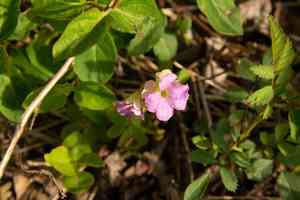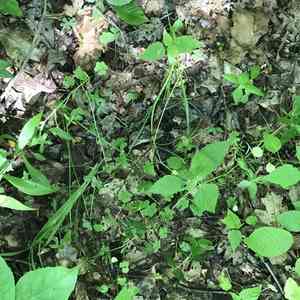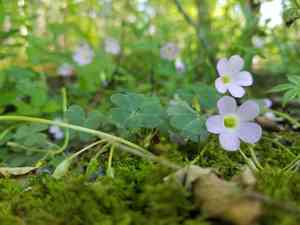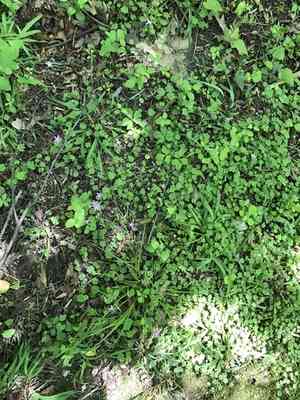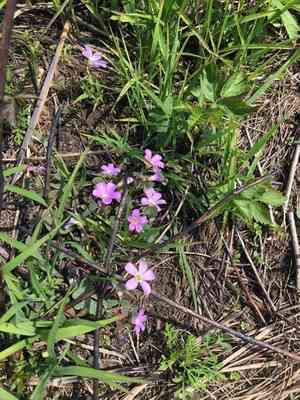
Violet woodsorrel(Oxalis violacea)

Violet woodsorrel (Oxalis violacea)

Also known as: Violet wood-sorrel

Oxalis violacea, found widely across the United States, grows from an underground bulb. Its leaf stems generally reach 6 to 13 cm in height, with flower clusters that can extend from 9 to 23 cm tall. The plant resembles a shamrock, featuring lavender to white flowers that bloom in the spring.

Attributes of Violet woodsorrel

Lifespan
Perennial
Plant Type
Herb
Plant Height
15 cm to 23 cm
Spread
15 cm to 25 cm
Leaf Color
Yellow Gold Purple Lavender
Flower Size
2.5 cm to 5 cm
Flower Color
Pink Purple

ForwardPlant - Identify plants with a snap

Identify and diagnose plants, get toxicity alerts, and explore safety guides for all types of fungi.

Try for Free

Images of Violet woodsorrel

Violet woodsorrel(Oxalis violacea)

Quickly Identify Violet woodsorrel

1
Violet flowers with 5 heart-shaped petals, 0.4-0.8 inches (1-2 cm) in diameter.
2
Compound leaves resembling clover, with 3 heart-shaped leaflets, exhibiting a deep green hue with hints of purple.
3
Distinctive rose-purple flowers with flaring star-like shape and green sepals with orange tips.
4
Long-stalked leaves with 3 inversely heart-shaped leaflets, measuring 1.5-2 inches (4-5 cm) in length.
5
Unique color contrast of green upper side and reddish or purplish underside of leaves.

Scientific Classification of Violet woodsorrel

Phylum
Vascular plants
Class
Dicotyledons
Order
Oxalidales
Family
Wood sorrel
Genus
Wood sorrels
Species
Violet woodsorrel

Planting and Growing of Violet woodsorrel

Care Difficulty
Easy
Watering Schedule
Every 6 days
Sunlight Requirements
Partial sun
Sunshine Duration
6-12 hours
Ideal Temperature
70-75℉
Soil Type
Potting Mix, Peat Mix
Soil pH
6.5-7.5
Fertilizer Type
Balanced
Pruning Season
Spring, Summer
Pruning Area
Branches, Leaves
Pruning Frequency
2 times a year
Repotting Season
Spring
Pot Type
Plastic, Terracotta

water icon How to Water Violet woodsorrel?

Oxalis violacea requires a moderate watering approach. Approximately 250 milliliters per watering is ideal, ensuring the soil is thoroughly moist, not waterlogged. Aim to maintain a consistent moisture level in the soil without letting it dry out completely in between waterings.
What are the symptoms of an underwatered Violet woodsorrel?
What should I do if my Violet woodsorrel is not getting enough water?
What are the symptoms of an overwatered Violet woodsorrel?
How to save an overwatered Violet woodsorrel?

sunlight icon What Are the Sunlight Requirements for Violet woodsorrel?

Sunlight Requirements: Partial sun, Full sun
Duration of light: 4 to 6 hours daily
Oxalis violacea ideally thrives in conditions that offer partial to full sun exposure. Providing this light range ensures robust growth and vibrant blooms. The right amount of light encourages active photosynthesis, enhancing coloration and resilience against pests.
What type of sunlight does Oxalis violacea prefer?
How can I achieve the ideal lighting conditions for my Oxalis violacea?
What are the benefits of providing ideal lighting to Oxalis violacea?
More About Sunlight Requirements Techniques

temperature icon What Is the Ideal Temperature Range for Violet woodsorrel?

Ideal Temperature: 70 ~ 75℉
The ideal temperature range for growing Oxalis violacea is between 70°F and 75°F. Within this range, the plant can thrive, as these conditions mimic its native growing environment. Maintaining this range helps ensure optimal growth and flowering.

soil icon What Soil is Best for Violet woodsorrel?

Soil type: Sandy loam, Loam, Calcareous soil
Soil PH: 6.5 ~ 7.5
Oxalis violacea thrives in well-draining soils, which allows excess water to escape and prevents root rot. This enables the plant to take in nutrients efficiently, promoting healthy growth and vibrant blooms. These plants prefer moderately fertile soil that provides a balanced nutrient supply without overwhelming the roots. This setting encourages steady growth and flower production, enhancing the ornamental value of the plant. Oxalis violacea requires soil that retains some moisture while still being well-draining. This balance ensures that the roots are neither too dry nor too waterlogged, providing optimal growing conditions.

fertilize icon How to Fertilize Violet woodsorrel?

Fertilizer type: Balanced
For Oxalis violacea, a balanced 10-10-10 or 20-20-20 liquid fertilizer is recommended. Use approximately half the recommended strength on the packaging, as this plant is sensitive to over-fertilization. Typically, a dilution to half or a quarter of the recommended amount is sufficient.

prune icon How to Prune Violet woodsorrel?

Pruning Time: Spring, Summer
Begin by examining the plant for any dead, brown, or decaying leaves. These parts should be removed first to encourage healthier growth and prevent the spread of disease. To maintain a desirable shape, trim back any overgrown stems. This not only keeps the plant aesthetically pleasing but also ensures that it doesn't overshadow its neighbors in the garden. Ensure that there's sufficient space between the stems for air to circulate, reducing the risk of fungal infections. Trim any crowded areas for improved airflow. After pruning, collect all clippings and dispose of them away from other plants. This prevents any potential diseases from spreading and keeps your garden tidy. More About Pruning Techniques

propagate icon How to Propagate Violet woodsorrel plant?

Propagate Time: Spring, Early spring
1
Choose a well-draining potting mix or prepare garden soil enriched with organic matter. Loosen the soil to improve aeration, which will create a hospitable environment for the seeds or bulbs of Oxalis violacea.
2
Plant the seeds at a shallow depth, approximately 1/4 inch below soil surface. Ensure they are spaced adequately to prevent overcrowding, which might hinder seedling growth and result in weak plants.
3
Water the seeds gently but thoroughly. It's essential to maintain soil moisture but avoid waterlogging, which can lead to seed rot and prevent successful germination.
More About Propagating Techniques

repot icon How to Repot Violet woodsorrel plant?

Repotting frequency: Every 2 years
1
Oxalis violacea thrives best with occasional repotting. You'll know it’s time to repot when you observe roots spiraling around the pot base or protruding from the drainage holes. Additionally, if the soil drains too quickly or the plant appears crowded, these are strong indicators that repotting is necessary.
2
Selecting the right pot for Oxalis violacea is crucial. Opt for one that is slightly larger than the previous container, providing room for root expansion. A pot with ample drainage holes is essential to prevent waterlogging, which can lead to root rot. The ideal pot should enhance the plant's health by promoting optimal air flow and moisture management.
3
Opting for a well-draining, sandy mixture will mimic Oxalis violacea's natural environment, ensuring that water retention is balanced. Such soil prevents water from sitting around the roots, thus averting rot and promoting healthy growth. A soil blend that incorporates organic material aids in nutrient availability, boosting the plant’s vitality.

ForwardPlant - Identify plants with a snap

Find the best spots for them to optimize their health, simply using your phone.

Try for Free

Toxicity of Violet woodsorrel

Is Violet woodsorrel toxic to cat?

Violet woodsorrel is harmful to cats and can represent a serious health threat if ingested. Felines may unintentionally consume the plant, placing them at risk. Every part of violet woodsorrel, such as leaves, flowers, fruits, roots, seeds, stems, bark, and sap, contains toxic substances. Should a cat ingest this plant, signs of discomfort or illness may manifest. It is crucial for cat owners to keep a vigilant eye on their pets and seek urgent veterinary attention at the first indication of possible poisoning to guarantee timely and suitable care.

Is Violet woodsorrel toxic to dog?

Violet woodsorrel is recognized as toxic to dogs. Canines may inadvertently consume various parts of the plant, including leaves, flowers, fruits, roots, seeds, stems, or sap/juice. Upon ingestion of violet woodsorrel, a dog may display symptoms such as gastrointestinal distress, lethargy, or potentially more severe reactions influenced by the quantity consumed. It is essential for dog owners to observe their pets closely and restrict their access to violet woodsorrel. Should a dog ingest any part of violet woodsorrel, it is vital to seek prompt veterinary attention to secure the best possible outcome for the pet.

Identify toxic plants for your safety

Learn which plants are harmful to you and your pets, and make informed choices for a safer home!

Try for Free
WARNING
The judgment on toxicity and danger is for reference only. We DO NOT GUARANTEE any accuracy of such judgment. Therefore, you SHALL NOT rely on such judgment. It is IMPORTANT TO SEEK PROFESSIONAL ADVICE in advance when necessary.
More About Toxic Techniques