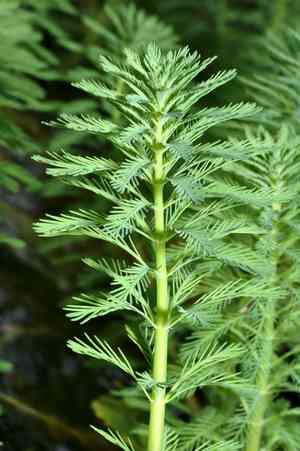
Parrot's feather (Myriophyllum aquaticum)
Also known as: Water-Feather, Parrot feather watermilfoil
Parrot's feather (*Myriophyllum aquaticum*) is a perennial aquatic plant named for its feather-like leaves. It originates from the Amazon River basin in South America. Over time, it has been introduced to continents worldwide, excluding Antarctica. In North America, it was brought in during the 19th century, with initial reports in the United States dating back to the 1890s.
In This Article
Attributes of Parrot's feather
Lifespan
Perennial, Annual
Plant Type
Herb
Plant Height
8 cm to 15 cm
Spread
3 m
Leaf Color
Green Blue
Flower Size
2.5 cm
Flower Color
White Pink Green
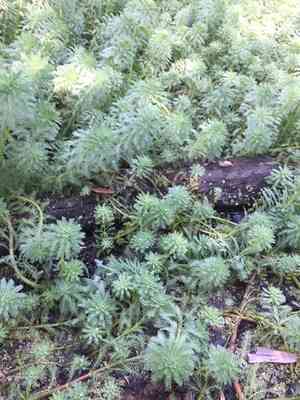
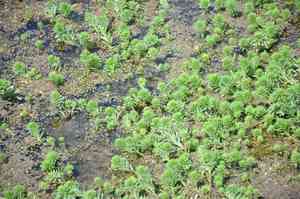
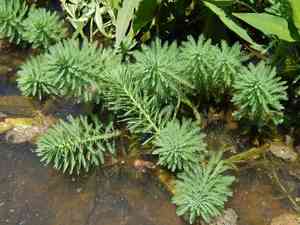
Images of Parrot's feather
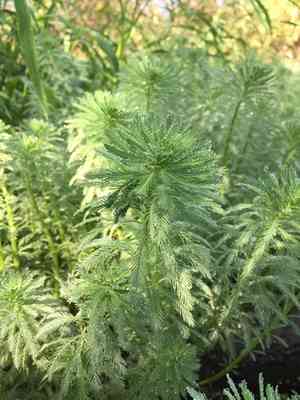
Quickly Identify Parrot's feather
1
Long stems ranging from 1 to 5 feet (30 to 150 cm), gracefully curving above water.
2
Delicate, blue-green leaves in whorls, fine-textured and feather-like, thriving in sunny and shaded areas.
3
Small, white flowers hidden within emergent leaves, measuring 0.1 inches (2-3 mm) in diameter.
4
Distinct leaf types: bright green, lobed submersed leaves and dark blue-green, less lobed emergent leaves.
5
Tough, reddish-green stems with whorled branches, reaching up to 2 feet (60 cm) in length.
Scientific Classification of Parrot's feather
Phylum
Vascular plants
Class
Dicotyledons
Order
Saxifragales
Family
Water milfoil
Genus
Myriophyllum
Species
Parrot's feather
Planting and Growing of Parrot's feather
Care Difficulty
Easy
Watering Schedule
Every 8 days
Sunlight Requirements
Full sun
Sunshine Duration
6-10 hours
Ideal Temperature
68-77℉
Soil Type
Potting Mix, Peat Mix
Soil pH
6-8
Fertilizer Type
Balanced
Pruning Season
Spring, Summer
Pruning Area
Branches, Leaves
Pruning Frequency
2 times a year
Repotting Season
Spring
Pot Type
Plastic, Ceramic
 How to Water Parrot's feather?
For Myriophyllum aquaticum, it’s essential to maintain a consistently moist environment without allowing the soil to dry out completely. The plant thrives in water-saturated conditions, so aim to keep the substrate wet, but avoid stagnation.
What are the symptoms of an underwatered Parrot's feather?
›
What should I do if my Parrot's feather is not getting enough water?
›
What are the symptoms of an overwatered Parrot's feather?
›
How to save an overwatered Parrot's feather?
›
 What Are the Sunlight Requirements for Parrot's feather?
Myriophyllum aquaticum benefits from a light range of full to partial sunlight. Adequate exposure ensures photosynthesis efficiency, resulting in vibrant and healthy foliage with optimal growth.
More About Sunlight Requirements Techniques→
What is the ideal light for Myriophyllum aquaticum?
›
How to position the plant for optimal lighting?
›
Benefits of providing ideal lighting?
›
 What Is the Ideal Temperature Range for Parrot's feather?
Myriophyllum aquaticum thrives best at temperatures ranging from 68 to 77°F. This temperature range ensures that the plant's metabolic processes function optimally, supporting healthy growth and foliage. Maintaining these temperatures can prevent stress and promote vibrant plant development.
 What Soil is Best for Parrot's feather?
Myriophyllum aquaticum thrives in soils that can effectively retain moisture. A soil with good moisture retention ensures that the plant has continuous access to the water it needs, promoting robust growth and vibrant foliage. This aquatic plant requires a nutrient-rich substrate. Loamy soils, full of organic matter, offer the essential nutrients that Myriophyllum aquaticum uses to thrive, leading to healthy stems and leaves. Proper aeration in the soil is crucial for the roots of Myriophyllum aquaticum to breathe and access nutrients efficiently. Well-aerated soil prevents root rot and supports vigorous plant growth.
 How to Fertilize Parrot's feather?
Myriophyllum aquaticum benefits from regular, balanced fertilization, provided in moderate amounts. Using liquid fertilizer, apply 5 ml per liter of water bi-weekly. For slow-release pellets, distribute 2 grams per square meter at three key intervals throughout the year.
 How to Prune Parrot's feather?
Begin by inspecting the plant for any dead or discolored stems, which should be removed first to prevent disease spread or decay. 2. Use sharp, clean pruning shears to trim back up to a third of the plant, focusing on areas that appear overly dense. 3. When cutting, make sure to do so just above a node or leaf to promote bushier growth. 4. Regular trimming below the water line ensures that the plant does not block sunlight or compete excessively for nutrients within aquariums or ponds.
More About Pruning Techniques→
 How to Propagate Parrot's feather plant?
1
Choose a healthy and mature Myriophyllum aquaticum plant with strong and green stems for propagation. A robust mother plant will provide more viable cuttings and divisions.
2
Use sharp scissors to take stem cuttings about 10-15 cm long. For division, gently separate a section of the plant ensuring it includes both stems and roots.
3
Place the cuttings or divisions into aquatic soil or water. Keep the leaves above the water line to prevent rot while ensuring stems have adequate contact with the rooting medium.
 How to Repot Parrot's feather plant?
1
Parrot's Feather exhibits certain signs that indicate it's time for repotting. Notice when roots begin to curl around the edges of the pot or shoot through drainage holes, it’s a signal! Additionally, if water seems to take too long to drain or the plant appears to outgrow its space, these are all green lights for a new pot.
2
When selecting a new container for Parrot's Feather, opt for pots that offer exceptional drainage. This ensures excess moisture escapes, preventing waterlogging—a common issue with aquatic plants. The pot should be wide enough to allow the expansive growth habit and at least one inch larger than the current one. The material isn't crucial, yet lightweight and durable options like plastic or fiberglass can be ideal for easy maneuvering.
3
For Myriophyllum aquaticum, an aquatic substrate rich in nutrients is essential. Look for substrates specifically designed for water plants that allow roots to secure themselves and provide the necessary minerals for vigorous growth. These substrates ensure the plant remains buoyant while being kept adequately nourished.



