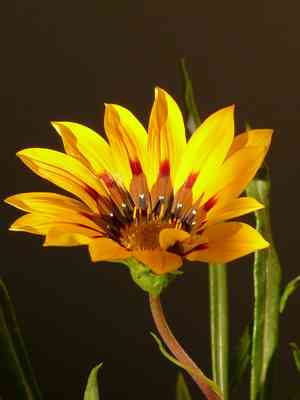
Flaming sword bromeliad (Lutheria splendens)
Also known as: Splendid Lutheria, Shining Lutheria
The flaming sword bromeliad (*Lutheria splendens*) is named for its dramatic, brilliant red-orange spike that looks like a fiery sword. It is an epiphyte bromeliad plant, which means it’s an air plant that grows on trees and rocks. The bromeliads are rooted to their host, but don’t receive any nutritional sustenance from it.
In This Article
Attributes of Flaming sword bromeliad
Lifespan
Perennial
Plant Type
Herb
Plant Height
76 cm to 91 cm
Spread
25 cm
Leaf Color
Green Brown Variegated Silver
Flower Size
2.5 cm
Flower Color
Yellow Red Green
Images of Flaming sword bromeliad
Quickly Identify Flaming sword bromeliad
1
Recognize Lutheria splendens by its brightly colored, glossy leaves which often have a metallic sheen. Look for its distinctive, symmetrical leaf patterns and occasional small flowers.
Scientific Classification of Flaming sword bromeliad
Phylum
Vascular plants
Class
Monocotyledons
Order
Lamiales
Family
Bromeliad
Genus
Lutheria
Species
Flaming sword bromeliad
Planting and Growing of Flaming sword bromeliad
Care Difficulty
Easy
Watering Schedule
Every 2 days
Sunlight Requirements
Partial sun
Sunshine Duration
4-8 hours
Ideal Temperature
65-75℉
Soil Type
Potting Mix, Peat Mix
Soil pH
6.5-7.5
Fertilizer Type
Balanced
Pruning Season
Spring, Summer
Pruning Area
Branches, Leaves
Pruning Frequency
Once a year
Repotting Season
Spring
Pot Type
Plastic, Ceramic
 How to Water Flaming sword bromeliad?
Lutheria splendens thrives best when watered adequately to keep the soil consistently moist but not soggy. It is advisable to water until the topsoil is thoroughly moistened, but be sure to avoid pooling water at the base.
More About Watering Techniques→
What are the symptoms of an underwatered Flaming sword bromeliad?
›
What should I do if my Flaming sword bromeliad is not getting enough water?
›
What are the symptoms of an overwatered Flaming sword bromeliad?
›
How to save an overwatered Flaming sword bromeliad?
›
 What Are the Sunlight Requirements for Flaming sword bromeliad?
Partial sun conditions, involving exposure to morning or late afternoon light, are ideal for Lutheria splendens. This lighting condition supports optimal growth and prevents leaf damage, ensuring the plant maintains health and vibrant foliage.
More About Sunlight Requirements Techniques→
What is the best lighting condition for Lutheria splendens?
›
How can you achieve the ideal lighting condition?
›
What are the benefits of ideal lighting for Lutheria splendens?
›
 What Is the Ideal Temperature Range for Flaming sword bromeliad?
For optimal growth, Lutheria splendens should be kept between 65°F and 75°F. This range ensures the plant experiences stable, warm conditions that support photosynthesis and healthy metabolism. Maintaining this range helps the plant to thrive and produce vibrant foliage.
 What Soil is Best for Flaming sword bromeliad?
Lutheria splendens thrives best in well-draining soil, which helps prevent waterlogging that can lead to root rot. Ensuring proper drainage can significantly enhance the plant's health by maintaining a balanced moisture level. This plant requires nutrient-rich soil to support its growth and bright foliage. Feeding the soil with organic matter or balanced fertilizers can lead to more robust and vibrant growth, making it a stunning focal point. Lutheria splendens benefits from soil that retains moderate moisture. This characteristic ensures the plant has consistent access to water without becoming oversaturated, fostering a strong root system.
More About Soil→
 How to Fertilize Flaming sword bromeliad?
For Lutheria splendens, an optimal fertilization strategy involves using a balanced liquid fertilizer with an NPK ratio of 10-10-10. During the growing season, apply approximately 1/2 teaspoon per gallon of water, ensuring even distribution across the soil surface. Adjust quantities based on pot size and plant response to prevent nutrient imbalances.
More About Fertilizing Techniques→
 How to Prune Flaming sword bromeliad?
Begin by identifying and removing any dead or damaged leaves. Such leaves can often harbor pests or diseases, and their removal encourages more robust growth. Gently trim these areas close to the base, taking care to use clean, sharp cuts. Gradually shape Lutheria splendens to enhance its natural form. Cut back overgrown branches to encourage fuller foliage. Shape the plant by following its natural lines to support a desirable structure while promoting air circulation between the leaves.
More About Pruning Techniques→
 How to Propagate Flaming sword bromeliad plant?
1
Select healthy stems from the parent plant, preferably those without flowers. Use sharp, sterilized shears to cut them, ensuring each cutting is 4-6 inches long.
2
Dip the cut ends of the stems into a rooting hormone to encourage root growth. Tap off any excess hormone powder before planting the cuttings.
3
Insert the prepared cuttings into a pot filled with a moist, well-draining soil mix. Ensure the cuttings are planted deep enough to stand upright and water lightly.
 How to Repot Flaming sword bromeliad plant?
1
Lutheria splendens should be repotted when you observe roots growing out of the drainage holes or the plant's growth noticeably slows. This usually indicates the plant has outgrown its current pot and needs more space. Experiencing stunted growth and yellowing leaves are other signals that repotting might be necessary.
2
Select a pot that is one size larger than the current one, with good drainage holes. A right-sized pot prevents water from pooling at the bottom, reducing the risk of root rot. Ceramic or terracotta pots are preferred as they allow the soil to dry out more evenly.
3
Opt for a well-draining, rich potting mix that allows air to circulate around the roots. This promotes healthy root development and prevents the common issue of overwatering which can suffocate the roots. A soil mix that contains peat, perlite, and bark works best for Lutheria splendens.
Toxicity
Ingestion, Skin Contact
WARNING
The judgment on toxicity and danger is for reference only. We DO NOT GUARANTEE any accuracy of such judgment. Therefore, you SHALL NOT rely on such judgment. It is IMPORTANT TO SEEK PROFESSIONAL ADVICE in advance when necessary.
Learn More About Flaming sword bromeliad Diseases
Anthracnose
Bacterial Leaf Spot
Bacterial Wilt
Black Spot
Chemical Injury
Crown Gall
Damping-off
Downy Mildew
Drought Stress
Fusarium Wilt
Gray Mold
Leaf Curl
Leaf Spot
Mosaic
Nutrient Deficiency
Nutrient Toxicity
Powdery Mildew
Root Rot
Root-knot Nematode
Rusts
Sooty Mold
Spider Mites
Temperature Stress
Thrips Damage
White Mold



