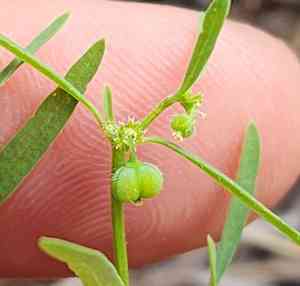
Blackseed spurge (Euphorbia bilobata)
Also known as: Two-lobed Spurge
Blackseed spurge (Euphorbia lathyris) is well-suited to arid climates thanks to several key adaptations. Its succulent stems and distinctively bilobed leaves are designed to store water efficiently, allowing the plant to survive in environments where water is scarce. The plant's low-growing form helps minimize exposure to harsh sunlight and reduces water loss. Additionally, its small and inconspicuous flowers reflect its ability to thrive without attracting unnecessary attention, conserving energy for survival in its desert habitat. These traits collectively enable blackseed spurge to endure and flourish in dry, challenging conditions.
In This Article
Attributes of Blackseed spurge
Lifespan
Perennial
Plant Type
Herb, Succulent
Plant Height
10-50 cm
Spread
Variable, dense growth habit
Leaf Color
Green
Flower Size
Small, usually less than 1 cm
Flower Color
Yellow-green
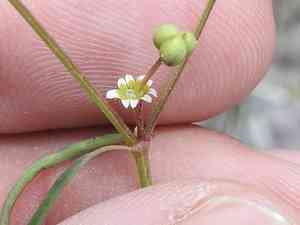
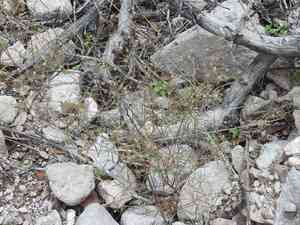
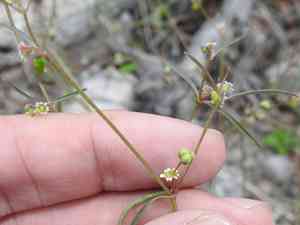
Images of Blackseed spurge
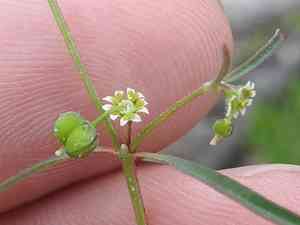
Quickly Identify Blackseed spurge
1
Euphorbia bilobata can be identified by its distinct two-lobed leaves and small yellow-green flowers. It typically exhibits a milky sap when the plant is cut or broken.
Scientific Classification of Blackseed spurge
Phylum
Vascular plants
Class
Dicotyledons
Order
Malpighiales
Family
Spurge
Genus
Spurges
Species
Blackseed spurge
Planting and Growing of Blackseed spurge
Care Difficulty
Moderate
Watering Schedule
Every 2 days
Sunlight Requirements
Partial sun
Sunshine Duration
4-8 hours
Ideal Temperature
75-85℉
Soil Type
Potting Mix, Peat Mix
Soil pH
6.5-7.5
Fertilizer Type
Balanced
Pruning Season
Spring, Summer
Pruning Area
Branches, Leaves
Pruning Frequency
2 times a year
Repotting Season
Spring
Pot Type
Plastic, Ceramic
 How to Water Blackseed spurge?
Euphorbia bilobata prefers to have soil that is allowed to dry out between waterings. It should be watered with approximately 200 ml of water. Make sure to water the plant until you see water escaping from the drainage holes of the pot, ensuring the soil is moist but not waterlogged.
What are the symptoms of an underwatered Blackseed spurge?
›
What should I do if my Blackseed spurge is not getting enough water?
›
What are the symptoms of an overwatered Blackseed spurge?
›
How to save an overwatered Blackseed spurge?
›
 What Are the Sunlight Requirements for Blackseed spurge?
Euphorbia bilobata's ideal range is partial sun, receiving 4 to 6 hours of light daily. This balance ensures optimum growth without stressing the plant, improving its vigor and appearance.
What is the best environment for Euphorbia bilobata?
›
How do you achieve ideal lighting?
›
What are the benefits of ideal lighting for this plant?
›
 What Is the Ideal Temperature Range for Blackseed spurge?
Euphorbia bilobata thrives best within a temperature range of 75°F to 85°F. This range ensures that the plant undergoes regular metabolic activities efficiently, promoting healthy growth and vibrant foliage.
 What Soil is Best for Blackseed spurge?
Euphorbia bilobata thrives in well-draining soil as it prevents root rot and supports healthy root systems. This not only enhances nutrient absorption but also aids in preventing waterlogging, ensuring optimal growth. A soil rich in organic matter provides the essential nutrients for the robust growth of Euphorbia bilobata. Organic matter acts as a reservoir of nutrients that are gradually released, promoting consistent growth and vibrant appearance. While well-draining, the soil should retain moderate moisture to supply sufficient water for the plant's needs between watering sessions. This balance prevents dehydration and ensures the plant remains healthy and strong.
 How to Fertilize Blackseed spurge?
For Euphorbia bilobata, the recommended amount of fertilizer is generally light. Use a balanced 10-10-10 liquid fertilizer mixed at half-strength to ensure that the nutrients are available without overwhelming the plant. For slow-release granules, apply a small handful evenly around the base of the plant and gently scratch it into the soil to encourage absorption.
 How to Prune Blackseed spurge?
Begin by sterilizing your pruning shears to prevent any disease transmission. Carefully trim back any dead or damaged branches to improve the overall health of the plant. Target unwanted growth that detracts from the desired shape, ensuring you make clean cuts just above a node to encourage more branching. When shaping Euphorbia bilobata, your aim should be to create a balanced structure. Regular pruning allows you to reduce leggy growth that can occur with age. Focus on encouraging a symmetrical form by evenly trimming branches that have grown too long. Removing inward-growing branches also helps improve air circulation.
More About Pruning Techniques→
 How to Propagate Blackseed spurge plant?
1
Collect mature seeds from the parent plant when they are dry and free of moisture. Ensure that the seeds are correctly identified and free from pests or diseases to increase germination success.
2
Choose a healthy stem from the plant, cut at a 45-degree angle below a node, and remove any excess leaves to focus the plant’s energy on root development.
3
For cuttings, plant them in a well-draining soil mix; for seeds, ensure they are lightly covered with soil and kept in a warm area to encourage germination.
 How to Repot Blackseed spurge plant?
1
Euphorbia bilobata signals its need for repotting when its growth is stunted or roots begin exiting the drainage holes. Ideal times are when the plant has become root-bound or shows reduced vitality, typically every 2-3 years.
2
Select a pot that is 1-2 inches larger in diameter than the current one to accommodate growth. Choose a clay or terracotta pot for excellent drainage and breathability, which aids in preventing root rot.
3
Select a well-draining cactus mix to ensure adequate aeration and to prevent water retention that can lead to root rot. The right soil mix is crucial for mimicking the plant’s native habitat, promoting healthy growth.
Toxicity
ingestion, skin contact
WARNING
The judgment on toxicity and danger is for reference only. We DO NOT GUARANTEE any accuracy of such judgment. Therefore, you SHALL NOT rely on such judgment. It is IMPORTANT TO SEEK PROFESSIONAL ADVICE in advance when necessary.
Learn More About Blackseed spurge Diseases
Anthracnose
Bacterial Leaf Spot
Bacterial Soft Rot
Bacterial Wilt
Black Spot
Chemical Injury
Crown Gall
Cyst Nematode
Damping-off
Downy Mildew
Drought Stress
Fusarium Wilt
Gray Mold
Leaf Curl
Leaf Spot
Mosaic
Nutrient Deficiency
Nutrient Toxicity
Powdery Mildew
Root Rot
Root-knot Nematode
Rusts
Sooty Mold
Spider Mites
Temperature Stress
Thrips Damage
White Mold


