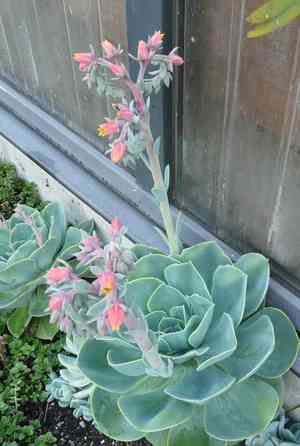
Blue echeveria (Echeveria secunda)
Also known as: Blue Echeveria, Blue Hens and Chicks
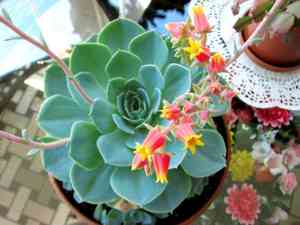
The blue echeveria is a small succulent with a blue tint to its leaves. It is popular as a low-maintenance windowsill plant. The blue echeveria is naive to South and Central America where it and related species are critical to the life cycles of many butterflies.
In This Article
Attributes of Blue echeveria
Lifespan
Perennial
Plant Type
Succulent, Herb
Plant Height
15 cm to 60 cm
Spread
7 cm to 20 cm
Leaf Color
Green Gray Silver
Flower Size
1-2 cm
Flower Color
Yellow Orange Pink Red Purple Gold
Images of Blue echeveria
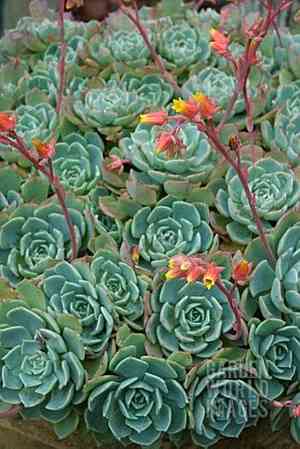
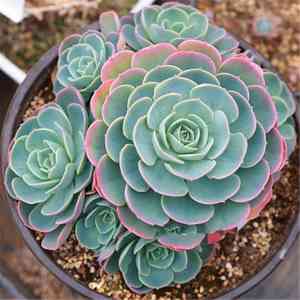
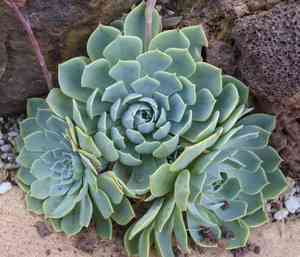
Quickly Identify Blue echeveria
1
Compact rosettes under 6 inches (15 cm) in diameter.
2
Bicolored flowers with yellow petals and red base on 12-inch (30 cm) stems.
3
Lantern-shaped flowers with vibrant yellow petals and striking red calyces.
4
Dry, dehiscent capsules with inconspicuous seeds for wind dispersal.
5
Evergreen leaves with blue-green color and powdery coating known as farina.
Scientific Classification of Blue echeveria
Phylum
Vascular plants
Class
Dicotyledons
Order
Saxifragales
Family
Stonecrop
Genus
Echeveria
Species
Blue echeveria
Planting and Growing of Blue echeveria
Care Difficulty
Easy
Watering Schedule
Every 2 days
Sunlight Requirements
Full sun
Sunshine Duration
6-10 hours
Ideal Temperature
65-75℉
Soil Type
Potting Mix, Peat Mix
Soil pH
6-7.5
Fertilizer Type
Balanced
Pruning Season
Spring, Summer
Pruning Area
Branches, Leaves
Pruning Frequency
2 times a year
Repotting Season
Spring
Pot Type
Plastic, Ceramic
 How to Water Blue echeveria?
When watering Echeveria secunda, aim for about 100 ml per watering session. This amount ensures that the soil is adequately moist but not overly saturated, allowing the roots to absorb water without risking root rot. The top layer of the soil should feel dry before watering again.
More About Watering Techniques→
What are the symptoms of an underwatered Blue echeveria?
›
What should I do if my Blue echeveria is not getting enough water?
›
What are the symptoms of an overwatered Blue echeveria?
›
How to save an overwatered Blue echeveria?
›
 What Are the Sunlight Requirements for Blue echeveria?
Echeveria secunda thrives with partial to full sun exposure, receiving 4-6 hours of direct sunlight. This light range ensures optimal photosynthesis, keeps the foliage vibrant, and maintains compact growth.
More About Sunlight Requirements Techniques→
What is the optimal amount of sunlight for Echeveria secunda?
›
How can I ensure Echeveria secunda receives enough light indoors?
›
What benefits does Echeveria secunda gain from ideal lighting?
›
 What Is the Ideal Temperature Range for Blue echeveria?
The ideal temperature range for Echeveria secunda is between 65°F and 75°F. This succulent thrives in warm conditions that mimic its natural habitat, allowing for optimal growth and health. Maintaining these temperatures helps in preventing stress-related issues and promotes robust development.
 What Soil is Best for Blue echeveria?
Echeveria secunda thrives in well-draining soil which prevents root rot by allowing excess water to escape easily. This type of soil emulates their natural environment and promotes healthy root development. The addition of organic matter can provide the nutrients necessary for the succulent to grow robustly. Nutrient-rich soil supports the plant's color and growth, making it vibrant and healthy. While drainage is essential, moderate moisture retention helps to maintain the plant's hydration levels. Sandy loam offers a balance by holding just enough moisture to support Echeveria secunda without causing waterlogging.
More About Soil→
 How to Fertilize Blue echeveria?
For Echeveria secunda, fertilize sparingly. Excessive fertilizer may harm the plant more than benefiting it. Use half-strength liquid fertilizer, considering the plant's small nutrient needs. Over-fertilization can lead to leaf drop or fungal growth, as this plant is native to low-nutrient environments.
 How to Prune Blue echeveria?
Start by using clean, sharp scissors or pruning shears to trim off any dead or withered leaves from the base of the rosette. Be gentle to avoid damaging healthy leaves. If your Echeveria secunda has long flower stalks, cut them back to promote new blooms. Additionally, if your plant starts to appear leggy, trim back the stems to retain a compact shape. Ensure proper spacing between cuts to promote even and symmetrical growth.
 How to Propagate Blue echeveria plant?
1
Gently twist and pull a healthy leaf from the main stem, ensuring it comes off without tearing. Allow the leaf to dry for a day or two until the cut end forms a callus, which helps prevent rot when planted.
2
Once the leaf has callused over, place it gently on top of a well-drained potting mix. You do not need to bury the end. Keep the soil slightly moist until new roots and a small plant form.
3
During the active growing season, separate offsets from the mother plant. Take care not to damage the roots. Plant the offsets in individual pots with a suitable potting mix, and water sparingly until established.
 How to Repot Blue echeveria plant?
1
Echeveria secunda shows signs it's ready for repotting when its roots start to outgrow the current container, emerging from the drainage holes, indicating it's getting cramped. Another indicator is slowed growth or if you notice the soil is retaining moisture longer than usual, suggesting compaction. Typically, this happens every 2-3 years, preferably in spring or early summer when the plant enters its active growth phase.
2
Opt for a pot that is one size larger than the current one, ensuring there are drainage holes. The material can vary; terracotta is popular as it allows the soil to dry out more quickly, preventing root rot. This choice supports healthy root development by avoiding excess moisture.
3
Select a well-drained cactus mix enriched with perlite or coarse sand. This type of soil mimics Echeveria secunda's natural environment, promoting aeration around the roots and preventing water from accumulating, which is crucial to avoid root rot in this succulent species.



