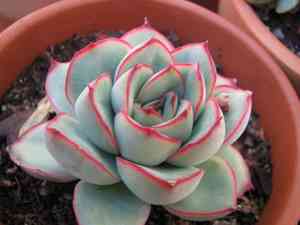
Pulido's echeveria (Echeveria pulidonis)
Also known as: Pulido’s Echeveria, Pulido's Wax Agave
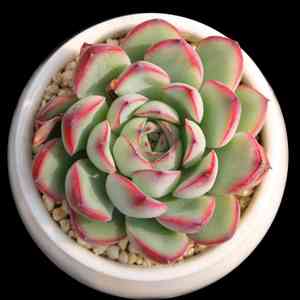
The leaf margin of pulido's echeveria is red and can become redder under sufficient light. In the summer, the plant grows so fast that the leaves spread out, becoming loose as a result. In the fall it quickly returns to its usual gorgeous state.
In This Article
Attributes of Pulido's echeveria
Lifespan
Perennial
Plant Type
Succulent, Herb
Plant Height
20 cm
Spread
15 cm to 20 cm
Leaf Color
Green Blue Red
Flower Size
Up to 0.4 inches (1 cm)
Flower Color
Yellow Green
Images of Pulido's echeveria
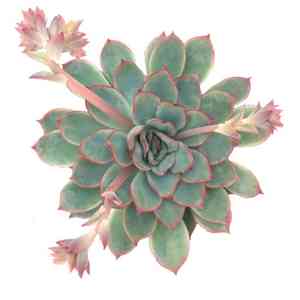
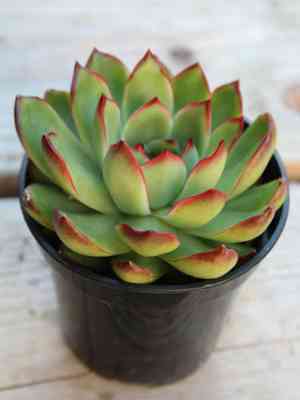
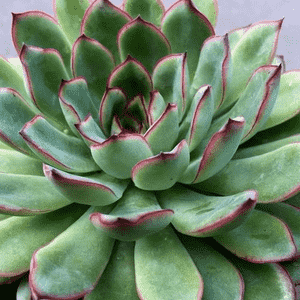
Quickly Identify Pulido's echeveria
1
Stemless rosettes measuring 4 to 5 inches (10 to 12.5 cm) in width.
2
Distinctively flat to slightly concave leaves with a red tip.
3
Over 25 fleshy leaves edged in red against pale bluish-green.
4
May produce offsets to form larger clumps.
5
Bright yellow flowers on unbranched stems likened to a 'shepherd's crook'.
Scientific Classification of Pulido's echeveria
Phylum
Vascular plants
Class
Dicotyledons
Order
Saxifragales
Family
Stonecrop
Genus
Echeveria
Species
Pulido's echeveria
Planting and Growing of Pulido's echeveria
Care Difficulty
Easy
Watering Schedule
Every 2 days
Sunlight Requirements
Full sun
Sunshine Duration
6-10 hours
Ideal Temperature
60-75℉
Soil Type
Potting Mix, Peat Mix
Soil pH
6.5-7.5
Fertilizer Type
Balanced
Pruning Season
Spring, Summer
Pruning Area
Branches, Leaves
Pruning Frequency
2 times a year
Repotting Season
Spring
Pot Type
Plastic, Ceramic
 How to Water Pulido's echeveria?
Echeveria pulidonis requires a careful balance in watering. You should aim to soak the soil thoroughly but allow it to dry out completely between waterings to prevent root rot. A general guideline is about 100 ml per session, but it's essential to adjust based on your plant's environmental conditions.
More About Watering Techniques→
What are the symptoms of an underwatered Pulido's echeveria?
›
What should I do if my Pulido's echeveria is not getting enough water?
›
What are the symptoms of an overwatered Pulido's echeveria?
›
How to save an overwatered Pulido's echeveria?
›
 What Are the Sunlight Requirements for Pulido's echeveria?
Echeveria pulidonis flourishes in both full sun and partial sun environments. Ensuring adequate light exposure promotes strong, compact growth and maintains its vivid leaf coloration, enhancing its ornamental appeal.
More About Sunlight Requirements Techniques→
How much light does Echeveria pulidonis need?
›
How can you ensure ideal lighting for Echeveria pulidonis?
›
What are the benefits of proper lighting for Echeveria pulidonis?
›
 What Is the Ideal Temperature Range for Pulido's echeveria?
Echeveria pulidonis thrives best in temperatures ranging from 60°F to 75°F. This range allows for optimal photosynthesis and growth without exposing the plant to thermal stress, ensuring vibrant coloration and healthy foliage.
 What Soil is Best for Pulido's echeveria?
Echeveria pulidonis thrives in well-draining soils, which help prevent root rot by allowing excess water to escape quickly. This type of soil reduces waterlogging, a common issue for succulent plants. While they don't need particularly rich soil, having a few essential nutrients in the earth supports growth. A mildly fertile loam mixed with sand provides a balanced environment for this succulent. The soil should be loose and aerated, allowing roots to breathe easily. Good aeration prevents compaction, which can hinder root development and lead to unhealthy plant growth.
More About Soil→
 How to Fertilize Pulido's echeveria?
For Echeveria pulidonis, use a balanced liquid fertilizer diluted to half strength. About 1/4 teaspoon of fertilizer per gallon of water is typically sufficient. Avoid over-fertilizing, which can harm the plant by causing nutrient burn.
 How to Prune Pulido's echeveria?
Look for dead or withered leaves at the base of the plant. Using your fingers or tools, gently remove them to promote better air circulation and overall plant health. Trim any excessively long or unruly leaves to help maintain a compact and attractive rosette shape. Cut back to a natural form, making sure not to remove too much foliage at once. After pruning, observe the plant for signs of stress or new growth. Adjust care as necessary, ensuring that it receives the right amount of light and water to recover effectively.
 How to Propagate Pulido's echeveria plant?
1
Carefully select healthy leaves from the lower part of the plant. Gently twist off the leaf ensuring it detaches cleanly from the stem base.
2
Allow the cuttings to callus over for a few days in a dry, shaded area. This process reduces the risk of rot when placed in the potting mix.
3
Once callused, place the cuttings in a shallow layer of potting mix, ensuring the callused edge is the only part in contact with the soil.
 How to Repot Pulido's echeveria plant?
1
Echeveria pulidonis typically requires repotting when its roots outgrow the current pot, which can be seen through roots emerging from drainage holes. Another sign is when the plant appears unbalanced or top-heavy, indicating fresh soil is needed to support its growth.
2
Choose a pot that is 1-2 inches larger than the current one with drainage holes. A slightly bigger pot prevents overwatering as it helps excess moisture to escape, keeping the roots healthy and promoting stable plant growth.
3
Opt for a well-draining soil mix, like a cactus blend, to prevent water build-up. This kind of soil provides adequate aeration to the roots, reduces the risk of root rot, and supports the succulent's drought-tolerant nature.



