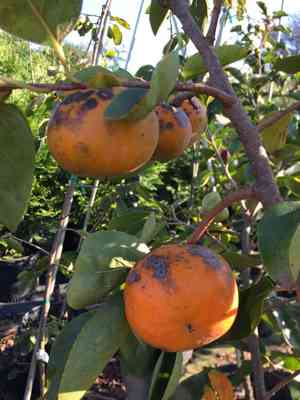
Japanese persimmon (Diospyros kaki)
Also known as: Kaki persimmon, Chinese persimmon
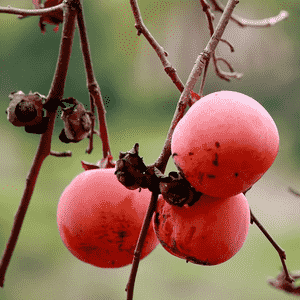
The Japanese persimmon tree (Diospyros kaki) enhances both the visual appeal and culinary value of gardens. These deciduous trees are relatively low-maintenance but are sensitive to extreme cold. Flowering in mid-spring, they produce distinctive orange-red fruit and vibrant fall foliage. The fruit, which can be enjoyed fresh or cooked, has been a staple in East Asian cultivation for over 1,000 years, particularly in China. The tree, capable of reaching heights of up to 30 feet, is celebrated not just for its fruit but also for its ornamental beauty.
In This Article
Attributes of Japanese persimmon
Lifespan
Perennial
Plant Type
Tree
Plant Height
10 m to 14 m
Spread
10 m to 13 m
Leaf Color
Green Yellow Red Orange Purple
Flower Size
2 cm to 2.5 cm
Flower Color
Yellow Cream
Images of Japanese persimmon
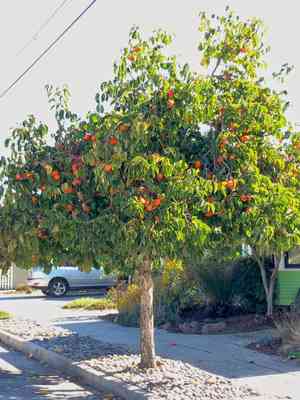
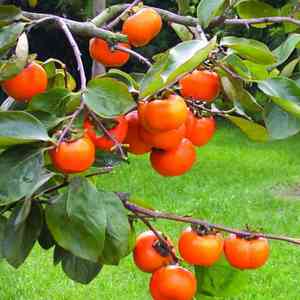
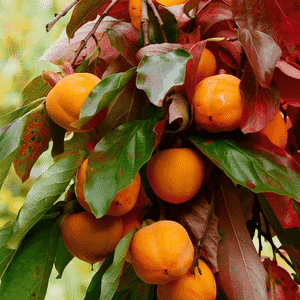
Quickly Identify Japanese persimmon
1
Distinctive bark pattern: deeply fissured, forming rectangular shapes.
2
Floral dimorphism: creamy-white solitary female flowers, pinkish cluster male flowers.
3
Vibrant orange fruit with star-like patterns upon cutting.
4
Seasonal leaf color change: yellow-green to red with pronounced veins.
5
Gray woody stems: alternate branching, leaf scars, occasional lenticels.
Scientific Classification of Japanese persimmon
Phylum
Vascular plants
Class
Dicotyledons
Order
Heathers and allies
Family
Ebony
Genus
Diospyros
Species
Japanese persimmon
Planting and Growing of Japanese persimmon
Care Difficulty
Moderate
Watering Schedule
Every 3 days
Sunlight Requirements
Full sun
Sunshine Duration
6-10 hours
Ideal Temperature
60-77℉
Soil Type
Potting Mix, Peat Mix
Soil pH
6-7.5
Fertilizer Type
Balanced
Pruning Season
Spring, Summer
Pruning Area
Branches, Leaves
Pruning Frequency
2 times a year
Repotting Season
Spring
Pot Type
Plastic, Ceramic
 How to Water Japanese persimmon?
For Diospyros kaki, also known as the Japanese persimmon, watering should be thorough but not excessive. The aim is to moisten the soil evenly without making it waterlogged. Ensure water reaches the root zone, generally around 500 ml per session for young trees, adjusting accordingly as the tree matures and weather conditions change.
More About Watering Techniques→
What are the symptoms of an underwatered Japanese persimmon?
›
What should I do if my Japanese persimmon is not getting enough water?
›
What are the symptoms of an overwatered Japanese persimmon?
›
How to save an overwatered Japanese persimmon?
›
 What Are the Sunlight Requirements for Japanese persimmon?
Diospyros kaki performs optimally with full sun to partial sun, ideally receiving 6-8 hours of sunlight. This balance promotes vigorous growth, abundant fruit production, and prevents diseases typically caused by excess moisture from insufficient drying.
More About Sunlight Requirements Techniques→
How long should it be exposed to sunlight?
›
What type of sunlight is ideal?
›
How to ensure adequate sunlight exposure?
›
 What Is the Ideal Temperature Range for Japanese persimmon?
For Diospyros kaki, the ideal temperature range for optimal growth is between 60°F and 77°F. This range provides the warmth needed for active growth and fruit development while avoiding the stress that can occur from temperatures that are too high or too low. Consistently maintaining temperatures within this range can result in healthy foliage and abundant fruit production.
 What Soil is Best for Japanese persimmon?
Diospyros kaki thrives on well-drained soils as these prevent waterlogging, a condition that can suffocate roots and hinder nutrient uptake. Ensuring good drainage enhances the root's ability to access oxygen and nutrients, supporting healthy growth. While well-drained, the soil should retain some moisture for optimal growth. Diospyros kaki requires consistent moisture without saturation, promoting steady nutrient absorption and robust yield of its fruits. Nutrient-rich soils enhance the growth of Diospyros kaki, supporting its fruiting potential and overall vigor. Mixing in organic matter or compost can boost the nutrient profile of the soil, benefiting the plant's development.
More About Soil→
 How to Fertilize Japanese persimmon?
For Diospyros kaki, the appropriate amount of fertilizer is crucial for healthy growth. Use about 0.5 kg of a balanced 10-10-10 NPK fertilizer per young tree once established. As the tree matures, increase the amount to about 1 kg per tree in the spring to support blossoming and fruiting stages optimally.
More About Fertilizing Techniques→
 How to Prune Japanese persimmon?
Start by removing any dead, damaged, or diseased limbs to maintain the tree's health. Focus on thinning the canopy to improve light exposure and air circulation, which can significantly enhance fruit quality. Always cut at a 45-degree angle just above a bud or a branch junction to prevent water damage and encourage new growth. While pruning, aim to develop an open, vase-like shape that allows light to penetrate the tree and reach all branches. This not only helps with the development of a more beautiful tree form but also increases fruit yield by promoting the growth of strong lateral branches.
More About Pruning Techniques→
 How to Propagate Japanese persimmon plant?
1
Soak the Diospyros kaki seeds in water for 24 hours before sowing. This helps soften the seed coat, promoting quicker germination. Ensure they are viable and free from any damage.
2
Plant the soaked seeds in seedling trays with a well-draining potting mix. Cover them lightly and maintain consistent moisture until germination occurs in a warm environment.
3
Select healthy rootstock and scion. Make precise cuts and align them correctly before securing with grafting tape. Keep the union moist and protected until growth is visible.
 How to Repot Japanese persimmon plant?
1
Diospyros kaki, or the persimmon tree, signals its need for repotting when roots circle tightly inside the pot or grow out of drainage holes. Early spring, just before new growth starts, is an ideal repotting time, allowing the tree to establish in its new home during active growth.
2
Choose a pot that is 1-2 inches larger in diameter than the current one, with ample drainage holes to prevent waterlogging. This ensures the roots have space to grow while reducing the risk of root rot, promoting healthy development and stability for the Diospyros kaki.
3
Opt for a well-draining, organic-rich soil mix composed of loam, sand, and organic matter. Such a mix provides essential nutrients and aeration, crucial for the health of Diospyros kaki, fostering robust growth and efficient water management.



