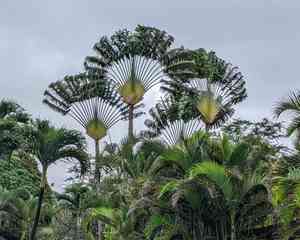
Traveller's palm (Ravenala madagascariensis)
Also known as: Madagascar traveller's tree
The traveller's palm, or Ravenala madagascariensis, hails from Madagascar and is noted for its striking, fan-shaped leaves that resemble a peacock's tail. The name "traveller's palm" comes from the plant's ability to store rainwater in its stem sheaths, offering a potential water source for parched travelers.
In This Article
Attributes of Traveller's palm
Lifespan
Perennial
Plant Type
Herb
Plant Height
9 m to 15 m
Spread
4.5 m to 5 m
Leaf Color
Green Blue
Flower Size
15 cm to 30 cm
Flower Color
White Yellow Green
Images of Traveller's palm
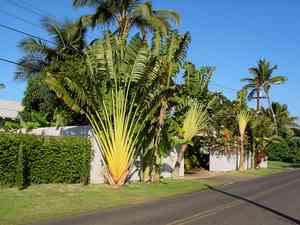
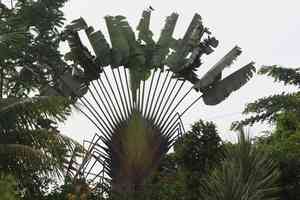
Quickly Identify Traveller's palm
1
Robust trunk reaches 30-50 feet (9-15 m) with large banana-like leaves in fan arrangement.
2
Distinctive white boat-shaped flowers with 3 petals in cymes, crucial for identification.
3
Woody fruit capsules with edible blue-hued seeds, approximately 3 1/2 inches (9 cm) long.
4
Large glossy paddle-shaped leaves, up to 10 feet (3 meters) long, with cup-shaped petioles.
5
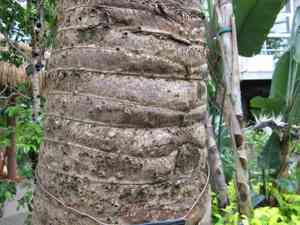
Trunk diameter 12 inches (30 cm), segmented with prominent leaf scar rings, supporting fan-like foliage.
Scientific Classification of Traveller's palm
Phylum
Vascular plants
Class
Monocotyledons
Order
Gingers, bananas, and allies
Family
Bird of paradise flower
Genus
Traveller's palms
Species
Traveller's palm
Planting and Growing of Traveller's palm
Care Difficulty
Easy
Watering Schedule
Every 3 days
Sunlight Requirements
Full sun
Sunshine Duration
4-8 hours
Ideal Temperature
68-77℉
Soil Type
Potting Mix, Peat Mix
Soil pH
6.5-7.5
Fertilizer Type
Balanced
Pruning Season
Spring, Summer
Pruning Area
Branches, Leaves
Pruning Frequency
2 times a year
Repotting Season
Spring
Pot Type
Terracotta, Plastic
 How to Water Traveller's palm?
Ravenala madagascariensis, commonly known as the Traveler's Palm, requires ample water to thrive. Aim to provide around 2500 ml per watering session, ensuring the soil is thoroughly soaked but not waterlogged. The key is to strike a balance, allowing the soil to dry out slightly between waterings to mimic its natural habitat stemming from Madagascar's wet and dry seasons.
More About Watering Techniques→
What are the symptoms of an underwatered Traveller's palm?
›
What should I do if my Traveller's palm is not getting enough water?
›
What are the symptoms of an overwatered Traveller's palm?
›
How to save an overwatered Traveller's palm?
›
 What Are the Sunlight Requirements for Traveller's palm?
Partial to full sun is ideal for Ravenala madagascariensis, offering the best balance for photosynthesis, pigment production, and growth vigor. Ideal lighting ensures strong, healthy foliage and enables the plant to thrive.
More About Sunlight Requirements Techniques→
Optimal Light Requirement
›
Solutions for Ideal Light
›
Effects of Ideal Light
›
 What Is the Ideal Temperature Range for Traveller's palm?
Ravenala madagascariensis thrives best within an ideal temperature range of 68 to 77°F. Maintaining this range ensures robust growth and vibrant foliage, replicating the plant's native tropical conditions found in Madagascar.
 What Soil is Best for Traveller's palm?
Ravenala madagascariensis thrives in soil that offers good drainage to prevent root rot. Well-draining conditions allow for adequate air circulation around the roots, which is crucial for the plant's health and vigorous growth. While drainage is important, the soil also needs to retain some moisture to mimic the plant's natural habitat. Loamy soil holds moisture effectively without becoming waterlogged, ensuring that the plant roots have consistent access to water. Ravenala requires a nutrient-rich soil to support its large, lush leaves and rapid growth. Providing soil rich in organic matter, such as compost, can help sustain its nutritional needs and promote vibrant foliage.
More About Soil→
 How to Fertilize Traveller's palm?
The Ravenala madagascariensis, commonly known as the Traveler's Tree, requires a balanced approach to fertilization. When using liquid fertilizer, dilute a 10-10-10 formula to half strength and apply about 1 liter per plant base. For slow-release fertilizer, use a 50g amount evenly spread around the root zone. This balance ensures the plant receives optimal nutrients without over-fertilization.
More About Fertilizing Techniques→
 How to Prune Traveller's palm?
Use sharp pruning shears to cut away any dead or yellowing leaves at the base of the petiole. Be gentle to avoid damaging healthy growth. Removing these leaves allows the plant to focus its energy on new growth. Identify branches that extend beyond the desired shape of the plant. Make clean cuts back to a main stem to help retain the aesthetically pleasing fan-like shape of the Ravenala madagascariensis.
More About Pruning Techniques→
 How to Propagate Traveller's palm plant?
1
For both seed and division propagation, start by preparing a well-draining growing medium. A mix of peat moss and perlite or coarse sand works well. This combination ensures that the soil retains enough moisture while providing sufficient aeration for root growth.
2
Scatter the seeds evenly over the surface of the prepared growing medium, then cover them with a light layer of soil. After planting, water the seeds gently to settle them in their new environment, maintaining consistent moisture levels until germination occurs.
3
Carefully dig around the base of the Ravenala madagascariensis to expose its roots. Use a sharp, clean knife or spade to divide the root system into sections, ensuring each section has a healthy set of roots. Replant the divisions into prepared soil, and water them thoroughly to encourage new growth.
 How to Repot Traveller's palm plant?
1
Repot Ravenala madagascariensis when you notice roots coming out of the drainage holes or the plant seems to be growing slower than usual. These signs indicate the plant has outgrown its current pot. The best time to repot is during its active growing seasons, spring or summer, when the plant can quickly adjust to a new pot.
2
Select a pot that is one size larger than the current one with ample drainage holes. A slightly larger pot gives roots space to grow without overwhelming the plant. The material depends on your conditions; clay pots allow breathability, while plastic retains moisture better.
3
Choose a soil mix that drains well and is rich in organic matter. This helps provide both drainage and nutrients, crucial for healthy growth. A quality mix typically includes peat, pine bark, and perlite, ensuring the plant's roots have adequate oxygen and moisture levels.



