How Often Should You Water Your Common blackberry?
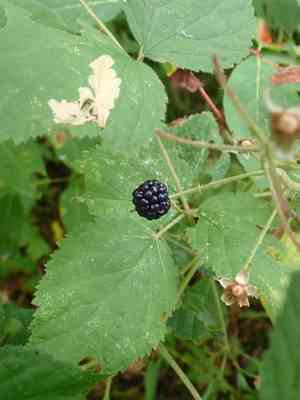
1
Provide water to your Common blackberry bi-weekly for peak development, particularly during its active growth phase.
2
The ideal period to irrigate Common blackberry is in the early morning, allowing moisture to penetrate the soil prior to daily warmth.
3
A soil blend that drains effectively aids in avoiding excessive watering and root decay in Common blackberry specimens.
Understanding the Hydration Requirements of Common blackberry
The Significance of Adequate Moisture
Adequate moisture is vital for the vitality and yield of your Common blackberry. These plants flourish with consistent hydration, and a well-watered Common blackberry will yield more plentiful and succulent fruits. Watering aids the plant in maintaining turgor, which keeps it upright and assists in nutrient transport. Regular watering is especially crucial during the blooming and fruiting phases when water demand rises considerably.
Indicators of Excessive and Insufficient Watering
It's crucial to observe your Common blackberry to prevent the issues of overwatering and underwatering. Excessive watering can lead to root rot, identified by a foul odor and dark, soft roots. Symptoms of overwatering also include yellowing foliage and wilting, despite moist soil. Conversely, insufficient watering can cause leaves to curl, brown, and eventually drop. The soil will often be arid and crumbly to the touch. Recognizing these signs early can help you adjust your watering practices before significant harm occurs.
Optimal Watering Practices for Common blackberry
Determining the Appropriate Water Volume
Figuring out the correct amount of water for your Common blackberry can be a delicate balance. Typically, these plants require approximately 2.5 to 5 centimeters (1 to 2 inches) of water weekly, either from precipitation or supplementary irrigation. The key is to ensure the water penetrates deeply into the soil to reach the root system. A good method is to water until the top 15-20 centimeters (6-8 inches) of soil are damp. This may necessitate 3 to 5 liters (0.8 to 1.3 gallons) of water depending on your soil type and weather conditions.
Seasonal Adjustments to Watering Schedule
Your watering regimen for Common blackberry will need to adapt with the changing seasons. In spring and summer, when plants are actively growing and producing fruit, it's essential to keep the soil consistently moist. This usually means watering twice per week. During autumn, as the plant's growth slows, you can decrease the frequency to once a week. In winter, Common blackberry plants enter dormancy, meaning you can further reduce watering, possibly to once every two weeks, or just maintain slightly moist soil if you reside in an area with mild winters.
Tools and Methods for Efficient Irrigation
Employing the correct tools and methods can significantly enhance the effectiveness of watering your Common blackberry. A soaker hose or drip irrigation system is ideal as it delivers water directly to the plant's base, minimizing water waste. Mulching is another effective technique; applying a layer of organic mulch around your Common blackberry plants can help retain soil moisture and lessen the frequency of watering. Additionally, always aim to water in the early morning to ensure the water has time to soak in before the day's heat, reducing evaporation.
Commonly Asked Questions
Is tap water suitable for my Common blackberry?
Yes, you can generally use tap water for your Common blackberry, but it's worth noting that some municipal water sources contain elevated levels of chlorine or fluoride which can be detrimental to plants over time. To mitigate this, you can let tap water sit out overnight in an open container to allow chlorine to dissipate, or use a water filter to remove excess chemicals. Rainwater is also an excellent alternative if available.
How can I ascertain if my Common blackberry requires water?
An easy way to determine if your Common blackberry needs water is to check the soil's moisture level. Insert your finger about 5 centimeters (2 inches) into the soil; if it feels dry at that depth, it's time to water. Additionally, observing the plant's leaves can offer clues; drooping leaves may indicate the plant is thirsty. Investing in a soil moisture meter can also provide a more precise reading of the moisture level in the root zone.



