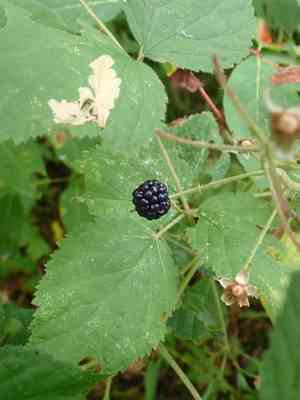
Common blackberry (Rubus allegheniensis)
Also known as: Sow-teat blackberry, Mountain blackberry
The American hazelnut (Corylus americana) is a deciduous shrub native to North America. It thrives in clearings and along woodland edges. The nuts it produces are edible, offering a sweet, mildly spicy flavor. These nuts are often enjoyed raw, but they can also be roasted or used in various culinary preparations.
In This Article
Attributes of Common blackberry
Lifespan
Perennial
Plant Type
Shrub
Plant Height
1.5 m to 2.5 m
Spread
1.8 m to 3.5 m
Leaf Color
Green
Flower Size
1.9 cm
Flower Color
White
Images of Common blackberry
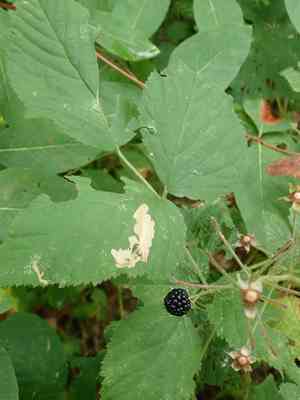
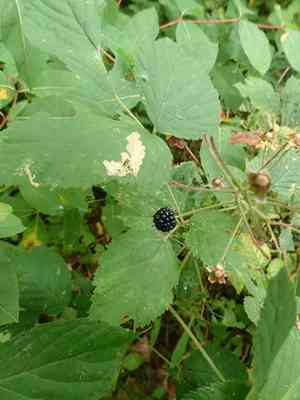
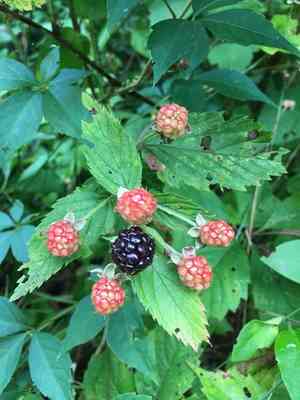
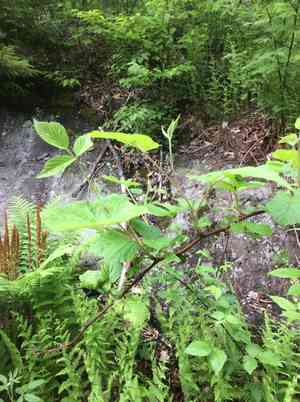
Quickly Identify Common blackberry
1
Arching stems with red-purple hue and small prickles.
2
White flowers in loose clusters with symmetric petals.
3
Thimble-shaped fruit transitioning from green to glossy black.
4
Trifoliate leaves with coarse, doubly serrate edges.
5
Stout stems with straight prickles, varying in thickness.
Scientific Classification of Common blackberry
Phylum
Vascular plants
Class
Dicotyledons
Order
Rosales
Family
Rose
Genus
Brambles
Species
Common blackberry
Planting and Growing of Common blackberry
Care Difficulty
Easy
Watering Schedule
Every 4 days
Sunlight Requirements
Full sun
Sunshine Duration
6-10 hours
Ideal Temperature
60-75℉
Soil Type
Potting Mix, Peat Mix
Soil pH
6.5-7.5
Fertilizer Type
Balanced
Pruning Season
Spring, Summer
Pruning Area
Branches, Leaves
Pruning Frequency
2 times a year
Repotting Season
Spring
Pot Type
Plastic, Terracotta
 How to Water Common blackberry?
When watering Rubus allegheniensis, aim for a deep soaking that reaches the root zone. Ensure the soil is moist but not waterlogged. Generally, about 500 milliliters per plant ensures the roots receive adequate moisture without drowning them.
More About Watering Techniques→
What are the symptoms of an underwatered Common blackberry?
›
What should I do if my Common blackberry is not getting enough water?
›
What are the symptoms of an overwatered Common blackberry?
›
How to save an overwatered Common blackberry?
›
 What Are the Sunlight Requirements for Common blackberry?
The ideal light range for Rubus allegheniensis is full sun to partial sun. Proper light conditions enhance its growth, fruit production, and overall resilience by optimizing photosynthetic activities.
More About Sunlight Requirements Techniques→
What is the ideal amount of sunlight for Rubus allegheniensis?
›
How to ensure Rubus allegheniensis gets ideal sunlight?
›
What are the benefits of providing ideal sunlight?
›
 What Is the Ideal Temperature Range for Common blackberry?
The ideal temperature range for growing Rubus allegheniensis is between 60°F and 75°F. This range supports optimal photosynthesis and promotes healthy growth. Temperatures within this range ensure the leaves remain actively engaged in capturing sunlight and balancing moisture levels. If the temperature stays within these limits consistently, you will see robust growth and healthy fruit production.
 What Soil is Best for Common blackberry?
Rubus allegheniensis prefers well-drained soil to prevent root rot and other moisture-related issues. This helps the roots remain healthy and promotes optimal nutrient uptake, leading to robust plant growth. The plant benefits from soil rich in organic matter, which improves soil fertility and structure. Organic matter supports beneficial microorganisms and enhances water retention, essential for healthy development. Rubus allegheniensis requires soil that stays consistently moist but not waterlogged. This balance ensures that the plant has access to moisture without risking suffocation of roots due to excessive water.
More About Soil→
 How to Fertilize Common blackberry?
For Rubus allegheniensis, apply a moderate amount of fertilizer. Generally, 1/2 to 1 cup of a balanced 10-10-10 fertilizer per plant during the growing season is advisable. Ensure to avoid direct contact with the plant stems to prevent burn.
More About Fertilizing Techniques→
 How to Prune Common blackberry?
First, identify the canes that have fruited the previous year, as these are no longer productive. Look for older, greyish canes with bark that might be flaking compared to newer ones. Use sharp pruning shears to cut the old canes at the base of the plant. By cutting close to the crown, you minimize the chance of any lingering disease and promote vigorous growth of new canes. After removing the old canes, thin out the new ones by leaving only 4-6 of the strongest canes. This can prevent overcrowding and enhance airflow, reducing fungal problems and improving fruit production.
More About Pruning Techniques→
 How to Propagate Common blackberry plant?
1
Collect ripe seeds from the berries of Rubus allegheniensis. Clean and dry them thoroughly before planting. This ensures good germination rates and reduces the risk of mold.
2
Select healthy branches and cut 4-6 inch sections. Remove lower leaves and dip the cut end in rooting hormone. This helps in the efficient development of roots.
3
Carefully dig around the plant to expose the root ball. Divide it into sections, ensuring each has roots attached. Replant promptly to avoid drying out.
 How to Repot Common blackberry plant?
1
Monitor your Rubus allegheniensis for signs like roots protruding from the pot's drainage holes or the soil drying out unusually fast. These indicators suggest that it's time for repotting, ensuring the plant has enough space for root expansion.
2
Select a pot that is one size larger than the current one with drainage holes at the bottom. This helps prevent waterlogging, allowing excess water to escape and promoting healthy root growth by providing the roots more space to expand.
3
Opt for a well-draining loamy soil mix, rich in organic matter. This type of soil allows sufficient air circulation around the roots, while retaining enough moisture to keep the plant healthy without risking root rot.



