How to Prune Stokes' aster?
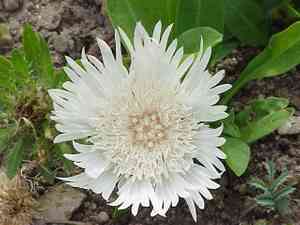
This indigenous perennial, recognized for its striking, brightly hued blossoms, flourishes in sun-drenched, adequately drained environments. Essential trimming methods involve removing faded blooms to stimulate further flowering and reducing foliage post-bloom to preserve a tidy look. Trimming is most effective in spring and summer, coinciding with stokes' aster's period of active development. Particular points of attention include hygienic pruning to avert the dissemination of pathogens. Pruning aids stokes' aster by fostering robust development and a more abundant floral presentation.
Advantages of Trimming Stokes' Aster
Advantages of Trimming Stokes' Aster
Trimming stokes' aster promotes robust development and assists in maintaining its preferred form, enhancing plant vitality and increasing flowering capacity.
Optimal Time for Pruning Stokes' Aster
Optimal Time for Pruning Stokes' Aster
Late spring is perfect for cutting back stokes' aster once its blooming cycle has finished, enabling gardeners to shape the plant and remove faded flowers to encourage a possible second bloom. Early summer is also suitable for light trimming to preserve the plant's structure and improve air movement, which is essential for stokes' aster's well-being and disease prevention. Pruning during these periods aligns with the stokes' aster's growth pattern, ensuring the plant recovers effectively and forms buds for the subsequent year without compromising its vigor or bloom potential.
Necessary Tools for Pruning Stokes' Aster
Bypass Pruners
Perfect for making precise cuts on stokes' aster, bypass pruners inflict minimal harm to the plant's tissues. They are effective for cutting back spent flower stalks and removing dead leaves. Suitable for diameters up to ½ inch.
Gloves
Protecting hands while pruning stokes' aster, gloves guarantee safety from sharp implements and thorns.
Garden Shears
Stokes' aster may need shaping for aesthetic reasons or to keep a compact shape. Garden shears are appropriate for trimming soft foliage and can manage the thin, herbaceous stems of stokes' aster.
Pruning Saw
For older, woodier stems of stokes' aster that have become too thick for pruners, a pruning saw can make clean cuts on branches exceeding ½ inch in diameter. Although not frequently required for stokes' aster, it is useful for managing mature clumps that have become woody at the base.
How to Prune Stokes' Aster
Deadheading
Identify and remove faded blooms on stokes' aster to encourage more flowering and prevent the plants from expending energy on seed production.
Cutting Back Stems
Cut back old stems of stokes' aster in late winter or early spring before new growth emerges, to maintain plant health and vitality.
Thinning
Thin out congested areas by selectively pruning older stems of stokes' aster at the base to enhance air circulation and light penetration.
Shaping
Shape the plant by cutting the stokes' aster's stems to a desired height and form, promoting a bushier growth habit and visual appeal.
Clean Up
Remove and dispose of all pruned material away from stokes' aster to lessen the risk of diseases and pests being harbored in the debris.
Common Pruning Errors with Stokes' Aster
Overpruning
Cutting back stokes' aster excessively can stress the plant, diminishing its vigor and bloom potential. It's crucial to avoid removing more than one-third of the plant at any single time.
Incorrect Cut Location
Making cuts too far from the bud can leave a stub that invites diseases or pests. Proper cuts should be close to the bud without causing damage.
Using Dull Tools
Pruning with dull or dirty tools can result in jagged cuts that are more vulnerable to disease. Using sharp, clean pruning tools is essential for clean cuts and healthy plants.
Pruning For Shape Only
Focusing solely on the shape and neglecting the plant's health can lead to a poorly structured stokes' aster that doesn't bloom well. Health and vigor should always take precedence.
General Pruning Advice for Stokes' Aster
Selective Thinning
Remove only the necessary parts of stokes' aster to encourage better air circulation. This can help prevent disease and promote robust growth.
Deadheading
Regularly remove spent flowers to encourage stokes' aster to produce more blooms and extend the flowering period.
Cut To Healthy Tissue
If pruning away dead or diseased stems, ensure to cut back to healthy tissue to promote healing and regrowth.
Winter Preparation
After the flowering season, cut back the dead foliage before winter to tidy up the plant and help prevent disease.
Year-Round Observation
Monitor stokes' aster throughout the year to remove any damaged or diseased stems as needed, which can maintain plant health and appearance.



