How to Propagate Stokes' aster?
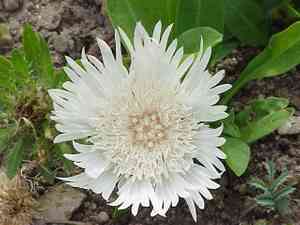
Stokes' aster is a perennial appreciated for its daisy-like blossoms and capacity to flourish in diverse environments. Reproduction is generally effective through cuttings, which ought to be harvested from robust, non-blooming stalks to stimulate root growth. Employ a potting blend that drains efficiently and sustain steady dampness without oversaturation. For peak outcomes, confirm that cuttings possess a minimum of two nodes, as this enhances the likelihood of root and shoot development, offering a firm foundation for new vegetation.
Optimal Time for Stokes' Aster Propagation
Propagation Method
Cutting
Propagation Period
Spring,Summer
Tools for Stokes' Aster Propagation
Sharp Pruning Shears
Utilized for making clean, precise cuts on stokes' aster, crucial for preventing tissue damage. Sharp blades ensure quick, neat cuts, aiding faster healing and reducing disease risk.
Rooting Hormone
Applied to the cut ends of stokes' aster cuttings to boost root development and improve propagation success. Hormones stimulate root growth, helping cuttings establish quickly for new plant health.
Sterile Potting Mix
Offers a safe, clean growing medium for stokes' aster cuttings. A sterile mix is pathogen and pest-free, allowing new plants to grow without disease or weed competition. It also maintains proper moisture, vital for root growth.
Propagating Trays
Used to organize and manage stokes' aster cuttings during early root development. These trays facilitate easy monitoring and care for multiple cuttings, maintaining necessary humidity and temperature for optimal root growth.
Plastic Covers or Humidity Domes
Placed over propagating trays to create a high-humidity microclimate, beneficial for stokes' aster cuttings. By maintaining high humidity, these covers prevent excessive moisture loss, enhancing successful root development.
How to Propagate Stokes' Aster?
Propagation Type
Simple
Caring for Newly Propagated Stokes' Aster
Caring for Newly Propagated Stokes' Aster
Post-propagation, gradually introduce stokes' aster to its new environment by progressively extending the time the plastic cover is removed daily. Once rooted, plant stokes' aster in well-draining soil in a location receiving full sun to partial shade. Water stokes' aster regularly to keep the soil moist but not waterlogged, and fertilize sparingly with a balanced feed during the growing season. Remove spent flowers to encourage continuous blooming and divide clumps every few years in early spring to maintain vigor.
Common Errors to Avoid When Propagating Stokes' Aster
Overwatering cuttings
Excessively moist soil can lead to rot in stokes' aster cuttings before rooting, resulting in propagation failure.
Deep burying seeds
Planting stokes' aster seeds too deep can hinder germination, as they require light to initiate the process.
Neglecting cleanliness
Using uncleaned tools or containers can introduce pathogens to stokes' aster cuttings or seeds, increasing disease risk and poor growth.
Overcrowding seeds
Sowing stokes' aster seeds too closely can cause competition for light, nutrients, and space, impeding healthy development.
Ignoring humidity needs
Failing to provide a humid environment for stokes' aster cuttings can lead to desiccation and rooting failure.
Tips for Propagating Stokes' Aster
Appropriate watering
Maintain balanced moisture for stokes' aster cuttings, ensuring consistently moist but not waterlogged soil to promote healthy rooting.
Light exposure for seeds
Sow stokes' aster seeds on the soil surface or cover lightly, ensuring sufficient light exposure to facilitate germination.
Sterilization practices
Sterilize all tools, pots, and work surfaces when propagating stokes' aster to prevent disease and ensure a healthy start.
Seed spacing
Adequately space stokes' aster seeds to provide each seedling ample room for growth without resource competition.
Humidity control
Create a humid microclimate for stokes' aster cuttings using a transparent cover, like a plastic bag or propagator lid, to prevent excessive water loss.



