How to Propagate Evergreen huckleberry?
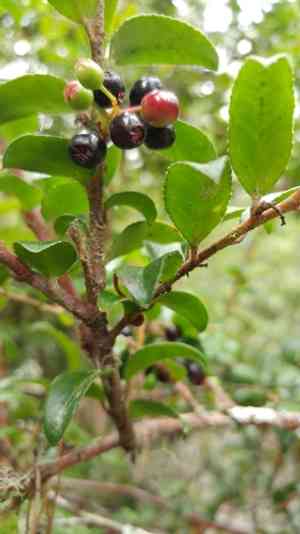
For optimal results, evergreen huckleberry propagation is best achieved through cuttings taken in the spring or summer seasons. This procedure can present some difficulty, yet the emergence of fresh foliage signifies successful establishment. Utilize semi-hardwood sections and apply premium rooting compounds to enhance the outcome.
When Is the Optimal Time to Propagate Evergreen Huckleberry?
Propagation Type
Cutting
Propagation Season
Spring, Summer
What Equipment Is Used in Evergreen Huckleberry Propagation?
Sharp pruning shears or scissors
These tools are utilized to obtain cuttings from the evergreen huckleberry, ensuring clean and precise cuts to minimize harm. Sharp blades facilitate a neat cut, promoting faster healing and reducing infection risk. This is particularly vital for evergreen huckleberry, as an uneven cut can impede rooting.
Rooting hormone
This substance is applied to the severed end of evergreen huckleberry cuttings to stimulate root formation. The hormone encourages root development, enhancing the likelihood of successful propagation. Given that evergreen huckleberry can sometimes root slowly, rooting hormone can significantly boost success rates.
Sterilized potting mix
A clean, well-draining substrate is essential for the well-being of evergreen huckleberry cuttings. Sterilized potting mix prevents the introduction of disease-causing agents and pests that could harm the cuttings during the vulnerable rooting phase.
Propagation tray or pots
These vessels hold the soil and cuttings throughout the rooting period. A propagation tray allows for numerous cuttings to be rooted simultaneously, while individual pots can help prevent disease spread among evergreen huckleberry cuttings.
Plastic dome or clear plastic bags
These items create a moist environment around the evergreen huckleberry cuttings, helping to maintain hydration levels and encourage rooting. This simulates a greenhouse effect, fostering a more stable and controlled propagation setting for evergreen huckleberry.
Misting bottle
This device is employed to gently moisten the evergreen huckleberry cuttings, keeping the soil damp but not waterlogged. Misting also aids in maintaining humidity levels, which is crucial for evergreen huckleberry cuttings to prevent dehydration.
How to Propagate Evergreen Huckleberry?
Propagation Type
Cutting
Difficulty Level
Moderately Difficult
How to Care for Your Newly Propagated Evergreen Huckleberry?
How to Care for Your Newly Propagated Evergreen Huckleberry?
Post-transplant care: After moving, position the new evergreen huckleberry plants in an area with filtered light, as excessive direct sun can stress young plants. Water them consistently, but allow the soil to dry slightly between waterings to prevent root rot. A slow-release fertilizer suitable for acid-loving plants can be applied as per package directions. As the plants mature, they can gradually be introduced to more sunlight, depending on the specific light conditions of their permanent location. Monitor for pests and diseases and address any issues promptly. With proper attention, evergreen huckleberry should develop into robust, flourishing plants.
Common Mistakes to Avoid When Propagating Evergreen Huckleberry
Improper cuttings
Selecting evergreen huckleberry cuttings that are either too immature or too old can hinder rooting. Young cuttings may lack sufficient stored energy for new root growth, while overly mature cuttings do not possess the same vigor for efficient root production.
Incorrect soil medium
Using an unsuitable soil medium can lead to poor drainage or insufficient aeration, negatively impacting root development in evergreen huckleberry cuttings. A medium that retains too much or too little water can cause cuttings to rot or dehydrate.
Neglecting humidity
Failing to maintain the correct humidity level is another frequent error. Evergreen huckleberry thrives in high humidity during the rooting phase. Without proper humidity balance, cuttings can lose moisture too rapidly and fail to establish.
Over watering
Excessive watering of evergreen huckleberry cuttings can lead to root rot, a condition where harmful fungi thrive due to surplus moisture, destroying newly formed roots. Maintaining equilibrium is vital to prevent such detrimental outcomes.
Tips For Propagating Evergreen Huckleberry
Healthy parent plant
Always take cuttings from a robust, disease-free parent evergreen huckleberry. This ensures the cuttings have the best chance of survival and are free from pathogens that could impede growth or cause decay.
Adequate light
Provide evergreen huckleberry cuttings with bright, indirect illumination. While cuttings require sufficient light for growth, direct sunlight can cause stress and desiccation in the absence of an established root system.
Right timing
Take semi-hardwood cuttings for evergreen huckleberry during late summer, as these possess the optimal balance of maturity and vigor for rooting.
Proper cutting size
Cuttings should be approximately 4-6 inches long, with several nodes present. This length is ideal for evergreen huckleberry, ensuring enough leaf area for photosynthesis and sufficient stem for root development.
Sterile equipment
Using sanitized pruning tools and containers is crucial to prevent the spread of disease to evergreen huckleberry cuttings, ensuring a higher success rate for propagation.
Rooting hormone
Applying a rooting hormone can stimulate root growth and increase the chances of successful propagation for evergreen huckleberry. It encourages faster root development and helps cuttings overcome the initial stress of being separated from the parent plant.



