How to Propagate White-panicle aster?
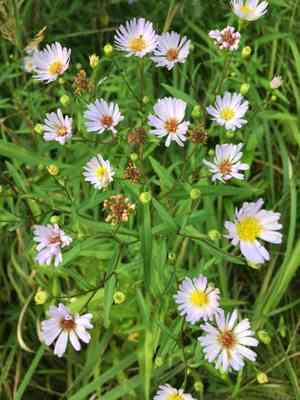
White-panicle aster is best multiplied in the spring or summer seasons using stem sections. This process presents a moderate challenge, with successful outcomes evidenced by fresh shoots and foliage emergence. Provide a robust, free-draining substrate for the most favorable results.
Optimal Time for White-panicle Aster Propagation
Propagation Method
Cutting
Propagation Period
Spring, Summer
Tools Required for White-panicle Aster Propagation
Sharp pruning shears
Sharp pruning shears are crucial for making clean cuts on white-panicle aster stems for cuttings, which helps prevent disease and damage to both the parent plant and the cuttings. The sharp blades ensure a precise cut without crushing the plant tissues, which is vital for successful rooting.
Rooting hormone powder or gel
Applying a rooting hormone to the cut end of white-panicle aster cuttings can significantly boost root development. This product stimulates root growth and helps protect the cutting from rot and fungal infections, ensuring a higher chance of successful propagation.
Sterilizing agent (e.g., rubbing alcohol or bleach solution)
Before making cuts, it is essential to sterilize pruning shears and any other tools that will contact white-panicle aster to prevent disease transmission. Clean tools are crucial for maintaining plant health during propagation.
Moisture-retaining potting mix
A potting mix that holds moisture without becoming waterlogged is essential for white-panicle aster cuttings. The mix should provide the right balance of air and water to support root growth while preventing rot and fungal diseases.
Propagation tray or small pots
Trays or small pots offer a suitable environment for the initial growth of white-panicle aster cuttings. They should have good drainage and be large enough to accommodate several cuttings, allowing for efficient use of space and resources.
Clear plastic cover or humidity dome
A humidity dome or clear plastic cover helps maintain high humidity around white-panicle aster cuttings, which is necessary for encouraging root growth. The constant moisture in the air prevents the cuttings from drying out before they can establish roots.
How to Propagate White-panicle Aster?
Propagation Type
Cutting
Difficulty Level
Easy
Caring for Your Newly Propagated White-panicle Aster
How to Care for Your Newly Propagated White-panicle Aster?
After propagation, care for the white-panicle aster by ensuring it is planted in well-draining soil with adequate depth for its root system. White-panicle aster prefers full sun to partial shade and requires moderate water, especially during dry periods. Mulching helps retain soil moisture and control weeds. Prune dead or damaged stems annually to encourage healthy growth and good air circulation. Fertilization is usually not needed, but a light application of a balanced, slow-release fertilizer can be beneficial in poor soils.
Common Mistakes to Avoid When Propagating White-panicle Aster
Overwatering cuttings
Cuttings of white-panicle aster can suffer from root rot when overwatered. Excess moisture reduces oxygen availability, which roots need to develop properly.
Using non-sterile tools
Propagation using contaminated tools can introduce pathogens to white-panicle aster cuttings, leading to infection and poor growth.
Ignoring pre-existing disease
Propagating white-panicle aster from diseased parent plants can transfer problems to the progeny, inhibiting growth and survival.
Cutting incorrect plant sections
Taking cuttings from non-viable sections of white-panicle aster reduces the chances of successful rooting and establishment.
Planting cuttings too deep
Deeply planting cuttings can cause white-panicle aster to suffer from oxygen deprivation and inhibit new shoot growth.
Tips For Propagating White-panicle Aster
Use healthy donor plants
Select robust, disease-free specimens of white-panicle aster to ensure vigorous and healthy cuttings.
Proper cutting length
Cuttings should be of adequate length and include several nodes to maximize rooting potential for white-panicle aster.
Adequate light exposure
Provide sufficient but indirect light to white-panicle aster cuttings to encourage root and shoot development without causing desiccation or burn.
Monitor moisture levels
Maintain evenly moist soil for white-panicle aster cuttings without making it waterlogged, to support root growth while preventing rot.
Stimulate rooting
Use a rooting hormone to enhance root development and increase the chances of successful propagation of white-panicle aster.



