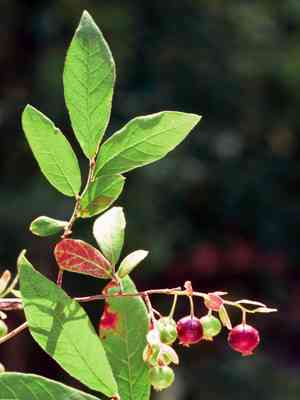
Deerberry (Vaccinium stamineum)
Also known as: Squaw huckleberry, Highbush huckleberry
The deerberry (Vaccinium stamineum) is a deciduous shrub indigenous to North America. Its extremely tart fruit requires sweetening to be palatable for humans, but deer enjoy the berries just as they are.
In This Article
Attributes of Deerberry
Lifespan
Perennial
Plant Type
Shrub
Plant Height
1.5 m to 3 m
Spread
1.8 m to 3.5 m
Leaf Color
Green Blue Red Purple Yellow
Flower Size
4 mm to 8 mm
Flower Color
White Green Pink
Images of Deerberry
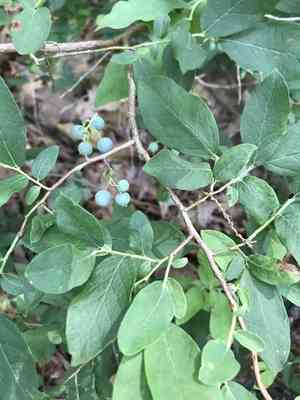
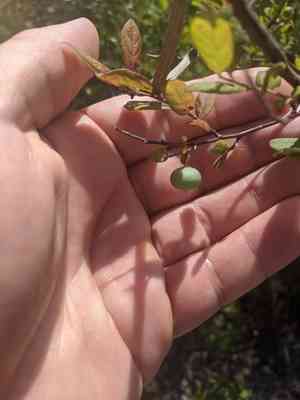
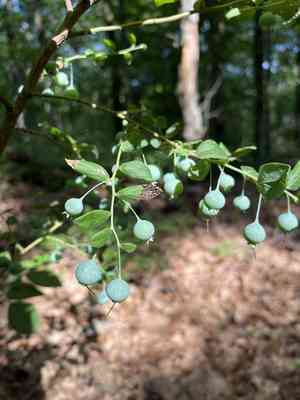
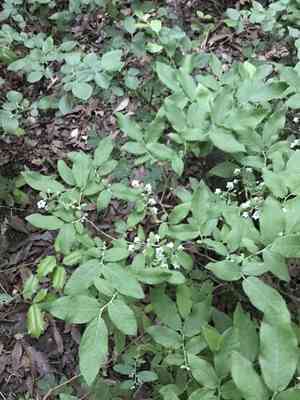
Quickly Identify Deerberry
1
Statuesque shrub reaching 5-15 feet (1.5-4.5 meters) with fuzzy underside leaves.
2
Small, open bell-shaped greenish-white flowers with prominent yellow stamens.
3
Pear-shaped berries in clusters, transitioning from yellow to purple when ripe.
4
Alternate leaves 1-3 inches (2.5-7.6 cm) long, with red and purple fall coloration.
5
Slender stem with zigzag pattern, green to red hue, branching irregularly.
Scientific Classification of Deerberry
Phylum
Vascular plants
Class
Dicotyledons
Order
Ericales
Family
Heath
Genus
Blueberries
Species
Deerberry
Planting and Growing of Deerberry
Care Difficulty
Easy
Watering Schedule
Every day
Sunlight Requirements
Partial sun
Sunshine Duration
6-10 hours
Ideal Temperature
60-75℉
Soil Type
Potting Mix, Peat Mix
Soil pH
4.5-6
Fertilizer Type
Balanced
Pruning Season
Spring, Summer
Pruning Area
Branches, Leaves
Pruning Frequency
2 times a year
Repotting Season
Spring
Pot Type
Terracotta, Plastic
 How to Water Deerberry?
When watering Vaccinium stamineum, aim for a moderate soak, about 500 ml per session. This ensures the soil is moist but not drenched, promoting healthy root growth without drowning the plant. Always check the topsoil; it should be dry up to an inch before the next watering.
What are the symptoms of an underwatered Deerberry?
›
What should I do if my Deerberry is not getting enough water?
›
What are the symptoms of an overwatered Deerberry?
›
How to save an overwatered Deerberry?
›
 What Are the Sunlight Requirements for Deerberry?
The ideal light range for Vaccinium stamineum is partial to full sun, specifically four to eight hours. This exposure supports healthy growth, vibrant foliage, and optimal flowering conditions throughout the growing season.
More About Sunlight Requirements Techniques→
How much sunlight does Vaccinium stamineum need?
›
What are the best conditions for its sunlight exposure?
›
How to adjust its position for seasonal sunlight changes?
›
 What Is the Ideal Temperature Range for Deerberry?
The ideal temperature range for Vaccinium stamineum is between 60°F and 75°F. This range supports optimal physiological functions, including photosynthesis and nutrient uptake, contributing to healthy growth and fruit production.
 What Soil is Best for Deerberry?
Vaccinium stamineum thrives in well-drained soils, which help prevent waterlogging that can suffocate roots or cause root rot. This type of soil ensures that the roots have adequate access to oxygen, promoting healthy growth and stability. This plant benefits from nutrient-rich soil, which supplies essential minerals and nutrients needed for its growth and fruit production. Fertile soil helps sustain its energy requirements and enhances the development of flowers and fruit. Vaccinium stamineum requires soil that retains moisture while providing proper drainage. This ensures that the plant roots are consistently hydrated without becoming waterlogged. Moist soil supports vibrant foliage and yields high-quality fruit.
 How to Fertilize Deerberry?
For Vaccinium stamineum, balanced fertilization is key. Use approximately half the recommended amount on the fertilizer package to avoid overfeeding, as this plant prefers a leaner nutrient environment. Dilute liquid fertilizers to half-strength to minimize the risk of root burn.
 How to Prune Deerberry?
Begin by identifying and removing any dead, diseased, or damaged branches. These not only affect the plant's aesthetic but can also hinder new growth. Thin out overcrowded sections to enhance air circulation. This reduces humidity and prevents fungal diseases, making the plant thrive more vigorously. Shape the plant by trimming branches that disrupt its natural form. Follow the plant's natural growth pattern for a harmonious and appealing look. Always cut at a 45-degree angle above a bud or branch junction to encourage healthy growth. This promotes natural healing and reduces water retention at the cut site.
More About Pruning Techniques→
 How to Propagate Deerberry plant?
1
Gather seeds from healthy, mature Vaccinium stamineum fruits. Clean them by removing any pulp and allow them to dry thoroughly before storage or sowing to prevent mold growth.
2
Select healthy, disease-free branches and cut sections about 10-15 cm in length. Remove lower leaves, leaving a few at the top, and treat the cut end with rooting hormone to promote root development.
3
Sow the cleaned seeds shallowly in a seed tray filled with well-draining potting mix. Maintain consistent moisture and position the tray in a warm, bright area to promote germination.
 How to Repot Deerberry plant?
1
Vaccinium stamineum requires repotting when you notice roots appear at the drainage holes, growth seems stunted, or the soil dries out rapidly. These signs indicate the plant has outgrown its current pot and needs more space for healthy development.
2
Select a pot that is one size larger than the current one, made of a breathable material like terracotta. This offers better aeration and helps in avoiding root rot. Ensure the pot has adequate drainage holes to prevent waterlogging.
3
Opt for an acidic soil mix with good drainage properties, such as a blend of peat moss, pine bark, and perlite. This type of soil mimics the plant's natural habitat, supporting root health and promoting vigorous growth.



