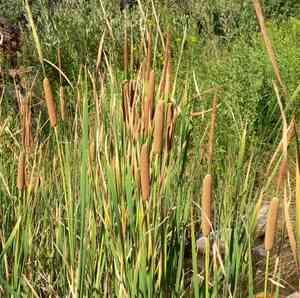
Southern cattail (Typha domingensis)
Also known as: Southern bulrush, Narrow-leaf cumbungi
Southern cattail (Typha domingensis) is a globally distributed perennial plant known for its ability to reduce bacterial contamination in water. While it can be quite invasive, often dominating small ponds, it has been traditionally utilized by Native Americans in various ways. The leaves were commonly used for weaving mats, baskets, and thatching roofs. The seed fluff provided effective stuffing for pillows and bedding. Additionally, the roots and young shoots were consumed as food, and parts of the plant were employed in traditional medicinal practices.
In This Article
Attributes of Southern cattail
Lifespan
Perennial
Plant Type
Herb
Plant Height
1.8 m to 3.5 m
Spread
1.8 m
Leaf Color
Green
Flower Size
2.5 cm
Flower Color
Yellow Green Brown
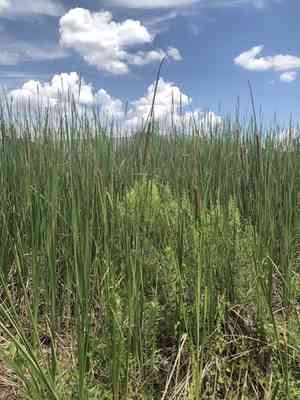
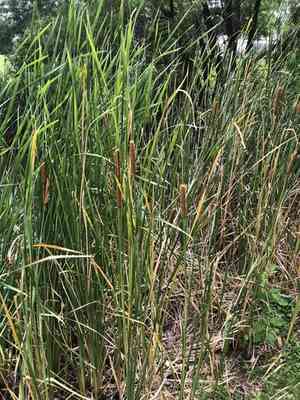
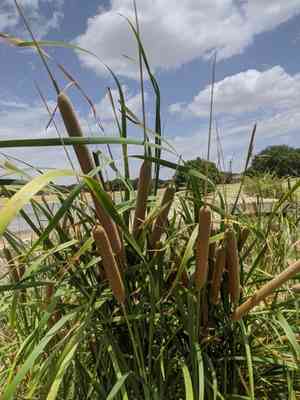
Images of Southern cattail

Quickly Identify Southern cattail
1
Typha domingensis can be identified by its tall, narrow, and erect stems that can grow up to 4 meters. The leaves are long and strap-like. Its distinctive brown, sausage-shaped flower spikes are a key feature for identification.
Scientific Classification of Southern cattail
Phylum
Vascular plants
Class
Monocotyledons
Order
Poales
Family
Cattail
Genus
Cattails
Species
Southern cattail
Planting and Growing of Southern cattail
Care Difficulty
Easy
Watering Schedule
Every 8 days
Sunlight Requirements
Full sun
Sunshine Duration
4-6 hours
Ideal Temperature
70-86℉
Soil Type
Potting Mix, Peat Mix
Soil pH
6.5-7.5
Fertilizer Type
Balanced
Pruning Season
Spring, Summer
Pruning Area
Branches, Leaves
Pruning Frequency
2 times a year
Repotting Season
Spring
Pot Type
Plastic, Ceramic
 How to Water Southern cattail?
Typha domingensis, also known as Southern cattail, thrives best in moist environments, echoing the wetlands from which it originates. Watering should ensure the soil remains consistently moist. Each session should provide about 500 ml of water, enough to saturate the soil without causing stagnation.
What are the symptoms of an underwatered Southern cattail?
›
What should I do if my Southern cattail is not getting enough water?
›
What are the symptoms of an overwatered Southern cattail?
›
How to save an overwatered Southern cattail?
›
 What Are the Sunlight Requirements for Southern cattail?
Typha domingensis prefers full sun to partial sun exposure, ideally six to eight hours daily. Proper light enhances photosynthesis, fueling growth and reproductive processes, which are vital for its ecological role.
More About Sunlight Requirements Techniques→
What is the best light exposure?
›
How to achieve ideal lighting?
›
What are the benefits of ideal light?
›
 What Is the Ideal Temperature Range for Southern cattail?
Typha domingensis thrives best in an environment where temperatures range from 70°F to 86°F. This range supports optimal metabolic processes and growth rates, providing an ideal balance necessary for vibrant health and reproductive success.
 What Soil is Best for Southern cattail?
Typha domingensis thrives in soils that retain moisture, making wetlands an ideal habitat. Moisture retention ensures the plant receives adequate water for optimal growth, crucial for its tall and dense structure. This plant demands nutrient-rich soils to support its rapid growth and dense root system. Abundant organic matter enhances soil fertility, promoting healthy Typha proliferation and robust ecosystem functions. While moisture is crucial, good drainage prevents waterlogging, which can suffocate roots and hinder growth. Proper drainage ensures a balance between moisture retention and aeration, vital for Typha health.
 How to Fertilize Southern cattail?
For Typha domingensis, when using liquid fertilizers, dilute to half the recommended concentration to avoid over-fertilization. For slow-release fertilizers, use approximately 5 grams per square meter.
 How to Prune Southern cattail?
Select dead, diseased, or damaged stems that need removal. Look for discolored or broken parts and cut them back to the base. Be sure to also thin the plant if it's overcrowded, allowing adequate sunlight and air circulation. When trimming back stems, make cuts just above the leaf line to encourage new growth. This practice ensures that the plant retains its height and provides aesthetically pleasing foliage structure.
More About Pruning Techniques→
 How to Propagate Southern cattail plant?
1
Collect ripe seeds from the Typha domingensis in late autumn. Clean and dry them thoroughly to ensure they are ready for planting during the proper season, generally spring.
2
Sow the seeds in individual pots or seed trays filled with sandy soil. Keep them in a shaded area to mimic their natural habitat and ensure consistent moisture for optimal germination.
3
In early summer, select a mature Typha domingensis plant. Use a spade to gently lift and separate the roots into smaller sections, ensuring each section has adequate roots for replanting.
 How to Repot Southern cattail plant?
1
Typha domingensis shows signs it needs repotting when its roots start circling the pot or growing out of the drainage holes. The best time is when the plant becomes root-bound, or water takes longer to drain, indicating soil compaction.
2
Select a pot that is 1-2 inches larger in diameter than the current one. Ensure it has sufficient drainage holes to prevent waterlogging. A larger pot supports healthy root development, aiding overall growth and vigor.
3
Opt for loamy, well-draining soil with a mix of sand and organic matter. This helps maintain adequate moisture levels while providing necessary nutrients, promoting robust growth and preventing root rot.
Learn More About Southern cattail Diseases
Anthracnose
Bacterial Leaf Spot
Bacterial Soft Rot
Bacterial Wilt
Chemical Injury
Cyst Nematode
Damping-off
Downy Mildew
Drought Stress
Fusarium Wilt
Gray Mold
Leaf Spot
Mosaic
Nutrient Deficiency
Nutrient Toxicity
Powdery Mildew
Root Rot
Root-knot Nematode
Rusts
Sooty Mold
Spider Mites
Temperature Stress
Thrips Damage
White Mold



