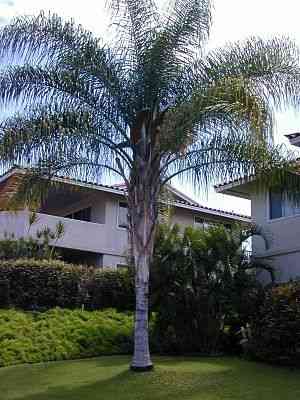
Queen palm (Syagrus romanzoffiana)
Also known as: Cocos palm
The Canary Island Date Palm (*Phoenix canariensis*) is a rapidly growing tree featuring a smooth gray trunk and elegantly arching, feather-like fronds. It produces cream-colored flowers and vibrant orange fruit that clusters heavily. This tree thrives in full sun, has moderate salt tolerance, and is a popular choice for urban landscapes, especially along streets and sidewalks. It can reach heights of up to 15 meters.
In This Article
Attributes of Queen palm
Lifespan
Perennial
Plant Type
Palm
Plant Height
10 m to 15 m
Spread
6 m to 9 m
Leaf Color
Green
Flower Size
4 mm to 6 mm
Flower Color
Cream
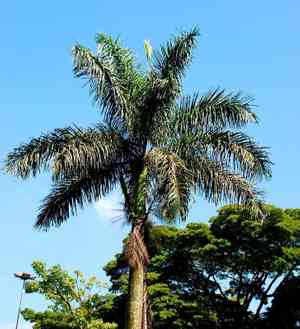
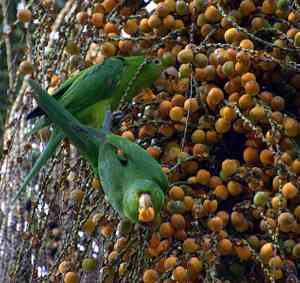
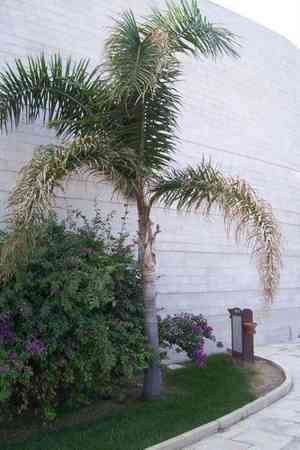
Images of Queen palm
Quickly Identify Queen palm
1
Impressive height of up to 50 feet (15 meters)
2
Elegant, arching fronds with vertically oriented leaflets
3
Creamy flowers and bright orange seeds in warmer seasons
4
Skirt of leaf bases and fibers near the crown
5
Smooth gray bark transitioning from leaf bases
Scientific Classification of Queen palm
Phylum
Vascular plants
Class
Monocotyledons
Order
Arecales
Family
Palm
Genus
syagrus
Species
Queen palm
Planting and Growing of Queen palm
Care Difficulty
Easy
Watering Schedule
Every 4 days
Sunlight Requirements
Full sun
Sunshine Duration
6-10 hours
Ideal Temperature
68-86℉
Soil Type
Potting Mix, Peat Mix
Soil pH
6.5-7.5
Fertilizer Type
Balanced
Pruning Season
Spring, Summer
Pruning Area
Branches, Leaves
Pruning Frequency
2 times a year
Repotting Season
Spring
Pot Type
Plastic, Ceramic
 How to Water Queen palm?
When watering Syagrus romanzoffiana, ensure the soil is thoroughly moistened but not waterlogged. This palm prefers deep watering, allowing the water to reach the roots, ensuring adequate hydration without drowning the plant.
More About Watering Techniques→
What are the symptoms of an underwatered Queen palm?
›
What should I do if my Queen palm is not getting enough water?
›
What are the symptoms of an overwatered Queen palm?
›
How to save an overwatered Queen palm?
›
 What Are the Sunlight Requirements for Queen palm?
This palm species performs optimally under full sun to partial sun conditions, benefiting from morning to early afternoon sunlight. Adequate light fosters lush foliage, bright coloration, and robust development, ensuring long-term health.
More About Sunlight Requirements Techniques→
What is the best location to plant Syagrus romanzoffiana?
›
How much sunlight does Syagrus romanzoffiana need?
›
What are the benefits of providing ideal light conditions for Syagrus romanzoffiana?
›
 What Is the Ideal Temperature Range for Queen palm?
For optimal growth, Syagrus romanzoffiana thrives best at temperatures between 68°F and 86°F. Within this range, the plant can photosynthesize effectively, which promotes healthy growth and development. Temperatures below or above this range may inhibit the plant's metabolic processes, leading to stunted growth.
 What Soil is Best for Queen palm?
Syagrus romanzoffiana thrives in well-drained soils that prevent waterlogging, ensuring healthy root growth and reducing the risk of root rot. A nutrient-rich soil provides essential minerals and nutrients that support robust growth and vibrant foliage of the Syagrus romanzoffiana. The soil should retain adequate moisture without becoming waterlogged, providing consistent water availability for optimal palm health and growth.
More About Soil→
 How to Fertilize Queen palm?
For a healthy Syagrus romanzoffiana, use a balanced 10-10-10 fertilizer. Apply 1/2 cup per sq. foot for young plants, doubled for mature specimens. Ensure dilution per package instructions when using liquid fertilizers to prevent root burn.
More About Fertilizing Techniques→
 How to Prune Queen palm?
Use a pair of sharp, clean pruning shears or a pruning saw for larger fronds. Sharp tools ensure clean cuts which help the plant to heal faster and reduce disease risks. Look for brown, dry fronds near the base. These are the ones you need to remove. A healthy frond is green and the base is flexible and vibrant in color. Ensure you make clean cuts just above the base of the frond without harming the trunk. This encourages proper healing and the growth of new fronds.
More About Pruning Techniques→
 How to Propagate Queen palm plant?
1
Harvest seeds from ripe fruit that has fallen naturally. Clean and dry the seeds before storing them in a cool, dry place until ready for sowing.
2
Fill seed trays with a well-draining potting mix. Lightly moisten the soil to provide an optimal environment for germination.
3
Plant the seeds about half an inch deep in the soil. Cover them lightly with potting mix and keep the trays in a warm, well-lit area.
 How to Repot Queen palm plant?
1
Syagrus romanzoffiana should be repotted when you observe roots coming out from the drainage holes or when the plant becomes root-bound. The ideal time is early spring when the plant shows signs of growth, ensuring that it has the entire growing season to establish in its new pot.
2
Opt for a pot that is one size larger than the current one with ample drainage holes. This allows the plant roots to expand while preventing water accumulation, which can lead to root rot. A good breathable pot aids in aerating the root system, promoting healthy growth.
3
Select a well-draining soil mix with added sand or perlite to enhance aeration and prevent waterlogging. This type of soil mimics the natural habitat of the plant, supporting steady water and nutrient absorption without suffocating the roots.



