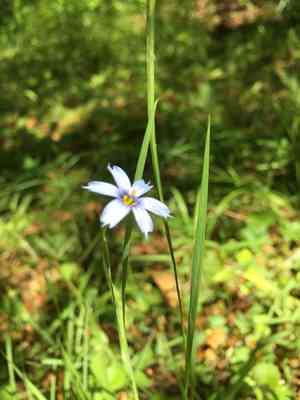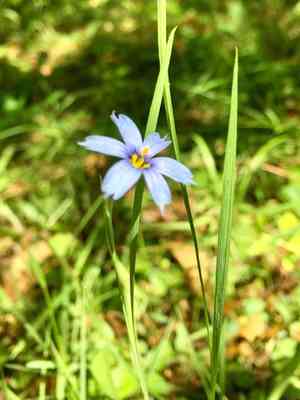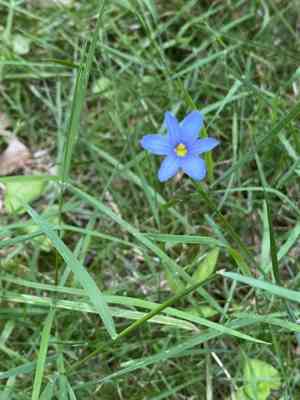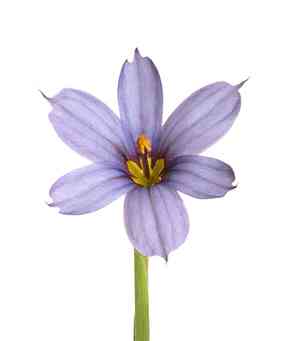
Narrow-leaf blue-eyed grass(Sisyrinchium angustifolium)

Narrow-leaf blue-eyed grass (Sisyrinchium angustifolium)

Also known as: Blue pigroot

Narrow-leaf blue-eyed grass (Sisyrinchium angustifolium), also known as Pointed Blue-Eyed Grass, Stout Blue-Eyed Grass, and Bermuda Blue-Eyed Grass, typically thrives in moist environments such as meadows, open woodlands, and near water bodies like stream edges and shorelines.

Attributes of Narrow-leaf blue-eyed grass

Lifespan
Perennial, Annual
Plant Type
Herb
Plant Height
46 cm to 61 cm
Spread
15 cm to 30 cm
Leaf Color
Green
Flower Size
2.5 cm
Flower Color
Blue Purple Yellow

ForwardPlant - Identify plants with a snap

Identify and diagnose plants, get toxicity alerts, and explore safety guides for all types of fungi.

Try for Free

Images of Narrow-leaf blue-eyed grass
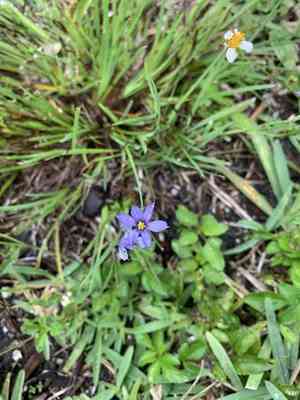
Narrow-leaf blue-eyed grass(Sisyrinchium angustifolium)

Quickly Identify Narrow-leaf blue-eyed grass

1
Distinctive star-shaped deep blue flowers with six petal-like tepals
2
Long, narrow, grass-like leaves measuring 4-10 inches (10-25 cm) in length
3
Slender, flat, wiry stems up to 24 inches (60 cm) in height, unbranched and uniform
4
Rounded fruit capsules that wrinkle and darken when mature, containing small black seeds
5
Basal tuft of slender foliage, giving the plant a delicate appearance

Scientific Classification of Narrow-leaf blue-eyed grass

Phylum
Vascular plants
Class
Monocotyledons
Order
Asparagales
Family
Iris
Genus
Blue-eyed grasses
Species
Narrow-leaf blue-eyed grass

Planting and Growing of Narrow-leaf blue-eyed grass

Care Difficulty
Easy
Watering Schedule
Every 4 days
Sunlight Requirements
Full sun
Sunshine Duration
4-6 hours
Ideal Temperature
65-75℉
Soil Type
Potting Mix, Peat Mix
Soil pH
6-7.5
Fertilizer Type
Balanced
Pruning Season
Spring, Summer
Pruning Area
Branches, Leaves
Pruning Frequency
2 times a year
Repotting Season
Spring
Pot Type
Plastic, Ceramic

water icon How to Water Narrow-leaf blue-eyed grass?

For Sisyrinchium angustifolium, ensure that the soil remains consistently moist but not waterlogged. Water sufficiently so that about 250 ml seeps through the soil, reaching the roots without drowning them. This balance keeps the plant hydrated while allowing roots to breathe.
What are the symptoms of an underwatered Narrow-leaf blue-eyed grass? ›
What should I do if my Narrow-leaf blue-eyed grass is not getting enough water? ›
What are the symptoms of an overwatered Narrow-leaf blue-eyed grass? ›
How to save an overwatered Narrow-leaf blue-eyed grass? ›

sunlight icon What Are the Sunlight Requirements for Narrow-leaf blue-eyed grass?

Sunlight Requirements: Full sun, Partial sun
Duration of light: 4 to 6 hours
Sisyrinchium angustifolium thrives in full sun to partial sun environments. Consistent exposure within this range promotes vibrant blooms and vigorous growth, enhancing its natural appeal and health.
How much sunlight does it need? ›
What are the solutions to provide ideal light? ›
What are the benefits of ideal lighting? ›
More About Sunlight Requirements Techniques→

temperature icon What Is the Ideal Temperature Range for Narrow-leaf blue-eyed grass?

Ideal Temperature: 65 ~ 75℉
The ideal temperature range for Sisyrinchium angustifolium is between 65 and 75°F. This range provides optimal conditions for photosynthesis and growth. Temperatures within this range allow the plant to thrive by enabling efficient nutrient uptake and enzymatic activities.

soil icon What Soil is Best for Narrow-leaf blue-eyed grass?

Soil type: Loam, Sandy loam
Soil PH: 6 ~ 7.5
Sisyrinchium angustifolium thrives in well-drained soil that prevents waterlogging, which can lead to root rot and other diseases. A loam or sandy loam soil ensures excess water can easily drain away, allowing roots to access oxygen and essential nutrients effectively. While Sisyrinchium angustifolium is not particularly demanding in terms of soil fertility, a moderately fertile soil can help support robust growth and vibrant flowers. Incorporating organic matter such as compost can provide necessary nutrients and improve soil structure. A soil pH between 6.0 and 7.5 is ideal for Sisyrinchium angustifolium. This range allows for the availability of essential nutrients and supports healthy plant development, avoiding nutrient lock-up that can occur at extremes of the pH scale.

fertilize icon How to Fertilize Narrow-leaf blue-eyed grass?

Fertilizer type: Balanced
For Sisyrinchium angustifolium, a small amount of fertilizer is necessary. Use 1/4 teaspoon of water-soluble fertilizer per pint of water for liquid fertilization to avoid over-feeding the plant.

prune icon How to Prune Narrow-leaf blue-eyed grass?

Pruning Time: Spring, Summer
Begin by examining the plant for dead, discolored, or damaged leaves and stems. These parts should be the first to be removed to encourage new growth and maintain overall plant health. Utilize a pair of sharp scissors or pruning shears to make clean cuts. Dull tools can damage the plant by causing jagged cuts that are more susceptible to disease. For best results, cut dead or damaged leaves and stems as close to the base as possible without injuring surrounding healthy growth. This approach helps the plant redirect energy towards new growth. Before and after pruning, ensure your tools are disinfected to avoid spreading any potential pathogens that could harm the plant. A simple solution of water and bleach can be used for this purpose. More About Pruning Techniques→

propagate icon How to Propagate Narrow-leaf blue-eyed grass plant?

Propagate Time: Spring, Early summer
1
Collect seeds from mature Sisyrinchium angustifolium plants. Clean them to remove any pulp and allow them to dry properly before sowing. This enhances germination rates.
2
Carefully dig up the plant and gently shake off excess soil. Use a sharp knife to divide the root ball into smaller clumps, ensuring each has shoots and roots. Replant immediately.
3
Fill a seed tray with a seed-starting mix, sow the seeds on the surface, and lightly cover them with soil. Maintain a consistent temperature and moisture level to promote germination.
More About Propagating Techniques→

repot icon How to Repot Narrow-leaf blue-eyed grass plant?

Repotting frequency: Every 2-3 years
1
Look for signs such as roots growing out of the drainage holes, the plant showing signs of stress like wilting or yellowing, or the soil not retaining moisture as it should. These are clear indicators Sisyrinchium angustifolium needs repotting.
2
Select a pot that is one size larger than the current one, with adequate drainage holes at the bottom. This helps prevent root rot and gives the roots space to expand, promoting healthier growth.
3
Opt for a well-draining potting mix enriched with organic matter. This type of soil ensures good aeration and nutrient retention, which is essential for maintaining the health of Sisyrinchium angustifolium.

ForwardPlant - Identify plants with a snap

Find the best spots for them to optimize their health, simply using your phone.

Try for Free

Toxicity of Narrow-leaf blue-eyed grass

Is Narrow-leaf blue-eyed grass toxic to cat?

Narrow-leaf blue-eyed grass is known to have a mild toxicity level for cats, which may manifest if they ingest significant amounts of the plant. Every part of this species is deemed toxic and could potentially result in general discomfort, illness, or painful reactions in cats. Although detailed symptoms are not specified, it is essential for cat owners to remain alert and observe their pets for any signs of distress or discomfort. Should you suspect that a cat has consumed a part of narrow-leaf blue-eyed grass, it is vital to seek prompt veterinary care to safeguard their health and overall well-being.

Is Narrow-leaf blue-eyed grass toxic to dog?

Narrow-leaf blue-eyed grass presents a mild toxicity risk to canines. Although this plant is not generally fatal, consuming it in large quantities can result in negative health effects. Each part of the narrow-leaf blue-eyed grass contains toxic substances, meaning dogs can be poisoned by ingesting any section of it. Symptoms of poisoning may include gastrointestinal disturbances, such as vomiting and diarrhea, increased lethargy, or other mild signs of illness. If you suspect that your dog has consumed narrow-leaf blue-eyed grass, it is crucial to seek veterinary assistance quickly to ensure proper treatment and avoid more serious health problems.

Identify toxic plants for your safety

Learn which plants are harmful to you and your pets, and make informed choices for a safer home!

Try for Free
WARNING
The judgment on toxicity and danger is for reference only. We DO NOT GUARANTEE any accuracy of such judgment. Therefore, you SHALL NOT rely on such judgment. It is IMPORTANT TO SEEK PROFESSIONAL ADVICE in advance when necessary.
More About Toxic Techniques→