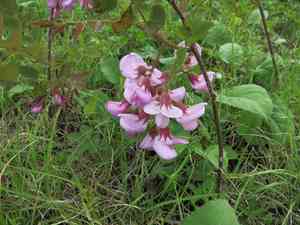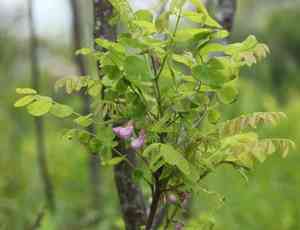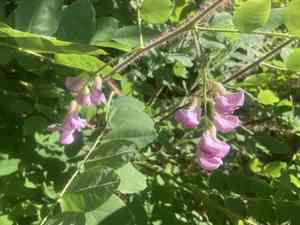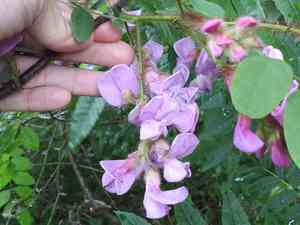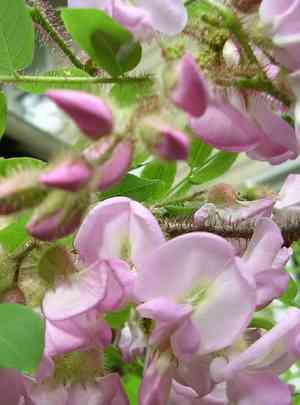
Bristly locust(Robinia hispida)

Bristly locust (Robinia hispida)

Also known as: Moss locust, Standing sweat pea

The bristly locust (Robinia hispida) is a deciduous shrub native to the southeastern U.S., known for its striking magenta flowers and effective soil stabilization. The Cherokee utilized this plant for various practical purposes, including crafting tools and constructing fences from its wood. They also valued the plant for its medicinal properties, using its roots to treat wounds and digestive issues.

Attributes of Bristly locust

Lifespan
Perennial
Plant Type
Shrub
Plant Height
3 m
Spread
90 cm to 1.8 m
Leaf Color
Green
Flower Size
3 cm
Flower Color
Pink Purple

ForwardPlant - Identify plants with a snap

Identify and diagnose plants, get toxicity alerts, and explore safety guides for all types of fungi.

Try for Free

Images of Bristly locust

Bristly locust(Robinia hispida)

Quickly Identify Bristly locust

1
Vibrant pendulous pink flower clusters resembling peas.
2
Compound leaves turning vivid yellow in the fall.
3
Distinct bristly purple flat seed pods, 2-3 inches (5-7.6 cm) long.
4
Purplish-brown bristly hairs covering stems and branches.
5
Smooth bark with a reddish-brown hue, displaying subtle vertical ridges.

Scientific Classification of Bristly locust

Phylum
Vascular plants
Class
Dicotyledons
Order
Legumes, milkworts and allies
Family
Legume
Genus
Locusts
Species
Bristly locust

Planting and Growing of Bristly locust

Care Difficulty
Easy
Watering Schedule
Every 2 days
Sunlight Requirements
Full sun
Sunshine Duration
6-10 hours
Ideal Temperature
60-75℉
Soil Type
Potting Mix, Peat Mix
Soil pH
6.5-7.5
Fertilizer Type
Balanced
Pruning Season
Spring, Summer
Pruning Area
Branches, Leaves
Pruning Frequency
2 times a year
Repotting Season
Spring
Pot Type
Plastic, Ceramic

water icon How to Water Bristly locust?

When watering Robinia hispida, aim to supply around 500 ml of water. Ensure the water saturates the root ball but avoid water pooling at the base to prevent root rot. This volume allows moisture to disperse evenly through the soil without oversaturation.
What are the symptoms of an underwatered Bristly locust?
What should I do if my Bristly locust is not getting enough water?
What are the symptoms of an overwatered Bristly locust?
How to save an overwatered Bristly locust?

sunlight icon What Are the Sunlight Requirements for Bristly locust?

Sunlight Requirements: Full sun, Partial sun
Duration of light: 4 to 6 hours
Robinia hispida benefits from a balance of full sun to partial sun exposure. Ideal light conditions involve a place where the plant can receive morning sunlight for vibrant flowering and growth, without the harmful effects of direct afternoon heat.
What type of sunlight does Robinia hispida prefer?
How can you ensure Robinia hispida gets optimal sunlight?
What are the benefits of optimal sunlight for Robinia hispida?
More About Sunlight Requirements Techniques

temperature icon What Is the Ideal Temperature Range for Bristly locust?

Ideal Temperature: 60 ~ 75℉
For optimal growth, Robinia hispida thrives best in temperatures ranging from 60°F to 75°F. These conditions provide the best environment for photosynthesis and nutrient uptake, promoting vibrant foliage and robust growth.

soil icon What Soil is Best for Bristly locust?

Soil type: Loam, Sandy loam, Sandy soil
Soil PH: 6.5 ~ 7.5
Robinia hispida thrives in well-drained soil which prevents waterlogging and root rot. Ensuring good drainage enhances root health and overall plant vigor, essential for successful growth. While this plant can tolerate some drought, it performs best in soil with consistent moderate moisture. This balance supports optimal nutrient uptake and ensures lush foliage. A fertile, nutrient-rich soil encourages robust flowering and foliage production. Amending soil with organic matter like compost can significantly boost nutrient availability.

fertilize icon How to Fertilize Bristly locust?

Fertilizer type: Balanced
For Robinia hispida, use a balanced 10-10-10 (N-P-K) fertilizer at half strength to avoid over-fertilization. Apply approximately 1 cup of liquid fertilizer per plant each session.

prune icon How to Prune Bristly locust?

Pruning Time: Spring, Summer
Ensure all your pruning tools are sharp and sanitized before beginning. This prevents the spread of disease and makes cleaner cuts, promoting faster healing. Start by removing any dead or diseased branches. This helps the plant focus its energy on healthy growth and prevents the spread of disease. Trim the shrub to shape it and thin out overcrowded areas. This ensures better airflow and light penetration, which are crucial for the plant's health and flowering. Prune in early spring before new growth begins or immediately after flowering ends to avoid cutting off next year's flower buds. This timing ensures a full bloom cycle. More About Pruning Techniques

propagate icon How to Propagate Bristly locust plant?

Propagate Time: Spring, Early summer
1
Select healthy, mature stems for cuttings, typically from the current year's growth. Look for stems that are disease-free and robust, ensuring they have several nodes for root development.
2
Cut a 4-6 inch length from the selected stem using sharp pruning shears. Remove leaves from the lower half to encourage root development and prepare it for rooting hormone application.
3
Dip the cut end into rooting hormone and plant it in a suitable growing medium, such as a mixture of sand and peat moss. Water thoroughly and cover with a plastic bag to create a humid micro-environment.
More About Propagating Techniques

repot icon How to Repot Bristly locust plant?

Repotting frequency: Every 2-3 years
1
Robinia hispida should be repotted when its roots start to emerge from the drainage holes, or if the plant shows signs of slowed or stunted growth, indicating it's root-bound. Spring and autumn are the optimal seasons for repotting, as the plant experiences vigorous growth during these times.
2
Select a pot that is slightly larger than the current one, with ample drainage holes to prevent waterlogging. A larger pot gives the roots more room to grow, promoting healthy plant development while minimizing the risk of overwatering. Terracotta pots are ideal as they allow excess moisture to evaporate easily.
3
Opt for a well-draining loamy soil mixture to ensure adequate drainage and aeration for Robinia hispida. This type of soil maintains moisture balance, preventing root rot while supporting the plant's growth and nutrient uptake. Incorporating sand or perlite can improve drainage further.

ForwardPlant - Identify plants with a snap

Find the best spots for them to optimize their health, simply using your phone.

Try for Free

Toxicity of Bristly locust

Is Bristly locust toxic to cat?

The bristly locust plant exhibits mild toxicity to felines and can result in health complications if consumed in significant amounts. Every part of the bristly locust is toxic, posing a danger if a cat ingests any section of the plant. Contact with the bristly locust may lead to noticeable signs of discomfort or illness in cats. If a cat has ingested the bristly locust, it is crucial to swiftly obtain professional assistance at a veterinary clinic to alleviate any possible negative consequences.

Is Bristly locust toxic to dog?

The bristly locust presents a moderate toxicity hazard for dogs. Although this plant is not extremely toxic, consuming it in significant amounts can result in poisoning. Dogs might be inclined to chew on any section of the bristly locust, as every part is deemed toxic. Signs of poisoning in dogs may encompass gastrointestinal disturbances, including vomiting and diarrhea, as well as possible lethargy or excessive salivation. If you believe your dog has consumed bristly locust, it is vital to seek prompt veterinary assistance to guarantee appropriate treatment and symptom management.

Identify toxic plants for your safety

Learn which plants are harmful to you and your pets, and make informed choices for a safer home!

Try for Free
WARNING
The judgment on toxicity and danger is for reference only. We DO NOT GUARANTEE any accuracy of such judgment. Therefore, you SHALL NOT rely on such judgment. It is IMPORTANT TO SEEK PROFESSIONAL ADVICE in advance when necessary.
More About Toxic Techniques