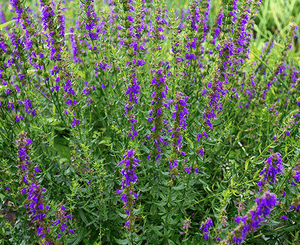
Hyssop(Hyssopus officinalis)

Hyssop (Hyssopus officinalis)

Also known as: Hyssop

Hyssop (*Hyssopus officinalis*) is an annual herb reaching heights of 61 to 91 cm. This plant blooms in late summer, producing small clusters of lavender-blue flowers. The fragrant blooms are particularly attractive to hummingbirds, bees, and butterflies.

Attributes of Hyssop

Lifespan
Perennial
Plant Type
Herb, Shrub
Plant Height
30 cm to 60 cm
Spread
45 cm to 60 cm
Leaf Color
Green Gray
Flower Size
2.5 cm
Flower Color
Blue Purple Violet White Pink

ForwardPlant - Identify plants with a snap

Identify and diagnose plants, get toxicity alerts, and explore safety guides for all types of fungi.

Try for Free

Images of Hyssop

Hyssop(Hyssopus officinalis)

Quickly Identify Hyssop

1
Slender stems up to 2 feet (60 cm) tall with lance-shaped, hairy leaves in whorled pattern.
2
Small, tubular blue to purple flowers clustered in spikes emit aromatic scent.
3
Distinctive two-lipped purple-blue flowers with protruding stamens on long spikes.
4
Narrow, shiny, dark green leaves up to 1 inch (2.5 cm) with toothed edges.
5
Green, square stems with frequent branching forming compact clusters, average thickness 0.1-0.3 inches (0.25-0.75 cm).

Scientific Classification of Hyssop

Phylum
Vascular plants
Class
Dicotyledons
Order
Mints plantains olives and allies
Family
Mint
Genus
Hyssop
Species
Hyssop

Planting and Growing of Hyssop

Care Difficulty
Easy
Watering Schedule
Every 4 days
Sunlight Requirements
Full sun
Sunshine Duration
6-10 hours
Ideal Temperature
65-77℉
Soil Type
Potting Mix, Peat Mix
Soil pH
6.5-7.5
Fertilizer Type
Balanced
Pruning Season
Spring, Summer
Pruning Area
Branches, Leaves
Pruning Frequency
2 times a year
Repotting Season
Spring
Pot Type
Plastic, Ceramic

water icon How to Water Hyssop?

Hyssopus officinalis, commonly known as hyssop, thrives with moderate watering. The plant requires about 250 ml of water each time, ensuring the soil remains slightly moist but not waterlogged. Water should be applied until it begins to drain from the bottom of the pot, indicating the soil has absorbed enough moisture.
What are the symptoms of an underwatered Hyssop?
What should I do if my Hyssop is not getting enough water?
What are the symptoms of an overwatered Hyssop?
How to save an overwatered Hyssop?

sunlight icon What Are the Sunlight Requirements for Hyssop?

Sunlight Requirements: Full sun
Duration of light: 6 to 8 hours
Hyssopus officinalis flourishes in full sun settings. Regular full sun exposure promotes healthy foliage, vibrant flowers, and enhances its aromatic essences, making it ideal for culinary and ornamental uses.
What is optimal light for Hyssopus officinalis?
Solution for providing optimal light exposure?
Benefits of adequate sunlight for Hyssopus officinalis?
More About Sunlight Requirements Techniques

temperature icon What Is the Ideal Temperature Range for Hyssop?

Ideal Temperature: 65 ~ 77℉
Hyssopus officinalis thrives best within a specific temperature range between 65°F and 77°F. This range provides optimal conditions for growth and ensures healthy development. Temperatures within this range enable efficient photosynthesis and prevent plant stress.

soil icon What Soil is Best for Hyssop?

Soil type: Sandy soil, Calcareous soil
Soil PH: 6.5 ~ 7.5
Hyssopus officinalis thrives in well-drained soil, as it prevents water from pooling around the roots, reducing the risk of root rot. This condition helps the plant maintain optimal health and encourages vibrant growth. While not overly demanding, this plant benefits from nutrient-rich soil that supplies essential minerals, promoting strong stems and lush foliage you will enjoy in any herb garden. A soil that has moderate moisture retention properties ensures that the plant receives enough hydration in hot climates without becoming waterlogged. This balance is key for its robust appearance and aromatic properties.

fertilize icon How to Fertilize Hyssop?

Fertilizer type: Balanced
For Hyssopus officinalis, a modest amount of fertilizer is key, especially considering its preference for more alkaline and well-drained soils. Typically, the use of a balanced 10-10-10 fertilizer at a reduced rate, about half the recommended amount, is advisable. This helps to provide essential nutrients without overwhelming the plant's natural growth patterns.

prune icon How to Prune Hyssop?

Pruning Time: Spring, Summer
Begin by inspecting the plant for any dead or damaged stems. Using pruning shears, trim back the top one-third of the plant. This encourages new growth and helps maintain a compact shape. Be sure to cut just above a leaf node to promote branching. More About Pruning Techniques

propagate icon How to Propagate Hyssop plant?

Propagate Time: Spring,Late spring,Early summer
1
To propagate Hyssopus officinalis by seeds, first gather mature seeds from healthy plants. Soak them in water for 24 hours to enhance germination rates.
2
For cutting propagation, choose a healthy plant and make 4-6 inch cuttings just below a node. Remove the lower leaves to prevent rotting, but keep some leaves at the top.
3
Divide the plant by gently digging it out and separating the roots into smaller clumps. Ensure each division has a substantial root system and foliage for better chance of survival.
More About Propagating Techniques

repot icon How to Repot Hyssop plant?

Repotting frequency: Every 2-3 years
1
Monitor your Hyssopus officinalis for signs such as overcrowded roots, wilting, or slowed growth. These are clear indicators that the plant needs a new space. Ideally, repot during its active growing seasons, spring or summer, for best adaptation.
2
Select a pot that is one size larger than the current one. Ensure it has drainage holes for excess water to escape. The right pot minimizes root rot risks and allows room for healthy, expansive root growth.
3
Opt for well-draining sandy soil that mimics its natural habitat. Such soil prevents waterlogging and ensures proper air circulation in the root zone, promoting a robust and healthy Hyssopus officinalis.

ForwardPlant - Identify plants with a snap

Find the best spots for them to optimize their health, simply using your phone.

Try for Free

Toxicity of Hyssop

Is Hyssop toxic to cat?

Hyssop is known to have a moderate toxicity level for felines, raising alarms for cat owners. Any part of the plant can be harmful, as all its components pose a risk if consumed. If a cat ingests Hyssop, it may show signs of discomfort, which indicates it has suffered negative effects from the ingestion. Promptly recognizing these health issues is crucial, and immediate veterinary assistance should be sought. Taking swift action can greatly enhance the likelihood of recovery for the cat and minimize the potential for serious health problems.

Is Hyssop toxic to dog?

Hyssopus officinalis, widely recognized as Hyssop, presents a moderate toxicity risk for dogs. If dogs consume any portion of the hyssop plant, they face the danger of poisoning due to its toxic characteristics. Every part of the plant is hazardous, and dogs can become poisoned upon ingesting even small amounts. Symptoms of hyssop poisoning in dogs may encompass gastrointestinal distress, vomiting, diarrhea, lethargy, or more serious signs, which depend on the quantity consumed. It is essential for dog owners to keep their pets away from hyssop and to remain vigilant for any signs of discomfort that might suggest ingestion. If a dog shows symptoms indicative of hyssop poisoning, seeking immediate veterinary assistance is critical to ensure swift treatment and achieve the best outcome.

Identify toxic plants for your safety

Learn which plants are harmful to you and your pets, and make informed choices for a safer home!

Try for Free
WARNING
The judgment on toxicity and danger is for reference only. We DO NOT GUARANTEE any accuracy of such judgment. Therefore, you SHALL NOT rely on such judgment. It is IMPORTANT TO SEEK PROFESSIONAL ADVICE in advance when necessary.
More About Toxic Techniques

