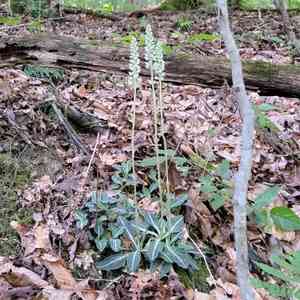
Rattlesnake plantain (Goodyera pubescens)
Also known as: Adder's violet, Scrofula leaf, Net-leaf, Downy rattlesnake plantain
Rattlesnake plantain (Goodyera pubescens) is a perennial evergreen orchid commonly found in the forests of Virginia and throughout eastern North America. It thrives in woodland gardens, preferring partially shaded areas and soil that is well-mulched and rich in organic matter.
In This Article
Attributes of Rattlesnake plantain
Lifespan
Perennial
Plant Type
Herb
Plant Height
5 cm to 46 cm
Spread
10 cm to 15 cm
Leaf Color
Green Blue White
Flower Size
3.5 mm to 6 mm
Flower Color
White
Images of Rattlesnake plantain
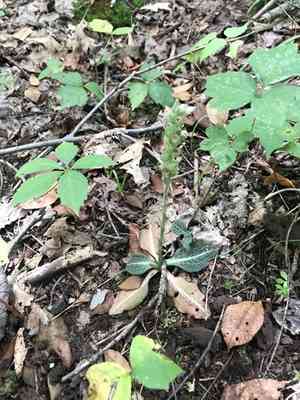
Quickly Identify Rattlesnake plantain
1
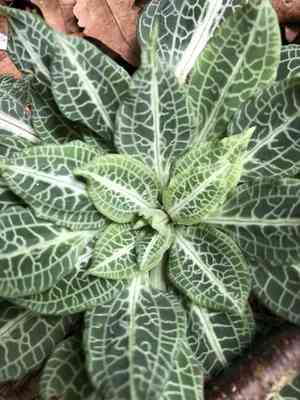
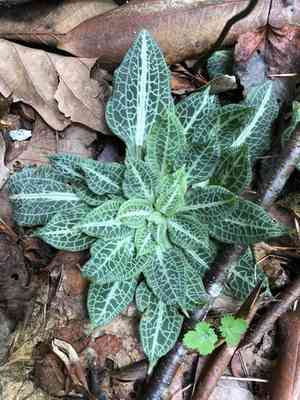
Basal rosette of dark green leaves with white rattlesnake-like markings, reaching up to 6 inches (15 cm) wide.
2
Downy flower stalk, 10-20 inches (25-50 cm) tall, supporting small symmetrical white orchid-like flowers.
3
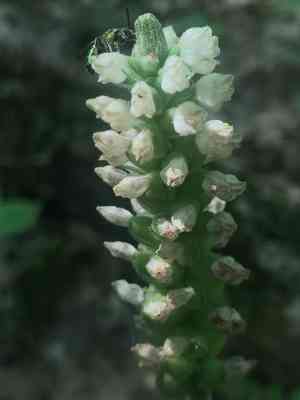
Minute white to greenish-white flowers, 0.25 inches (6 mm) wide, in dense spike-like raceme.
4
Spherical to oval capsules up to 0.4 inches (1 cm) long, containing numerous dust-like seeds.
5
Pubescent bluish-green leaves in basal rosette, up to 3 inches (7.6 cm) long, with striking white vein network.
Scientific Classification of Rattlesnake plantain
Phylum
Vascular plants
Class
Monocotyledons
Order
Asparagales
Family
Orchid
Genus
Rattlesnake plantain
Species
Rattlesnake plantain
Planting and Growing of Rattlesnake plantain
Care Difficulty
Easy
Watering Schedule
Every 2 days
Sunlight Requirements
Partial sun
Sunshine Duration
6-8 hours
Ideal Temperature
60-75℉
Soil Type
Potting Mix, Peat Mix
Soil pH
6.5-7.5
Fertilizer Type
Balanced
Pruning Season
Spring, Summer
Pruning Area
Branches, Leaves
Pruning Frequency
2 times a year
Repotting Season
Spring
Pot Type
Terracotta, Plastic
 How to Water Rattlesnake plantain?
The Goodyera pubescens prefers to have its soil consistently moist but not waterlogged. Water around 200 ml each time, ensuring the top inch of soil feels damp but excess water has drained away.
What are the symptoms of an underwatered Rattlesnake plantain?
›
What should I do if my Rattlesnake plantain is not getting enough water?
›
What are the symptoms of an overwatered Rattlesnake plantain?
›
How to save an overwatered Rattlesnake plantain?
›
 What Are the Sunlight Requirements for Rattlesnake plantain?
Partial shade given by 2 to 4 hours of indirect sunlight replicates forest environments, increasing resilience and optimizing growth in Goodyera pubescens by enhancing photosynthesis without stress.
More About Sunlight Requirements Techniques→
What type of light does Goodyera pubescens need?
›
How can you achieve ideal lighting conditions?
›
What advantages are there to ideal lighting?
›
 What Is the Ideal Temperature Range for Rattlesnake plantain?
The ideal temperature range for Goodyera pubescens to thrive is between 60°F and 75°F. This range provides the optimal conditions to support active growth and photosynthesis, ensuring the plant remains healthy. Maintaining this temperature range helps mimic the natural environment of these plants, which are typically found in temperate zones.
 What Soil is Best for Rattlesnake plantain?
Goodyera pubescens thrives in well-drained soil that allows excess water to escape easily. This helps prevent root rot and ensures that the roots have access to necessary oxygen, promoting healthy plant growth and development. This plant requires soil that remains consistently moist without becoming waterlogged. This balance prevents dehydration and nutrient leaching, ensuring the plant has a steady supply of hydration and nutrients for optimal health. Goodyera pubescens benefits from soil rich in organic matter. This provides a living layer full of nutrients and microorganisms that assist in nutrient uptake, fostering robust growth and resilience against pests and diseases.
 How to Fertilize Rattlesnake plantain?
For Goodyera pubescens, it’s crucial to apply the right amount of fertilizer to maintain its health. Typically, a balanced liquid fertilizer diluted to half-strength is optimal for this plant. Use around 1/4 cup of diluted liquid fertilizer, ensuring that the solution is spread evenly across the soil surface. This helps provide essential nutrients without overwhelming the delicate root system.
 How to Prune Rattlesnake plantain?
Begin by identifying leaves that are discolored, damaged, or dead. Using a clean, sharp tool, make precise cuts at the base of these leaves, avoiding tugging that could damage the entire plant. Be gentle, ensuring not to disturb the healthy parts more than necessary, and focus on creating a balanced appearance. After pruning, monitor Goodyera pubescens closely for signs of stress, such as wilting or discoloration. Provide adequate water and nutrients to support new growth. This aftercare is crucial for helping the plant recover swiftly and begin rejuvenating its foliage.
More About Pruning Techniques→
 How to Propagate Rattlesnake plantain plant?
1
Begin by collecting Goodyera pubescens seeds from mature seed pods, ensuring that you handle them gently. It's best to collect seeds when the pods have naturally split open, indicating maturity.
2
Prepare a sterile growing medium and sow the seeds sparsely on the surface. Do not cover them with soil, as light is essential for germination. Mist the surface lightly to maintain humidity.
3
Gently remove the plant from the pot and separate the rhizomes with at least one shoot or growth point per division. Ensure each division has some roots attached.
 How to Repot Rattlesnake plantain plant?
1
Goodyera pubescens shows signs that it's ready for repotting when its roots start growing through the drainage holes, or when the growing medium begins to break down. Repotting is preferably done when the plant is not actively flowering to reduce stress.
2
Choose a pot that's just slightly larger than the current one, with excellent drainage. A slightly larger pot helps in accommodating root growth without encouraging excessive soil that retains moisture, which can lead to root rot.
3
Selecting the right soil is crucial; use an orchid bark mix as it provides good aeration and drainage, mimicking the plant's natural forest floor habitat. This helps prevent waterlogging and supports healthy root development.
Learn More About Rattlesnake plantain Diseases
Anthracnose
Bacterial Leaf Spot
Bacterial Soft Rot
Bacterial Wilt
Black Spot
Chemical Injury
Crown Gall
Cyst Nematode
Damping-off
Downy Mildew
Drought Stress
Fusarium Wilt
Gray Mold
Leaf Spot
Mosaic
Nutrient Deficiency
Nutrient Toxicity
Powdery Mildew
Root Rot
Root-knot Nematode
Rusts
Sooty Mold
Spider Mites
Temperature Stress
Thrips Damage
White Mold



