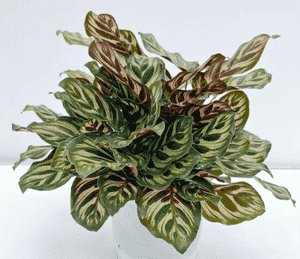
Peacock plant (Goeppertia makoyana)
Also known as: Prayer plant
The peacock plant sports large, thin leaves in varied shades of green. The plant thrives in warm, humid environments such as its native Brazil. It is a classic example of a "prayer plant," meaning its leaves appear to close up at night and open again in the morning.
In This Article
Attributes of Peacock plant
Lifespan
Perennial
Plant Type
Herb
Plant Height
20 cm to 90 cm
Spread
30 cm to 50 cm
Leaf Color
Green Purple Red Variegated
Flower Size
2.5 cm
Flower Color
White
Images of Peacock plant

Quickly Identify Peacock plant
1
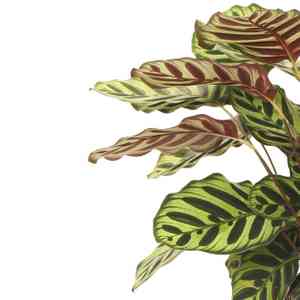
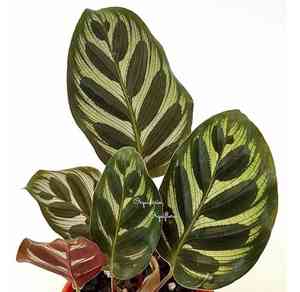
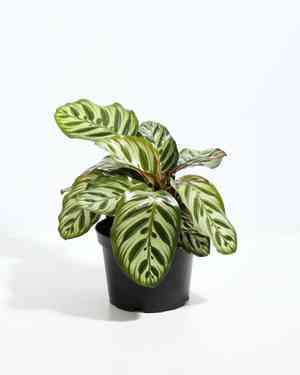
Distinctive peacock tail leaf pattern with green spots and cream feathering.
2
Papery-textured leaves with purple underside, 10-12 cm (4-5 in.) long.
3
Small white flowers with purple lobes, nestled in green bracts.
4
Short, slender stem with smooth texture, often aerial or rhizomatous.
5
Leaf venation shows dark green feather-like patterns; underside exhibits purplish-red repeating design.
Scientific Classification of Peacock plant
Phylum
Vascular plants
Class
Monocotyledons
Order
Zingiberales
Family
Arrowroot
Genus
Calatheas
Species
Peacock plant
Planting and Growing of Peacock plant
Care Difficulty
Moderate
Watering Schedule
Every 8 days
Sunlight Requirements
Partial sun
Sunshine Duration
4-6 hours
Ideal Temperature
65-75℉
Soil Type
Potting Mix, Peat Mix
Soil pH
6.5-7.5
Fertilizer Type
Balanced
Pruning Season
Spring, Summer
Pruning Area
Branches, Leaves
Pruning Frequency
Once a year
Repotting Season
Spring
Pot Type
Plastic, Terracotta
 How to Water Peacock plant?
Water Goeppertia makoyana thoroughly until excess water drains out of the pot's drainage holes. This ensures the soil is evenly moist, mimicking its natural habitat's consistency without causing waterlogging.
More About Watering Techniques→
What are the symptoms of an underwatered Peacock plant?
›
What should I do if my Peacock plant is not getting enough water?
›
What are the symptoms of an overwatered Peacock plant?
›
How to save an overwatered Peacock plant?
›
 What Are the Sunlight Requirements for Peacock plant?
This plant thrives in partial sun to full shade, ideally receiving 2-4 hours of filtered light daily. Proper lighting fosters vivid coloring, robust growth, and maintains the plant's health by preventing stress from either extreme light exposure.
More About Sunlight Requirements Techniques→
Optimal Indoor Placement
›
Using Artificial Lighting
›
Regular Light Monitoring
›
 What Is the Ideal Temperature Range for Peacock plant?
The ideal temperature range for Goeppertia makoyana is between 65°F and 75°F. This range mimics the warm, humid climate of its native habitat and ensures optimal growth and health. Maintaining temperatures within this range will help the plant thrive and display its characteristic vibrant foliage.
 What Soil is Best for Peacock plant?
Calathea makoyana benefits from well-draining soil, which prevents waterlogging and root rot. This ensures the roots have access to both moisture and air, promoting healthy growth. The soil needs to retain an adequate amount of moisture without becoming soggy. This balances hydration, crucial for mimicking the plant's native humid environment. A nutrient-rich substrate supports the plant's vibrant foliage by continuously supplying essential minerals. This helps maintain those beautiful patterns and hues in the leaves.
More About Soil→
 How to Fertilize Peacock plant?
For Goeppertia makoyana, a balanced 20-20-20 liquid fertilizer at a quarter strength is ideal. Use about 1/4 teaspoon per gallon of water. This ensures that the plant receives essential nutrients without the risk of over-fertilization, maintaining its vibrant foliage.
More About Fertilizing Techniques→
 How to Prune Peacock plant?
Begin by identifying leaves that are yellowing or appear damaged. These should be the first to go, as removing them will encourage new growth and keep the plant looking vibrant. When removing leaves, make precise cuts close to the stem to prevent unsightly stubs and minimize stress. This approach promotes optimal healing and prevents damage. After removing damaged leaves, look at the overall shape of the plant and prune as needed to maintain its aesthetic form. Small adjustments can keep its architectural allure.
More About Pruning Techniques→
 How to Propagate Peacock plant plant?
1
First, remove the Goeppertia makoyana from its pot to examine the root system. Gently clean the roots of excess soil to clearly see where natural separations or divisions can occur.
2
Using a sharp, sterilized knife, carefully cut the rhizomes, ensuring each division has a healthy root system and at least a few leaves. This is crucial for the new plant to establish itself.
3
Place each division in its own pot filled with a well-draining tropical potting mix. Water the plant lightly to settle the soil and minimize stress on the newly potted division.
 How to Repot Peacock plant plant?
1
Repot Goeppertia makoyana when its roots become pot-bound or visibly outgrow its container. Look for signs like slowed growth, roots poking through drainage holes, or when water runs straight through the pot, indicating a need for more soil. These signals suggest it's time for a repotting session to boost its growth.
2
Select a pot one size larger than the current one, with ample drainage holes to prevent root rot. A slightly bigger pot ensures that the roots have enough space to expand without drowning the plant in too much water, maintaining the right balance of moisture and aeration.
3
Opt for a peat-based, well-draining potting mix to emulate the plant's natural habitat. This choice helps retain enough moisture but also allows excess water to escape quickly, effectively preventing waterlogged conditions that could harm the plant's sensitive roots.



