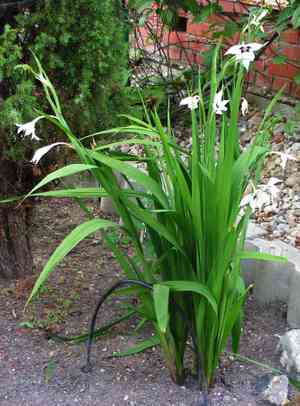
Acidanthera (Gladiolus murielae)
Also known as: Peacock orchid, Abyssinian gladiolus, Acidanthera
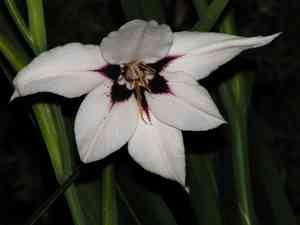
This plant is a cormous perennial that reaches a height of 70 to 100 cm. It features linear leaves and produces many fragrant white flowers with a maroon (sometimes orange) blotch in the throat during late summer. Commonly grown in western and southern European gardens, the corms are typically lifted annually and stored in frost-free conditions to protect them from cold weather.
In This Article
Attributes of Acidanthera
Lifespan
Perennial
Plant Type
Herb
Plant Height
1 m
Spread
40 cm
Leaf Color
Green
Flower Size
2.5 cm to 8 cm
Flower Color
White Purple
Images of Acidanthera
Quickly Identify Acidanthera
1
Slender, upright stature reaching 2-3 feet (60-90 cm)
2
Distinct fan-like arrangement of sword-shaped leaves
3
Elegant white flowers with maroon throat on tall, nodding stems
4
Capsule fruit transitioning from green to brown, 1-2 inches (2.5-5 cm)
5
Smooth, green stem growing 2-4 feet (60-120 cm) with minimal branching
Scientific Classification of Acidanthera
Phylum
Vascular plants
Class
Monocotyledons
Order
Asparagales
Family
Iris
Genus
Gladioli
Species
Acidanthera
Planting and Growing of Acidanthera
Care Difficulty
Easy
Watering Schedule
Every 3 days
Sunlight Requirements
Full sun
Sunshine Duration
4-8 hours
Ideal Temperature
60-75℉
Soil Type
Potting Mix, Peat Mix
Soil pH
6.5-7.5
Fertilizer Type
Balanced
Pruning Season
Spring, Summer
Pruning Area
Branches, Leaves
Pruning Frequency
Once a year
Repotting Season
Spring
Pot Type
Plastic, Ceramic
 How to Water Acidanthera?
When watering Gladiolus murielae, ensure the soil is moistened thoroughly but not waterlogged. Aim to deliver around 250 ml of water each time, targeting moist soil without leaving any standing water. Water evenly around the plant base, encouraging roots to reach deeper for moisture.
What are the symptoms of an underwatered Acidanthera?
›
What should I do if my Acidanthera is not getting enough water?
›
What are the symptoms of an overwatered Acidanthera?
›
How to save an overwatered Acidanthera?
›
 What Are the Sunlight Requirements for Acidanthera?
Ideal light for Gladiolus murielae encompasses both full and partial sun, enabling it to receive enough light for optimal growth. Abundant sunlight enhances flowering and keeps the plant vibrant.
More About Sunlight Requirements Techniques→
How much light does Gladiolus murielae need?
›
What are common solutions for achieving ideal light?
›
How does ideal light affect Gladiolus murielae?
›
 What Is the Ideal Temperature Range for Acidanthera?
The ideal temperature range for Gladiolus murielae is between 60°F and 75°F. This range provides the best conditions for growth, supporting healthy leaf development and optimal blooming. Maintaining this temperature range helps ensure that the plant can thrive without stress, promoting better flowering efficiency and vigor.
 What Soil is Best for Acidanthera?
Gladiolus murielae thrives best in well-drained soil. Proper drainage prevents root rot and promotes healthy growth, allowing these plants to flourish and produce their stunning flowers. This plant prefers soil rich in organic matter. Fertility boosts bloom production and enhances the overall vigor of the plant, providing essential nutrients necessary for sustaining vibrant foliage and flowers. Gladiolus murielae requires consistently moist but not waterlogged soil. Maintaining moderate moisture prevents wilting and ensures sustained plant health throughout the growing season.
 How to Fertilize Acidanthera?
For Gladiolus murielae, it is optimal to provide a balanced, water-soluble fertilizer at a rate of approximately 1 tablespoon per gallon of water. Applying the fertilizer in this concentration ensures that the plant receives necessary nutrients without the risk of over-fertilization.
 How to Prune Acidanthera?
Once the flower spikes of Gladiolus murielae have finished blooming, carefully cut them off at the base. This helps prevent the plant from wasting energy on seed production and redirects it towards creating stronger bulbs for the next growing season. After the first frost or when the foliage naturally turns yellow, trim the leaves down to the soil level. This practice keeps the garden tidy and reduces the risk of diseases overwintering on the old foliage.
More About Pruning Techniques→
 How to Propagate Acidanthera plant?
1
Start by selecting healthy seeds or corms, ensuring they are free from any disease or damage. Clean them under running water and soak in lukewarm water overnight to facilitate germination or encourage sprouting.
2
Fill seed trays with a well-draining potting mix conducive to gladiolus growth. Plant seeds at a depth of about 1 cm and maintain moisture by covering with a plastic wrap until germination occurs, which usually takes 10-14 days.
3
In early spring, dig up established corms using a garden trowel. Separate healthy cormlets from the parent corm, ensuring each piece has at least one bud. Replant the sections immediately at a similar depth to enhance rooting.
 How to Repot Acidanthera plant?
1
Gladiolus murielae should be repotted when you notice that its bulbs are crowded, impacting its magnificent flowering. The ideal time is when the plant is not in active bloom or growth, typically in spring or autumn. Look for signs like poor flowering or root-bound bulbs squeezing out of the pot.
2
Select a pot that's about 2 inches larger in diameter than the current one. It should have good drainage to prevent waterlogging, which these bulbs detest. A wider pot allows the new bulbs to spread comfortably, promoting healthier growth and more magnificent blooms.
3
Opt for a well-draining, sandy soil mix to mimic the plant’s natural habitat. This type of soil ensures proper water drainage, thus preventing root rot while providing the essential nutrients needed. The right soil mix will also ease the planting process and support healthy bulb growth.
Toxicity
Ingestion
WARNING
The judgment on toxicity and danger is for reference only. We DO NOT GUARANTEE any accuracy of such judgment. Therefore, you SHALL NOT rely on such judgment. It is IMPORTANT TO SEEK PROFESSIONAL ADVICE in advance when necessary.
Learn More About Acidanthera Diseases
Anthracnose
Bacterial Leaf Spot
Bacterial Soft Rot
Bacterial Wilt
Black Spot
Chemical Injury
Crown Gall
Cyst Nematode
Damping-off
Downy Mildew
Drought Stress
Fusarium Wilt
Gray Mold
Leaf Spot
Mosaic
Nutrient Deficiency
Nutrient Toxicity
Powdery Mildew
Root Rot
Root-knot Nematode
Rusts
Sooty Mold
Spider Mites
Temperature Stress
Thrips Damage
White Mold



