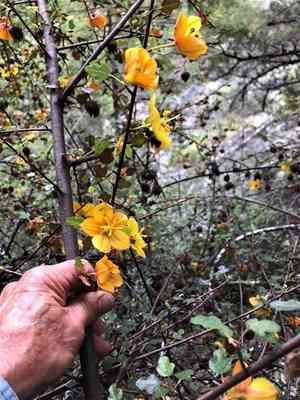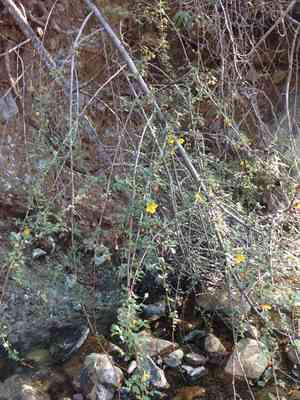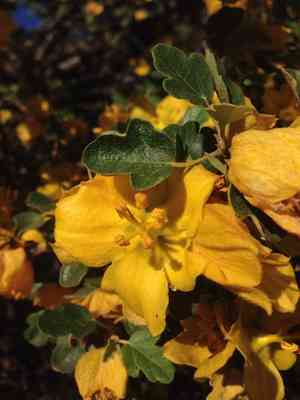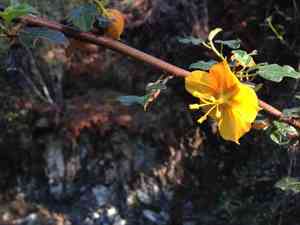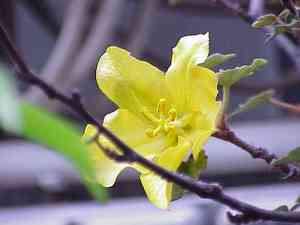
Flannel Bush(Fremontodendron californicum)

Flannel Bush (Fremontodendron californicum)

Also known as: California Flannelbush

Flannel Bush (Fremontodendron californicum) is a distinctive North American alpine species located in select areas of California, Arizona, and Baja California. The leaves of this plant are covered in tiny hairs that can irritate the skin upon contact. The wood of Flannel Bush is suitable for making furniture, while its bark can be used for crafting cordage. Interestingly, it shares a distant relation to the cacao plant!

Attributes of Flannel Bush

Lifespan
Perennial
Plant Type
Tree
Plant Height
2.5 m to 6 m
Spread
1.8 m to 3 m
Leaf Color
Green Gray
Flower Size
3.5 cm to 6 cm
Flower Color
Yellow

ForwardPlant - Identify plants with a snap

Identify and diagnose plants, get toxicity alerts, and explore safety guides for all types of fungi.

Try for Free

Images of Flannel Bush

Flannel Bush(Fremontodendron californicum)

Quickly Identify Flannel Bush

1
Look for a tall shrub or small tree with lobed, woolly leaves, and large, bright yellow, cup-shaped flowers. The branches are often covered with a fine, felt-like fuzz.

Scientific Classification of Flannel Bush

Phylum
Vascular plants
Class
Dicotyledons
Order
Malvales
Family
Mallow
Genus
Flannel bush
Species
Flannel Bush

Planting and Growing of Flannel Bush

Care Difficulty
Hard
Watering Schedule
Every 2 days
Sunlight Requirements
Full sun
Sunshine Duration
4-8 hours
Ideal Temperature
60-75℉
Soil Type
Potting Mix, Peat Mix
Soil pH
6.5-7.5
Fertilizer Type
Balanced
Pruning Season
Spring, Summer
Pruning Area
Branches, Leaves
Pruning Frequency
2 times a year
Repotting Season
Spring
Pot Type
Plastic, Ceramic

water icon How to Water Flannel Bush?

Fremontodendron californicum thrives best with deep but infrequent watering. The principle here is to mimic its native habitat, which experiences infrequent but intense rainfall. Water until the soil is moistened to a depth of about 60 cm (2 feet), ensuring the ground is not constantly damp.
What are the symptoms of an underwatered Flannel Bush?
What should I do if my Flannel Bush is not getting enough water?
What are the symptoms of an overwatered Flannel Bush?
How to save an overwatered Flannel Bush?

sunlight icon What Are the Sunlight Requirements for Flannel Bush?

Sunlight Requirements: Full sun, Partial sun
Duration of light: 6-8 hours daily
Fremontodendron californicum ideally flourishes under full to partial sun conditions, receiving around 6 to 8 hours of sunlight. Such exposure ensures the plant blossoms vibrantly and maintains strong health.
Ideal Light Durations
Solutions for Optimal Light
Effects of Optimal Light
More About Sunlight Requirements Techniques

temperature icon What Is the Ideal Temperature Range for Flannel Bush?

Ideal Temperature: 60 ~ 75℉
The ideal temperature range for growing Fremontodendron californicum is between 60°F and 75°F. This range ensures optimal photosynthesis and overall plant health. Plants thrive when the temperature maintains stability, promoting robust growth and vibrant flowering. Maintaining this temperature window helps to avoid stress and potential diseases that may occur under unsuitable conditions.

soil icon What Soil is Best for Flannel Bush?

Soil type: Sandy soil, Sandy loam, Loam
Soil PH: 6.5 ~ 7.5
Fremontodendron californicum thrives best in well-drained soil, which helps prevent waterlogged conditions that can lead to root rot. Ensuring good drainage will maintain the health of the plant’s root system, promoting vigorous growth and bloom production. This plant enjoys soil with a good balance of nutrients. A nutrient-rich base boosts overall plant vitality, enhancing flower brightness and foliage health. Regular additions of organic matter like compost can help in achieving this nutrient balance during planting. While drainage is crucial, the soil should retain enough moisture to sustain the plant during dry periods. Using sandy loam helps balance drainage with moisture retention, ensuring a steady supply of water without saturating the roots.

fertilize icon How to Fertilize Flannel Bush?

Fertilizer type: Balanced
Fremontodendron californicum, commonly known as flannel bush, requires a moderate amount of fertilizer to thrive. When using liquid fertilizer, apply 1/2 strength to avoid nutrient burn. For slow-release fertilizers, follow the manufacturer's instructions, which typically recommend a balanced NPK ratio.

prune icon How to Prune Flannel Bush?

Pruning Time: Spring, Summer
Using sharp pruning shears or loppers, begin by identifying dead, damaged, or diseased branches. Make clean cuts at a slight angle at the base of each undesired branch to ensure proper healing of the plant. Trim back excess growth from the center of the plant to keep it open and airy. This allows for better light penetration and air circulation, reducing the risk of pest infestations and fungal diseases. The best time to shape Fremontodendron californicum is right after it has finished blooming in spring. Lightly prune to maintain its natural shape, being careful not to remove more than a third of the plant in one session to avoid stress. More About Pruning Techniques

propagate icon How to Propagate Flannel Bush plant?

Propagate Time: Early spring,Spring
1
To prepare seeds of Fremontodendron californicum, soak them in warm water for 24 hours to soften the seed coat. This aids in germination by allowing moisture to penetrate and activate the seed's growth process.
2
Select a healthy branch to take cuttings from during early spring. Use sharp pruning shears to ensure a clean cut, approximately 6 inches long, which encourages root development and minimizes stress on the parent plant.
3
Place the seeds or cuttings in individual containers filled with a well-draining potting mix. Ensure they are adequately spaced to promote air circulation and prevent disease. Water the containers lightly to maintain moisture without waterlogging.
More About Propagating Techniques

repot icon How to Repot Flannel Bush plant?

Repotting frequency: Every two years
1
Fremontodendron californicum usually signals its repotting needs through visible signs: roots peeking through the drainage holes, soil that dries out unusually quickly, or a generally unhappy appearance with wilting leaves. Spring and Autumn are the best seasons to undertake this task, as the plant is neither in full growth or dormancy. Choose a time when the weather is mild to minimize stress on the plant.
2
When selecting a pot, consider one that is slightly larger by one or two inches in diameter than the current pot to give the roots ample room to breathe and grow. Ensure that the pot has adequate drainage holes—Fremontodendron californicum abhors waterlogged roots. A terracotta pot is ideal as it helps wick away excess moisture, thus preventing root rot.
3
Opt for a well-draining sandy soil mix, similar to the arid conditions of its native habitat. This type of soil prevents water accumulation, ensuring the roots have ample air circulation. Adding perlite or coarse sand can enhance drainage further, making your Fremontodendron flourish with robust health and vibrancy.

ForwardPlant - Identify plants with a snap

Find the best spots for them to optimize their health, simply using your phone.

Try for Free

Toxicity of Flannel Bush

Is Flannel Bush toxic to humans?

Flannel Bush has a moderate toxicity level and can trigger allergic reactions in individuals. Touching any part of the plant, especially its hairs, may result in skin reactions. If ingested by mistake, Flannel Bush can lead to poisoning, presenting symptoms such as irritation in the mouth and throat, nausea, vomiting, and diarrhea. The intensity of these symptoms can differ depending on the degree of exposure and personal sensitivity. It is essential to exercise caution to avoid unintentional contact or ingestion, as every part of the plant is deemed toxic.

Identify toxic plants for your safety

Learn which plants are harmful to you and your pets, and make informed choices for a safer home!

Try for Free
WARNING
The judgment on toxicity and danger is for reference only. We DO NOT GUARANTEE any accuracy of such judgment. Therefore, you SHALL NOT rely on such judgment. It is IMPORTANT TO SEEK PROFESSIONAL ADVICE in advance when necessary.
More About Toxic Techniques