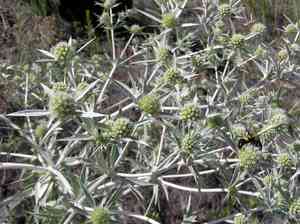
Field eryngo (Eryngium campestre)
Also known as: Italian eryngo, White-devil, Snakeroot coyote-thistle
Field eryngo (Eryngium campestre) is indigenous to Europe, northern Africa, and western Asia, often thriving in dry, coastal regions. It is favored for use in xeriscaping and as a dried ornamental plant. The plant's oils contain saponins and essential oils, which contribute to its bitter taste and aromatic qualities, deterring animals from consuming it.
In This Article
Attributes of Field eryngo
Lifespan
Perennial
Plant Type
Herb
Plant Height
60 cm
Spread
50 cm
Leaf Color
Gray-green
Flower Size
Approximately 1 to 2 centimeters
Flower Color
Green White Yellow
Images of Field eryngo
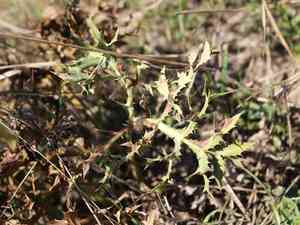
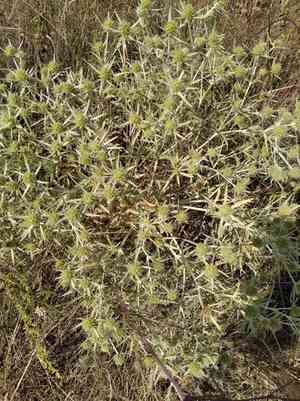
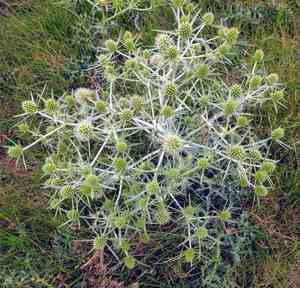
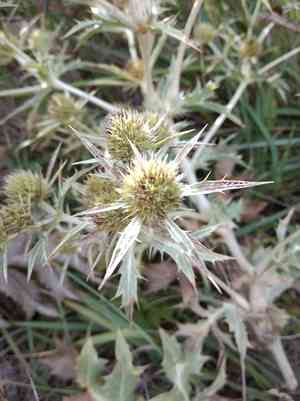
Quickly Identify Field eryngo
1
Identify Eryngium campestre by its spiny, pinnately divided leaves, blue or white umbel flowers resembling thistles, and its typical habitat in dry, rocky soils.
Scientific Classification of Field eryngo
Phylum
Vascular plants
Class
Dicotyledons
Order
Apiales
Family
Umbellifers
Genus
Eryngos
Species
Field eryngo
Planting and Growing of Field eryngo
Care Difficulty
Easy
Watering Schedule
Every 2 days
Sunlight Requirements
Full sun
Sunshine Duration
4-8 hours
Ideal Temperature
60-77℉
Soil Type
Potting Mix, Peat Mix
Soil pH
6.5-7.5
Fertilizer Type
Balanced
Pruning Season
Spring, Summer
Pruning Area
Branches, Leaves
Pruning Frequency
2 times a year
Repotting Season
Spring
Pot Type
Plastic, Ceramic
 How to Water Field eryngo?
Eryngium campestre should be watered with approximately 250 ml of water each time. The key is to ensure the soil is moderately moist but never waterlogged. The soil should dry out between watering, so only water when the top 2 inches of soil feel dry to the touch. This mimics its natural dry habitat.
What are the symptoms of an underwatered Field eryngo?
›
What should I do if my Field eryngo is not getting enough water?
›
What are the symptoms of an overwatered Field eryngo?
›
How to save an overwatered Field eryngo?
›
 What Are the Sunlight Requirements for Field eryngo?
Eryngium campestre requires full sun, ideally 6-8 hours a day. Adequate light supports optimal photosynthesis, encouraging vibrant foliage and healthy growth.
More About Sunlight Requirements Techniques→
What type of sunlight is best for Eryngium campestre?
›
How can Eryngium campestre get ideal light conditions?
›
Benefits of ideal lighting for Eryngium campestre
›
 What Is the Ideal Temperature Range for Field eryngo?
Eryngium campestre prefers a moderate climate with temperatures ranging from 60°F to 77°F. This range allows for optimal metabolic processes and ensures that the plant thrives. Maintaining this temperature helps in robust growth and supports flowering cycles effectively.
 What Soil is Best for Field eryngo?
Eryngium campestre thrives in well-drained soil, which prevents water from accumulating around the roots. This characteristic is crucial because it reduces the risk of root rot, ensuring the plant remains healthy and vibrant. Although Eryngium campestre is adaptable, it prefers soils with moderate nutrient levels. This allows the plant to access sufficient nutrients for growth without overwhelming it, leading to robust stalks and vibrant flower heads. While adaptable, Eryngium campestre shows an affinity towards slightly alkaline soils. Such conditions help in the optimal uptake of nutrients, contributing to a more vigorous growth habit.
 How to Fertilize Field eryngo?
Eryngium campestre requires a gentle touch when it comes to fertilization. It thrives best in nutrient-poor conditions, so over-fertilizing can be detrimental. Use a diluted liquid fertilizer every two weeks during the growing season, with a concentration of one-quarter of the recommended strength on the bottle. For slow-release fertilizers, apply sparingly once in early spring, summer, and fall at a rate no greater than 30 grams per square meter.
 How to Prune Field eryngo?
First, identify any dead or damaged stems and leaves. This often includes brown or yellow parts of the plant. These should be cut back to the base to allow healthy growth to take precedence. After removing dead growth, consider shaping the plant. Trim back excessively long shoots to encourage a more compact, bushy shape. Maintain its natural architecture by cutting just above a leaf joint. During the blooming season, remove spent flowers to encourage further blooming and prolong the flowering period. This also maintains the plant's aesthetic appeal throughout the growing months.
More About Pruning Techniques→
 How to Propagate Field eryngo plant?
1
Gather seeds from mature Eryngium campestre plants once the flower heads have dried. Ensure seeds are clean and dry before planting to avoid mold growth.
2
Use well-draining soil mix rich in organic matter for both seeds and cuttings to promote robust root development and prevent fungal issues.
3
For seeds, sow them lightly on the soil and cover with a thin layer of soil. For cuttings, insert the cut stem into the soil mix, ensuring stable vertical positioning.
 How to Repot Field eryngo plant?
1
Eryngium campestre shows signs of needing repotting when its roots start peeking through drainage holes or when growth appears stunted. Spring and early autumn are ideal periods for repotting as these seasons provide mild temperatures and active growth phases, helping the plant establish well in its new pot.
2
Select a pot with good drainage holes and size it slightly larger than the previous one to provide the roots with space to grow. Using a pot that is too large can lead to water retention issues, which might cause root rot. The chosen pot should preferably be made of a breathable material like terracotta, promoting healthy airflow for the roots.
3
Use a well-draining sandy soil mix to mimic Eryngium campestre’s natural environment. This type of soil helps in preventing water logging and root rot, maintaining appropriate moisture levels around the root zone while ensuring nutrients are efficiently delivered to the plant.
Learn More About Field eryngo Diseases
Anthracnose
Bacterial Leaf Spot
Bacterial Soft Rot
Bacterial Wilt
Black Spot
Chemical Injury
Crown Gall
Cyst Nematode
Damping-off
Downy Mildew
Drought Stress
Fusarium Wilt
Gray Mold
Leaf Spot
Mosaic
Nutrient Deficiency
Nutrient Toxicity
Powdery Mildew
Root Rot
Root-knot Nematode
Rusts
Sooty Mold
Spider Mites
Temperature Stress
Thrips Damage
White Mold



