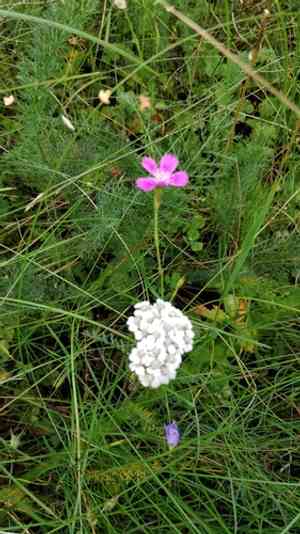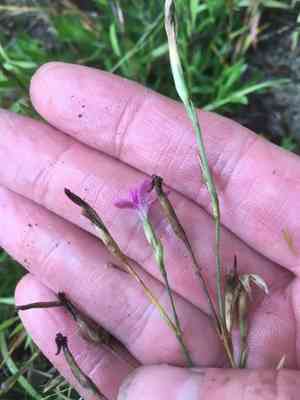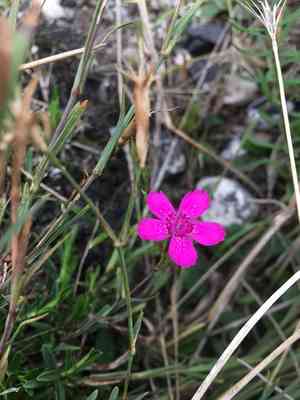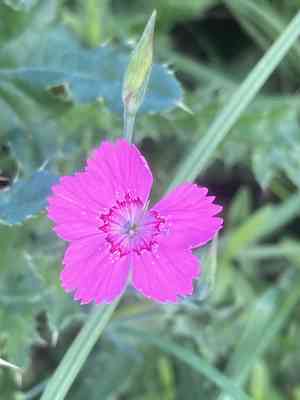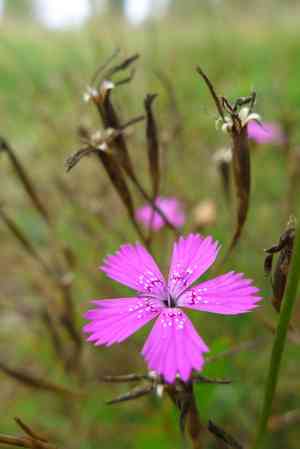
Maiden pink(Dianthus deltoides)

Maiden pink (Dianthus deltoides)

Also known as: Lady's cushion

The common rock rose (Helianthemum nummularium) is a perennial herb native to Europe and Western Asia. Naturally found in rocky terrains and grasslands, it is frequently grown for its vibrant flowers, making it a popular choice for ornamental gardening.

Attributes of Maiden pink

Lifespan
Perennial, Annual, Biennial
Plant Type
Herb
Plant Height
45 cm
Spread
15 cm to 60 cm
Leaf Color
Green Gray
Flower Size
1.5 cm to 2 cm
Flower Color
Pink Red White Purple

ForwardPlant - Identify plants with a snap

Identify and diagnose plants, get toxicity alerts, and explore safety guides for all types of fungi.

Try for Free

Images of Maiden pink

Maiden pink(Dianthus deltoides)

Quickly Identify Maiden pink

1
Brilliant pink to crimson flowers, 0.75 inches (2 cm) across, with five broadly notched petals.
2
Distinctive lance-shaped leaves forming a low, dense mat with a unique triangular appearance.
3
Long-stalked 5-petaled flowers in bright pink to lavender, with a dark ring near the center.
4
Capsules with dry texture and dehiscent seams, neutrally toned, small with numerous minute seeds.
5
Short, narrow grayish leaves, 0.4 to 1 inch (1 to 2.5 cm) in length with a waxy texture.

Scientific Classification of Maiden pink

Phylum
Vascular plants
Class
Dicotyledons
Order
Caryophyllales
Family
Pink
Genus
Dianthus
Species
Maiden pink

Planting and Growing of Maiden pink

Care Difficulty
Easy
Watering Schedule
Every 3 days
Sunlight Requirements
Full sun
Sunshine Duration
6-10 hours
Ideal Temperature
60-70℉
Soil Type
Potting Mix, Peat Mix
Soil pH
6.5-7.5
Fertilizer Type
Balanced
Pruning Season
Spring, Summer
Pruning Area
Branches, Leaves
Pruning Frequency
2 times a year
Repotting Season
Spring
Pot Type
Plastic, Ceramic

water icon How to Water Maiden pink?

When watering Dianthus deltoides, aim to soak the soil evenly without causing waterlogging. A good rule of thumb is to apply water until the topsoil is moist but ensure there's no standing water in saucers or trays.
What are the symptoms of an underwatered Maiden pink?
What should I do if my Maiden pink is not getting enough water?
What are the symptoms of an overwatered Maiden pink?
How to save an overwatered Maiden pink?

sunlight icon What Are the Sunlight Requirements for Maiden pink?

Sunlight Requirements: Full sun, Partial sun
Duration of light: 6 to 8 hours daily
Dianthus deltoides prefers partial to full sun. Providing this range of light encourages vivid blooms and overall plant vigor, supporting photosynthetic processes essential for healthy development.
What type of sunlight is ideal?
How can I provide ideal lighting?
Why is ideal lighting important?
More About Sunlight Requirements Techniques

temperature icon What Is the Ideal Temperature Range for Maiden pink?

Ideal Temperature: 60 ~ 70℉
The ideal temperature range for Dianthus deltoides, also known as Maiden Pink, is between 60°F and 70°F. This range allows optimal growth, flowering, and overall plant health. Within this temperature band, the plant can efficiently carry out photosynthesis, maintain its cellular functions, and develop strong, vibrant blooms. Maintaining this balance ensures the plant thrives and reaches its full horticultural potential.

soil icon What Soil is Best for Maiden pink?

Soil type: Sandy soil, Loam, Sandy loam
Soil PH: 6.5 ~ 7.5
Dianthus deltoides thrives in well-draining soil, as it prevents water from pooling around the roots, reducing the risk of root rot. This is essential for maintaining the plant's health and encouraging vibrant blooms. This plant prefers moderately fertile soil, where excessive nutrients don't inhibit its growth. An average nutrient content ensures healthy root development and maximizes flower production. The soil texture should be loose and aerated, facilitating air exchange vital for root respiration. This helps in robust root growth and efficient nutrient uptake, essential for the overall vigor of Dianthus deltoides. More About Soil

fertilize icon How to Fertilize Maiden pink?

Fertilizer type: Balanced
Dianthus deltoides prefers a balanced fertilization approach. When using liquid fertilizers, apply at a dilution rate of 1/2 teaspoon per gallon of water. Ensure the solution is evenly spread around the base of the plant, avoiding direct contact with leaves. For slow-release fertilizers, use approximately 1 tablespoon per plant, incorporated into the soil around the root zone. More About Fertilizing Techniques

prune icon How to Prune Maiden pink?

Pruning Time: Spring, Summer, Autumn
Start by using sharp, clean scissors or pruning shears. Identify dead or wilting flowers and stems. Cut the stems back to a healthy leaf node, just above where new leaves are sprouting. This will encourage the plant to focus energy on healthy growth and vibrant blooms. Clean any debris from around the base of the plant to allow for better air circulation, reducing the risk of mold and disease. More About Pruning Techniques

propagate icon How to Propagate Maiden pink plant?

Propagate Time: Spring, Early spring, Late spring
1
Fill seed trays with fine potting mix, sow the seeds thinly, and cover lightly with compost. Keep the trays in a warm area with indirect sunlight, ensuring the soil is consistently moist but not waterlogged.
2
Select a healthy, non-flowering shoot for cuttings; cut just below a leaf node. Remove the lower leaves, dip the base in rooting hormone, and insert it into potting mix. Maintain high humidity.
3
Carefully dig up a mature plant and separate it into smaller sections, each with a tuft of leaves and roots. Replant the divisions immediately, ensuring that the roots are well-covered with soil.
More About Propagating Techniques

repot icon How to Repot Maiden pink plant?

Repotting frequency: every 2-3 years
1
Look for signs like roots emerging from drainage holes, the soil drying out too quickly, or stunted growth. These are all cues that your Dianthus deltoides may require a new, larger pot. Spring and autumn offer the ideal temperatures for this transition, minimizing stress on the plant.
2
Select a pot that is one size larger than the current one to give enough space for root growth. Ensure it has drainage holes, which are crucial for preventing water accumulation that leads to root rot. A terracotta pot can be beneficial, as it allows for breathability and helps in maintaining optimal soil moisture.
3
Opt for well-draining sandy loam soil with a neutral to slightly alkaline pH. This type of soil prevents water-logging, which can cause root diseases, and it provides a stable flow of nutrients to the plant, supporting its upcoming flowering phase.

ForwardPlant - Identify plants with a snap

Find the best spots for them to optimize their health, simply using your phone.

Try for Free

Toxicity of Maiden pink

Is Maiden pink toxic to cat?

Maiden pink demonstrates a mild level of toxicity in cats and can lead to health problems when ingested in substantial amounts. Each part of the plant carries toxic properties, meaning any section of maiden pink can potentially poison a cat. If a cat consumes a considerable quantity of maiden pink, it may display signs of physical discomfort, which suggest poisoning. As the situation may deteriorate, cat owners should remain vigilant for any indications of illness and quickly contact a veterinary clinic to secure the best care for their beloved pet.

Is Maiden pink toxic to dog?

Maiden pink is categorized as having mild toxic effects on dogs. Although a small bite might not be harmful, consuming large quantities can result in poisoning. All parts of the maiden pink plant are toxic, meaning dogs can be affected by ingesting any portion. Poisoning symptoms may encompass gastrointestinal distress, including vomiting and diarrhea, fatigue, or more serious reactions based on the amount consumed. If you believe your dog has eaten a considerable quantity of maiden pink, it is essential to seek immediate care at a veterinary clinic to safeguard their health.

Identify toxic plants for your safety

Learn which plants are harmful to you and your pets, and make informed choices for a safer home!

Try for Free
WARNING
The judgment on toxicity and danger is for reference only. We DO NOT GUARANTEE any accuracy of such judgment. Therefore, you SHALL NOT rely on such judgment. It is IMPORTANT TO SEEK PROFESSIONAL ADVICE in advance when necessary.
More About Toxic Techniques