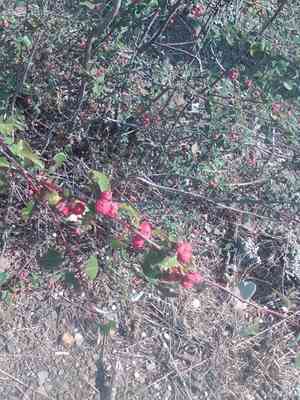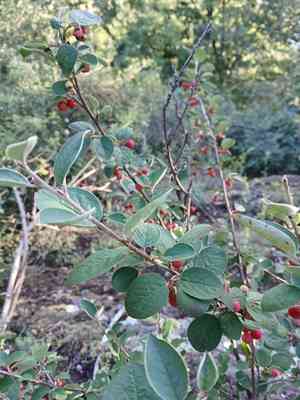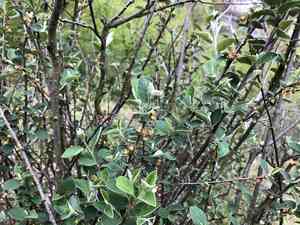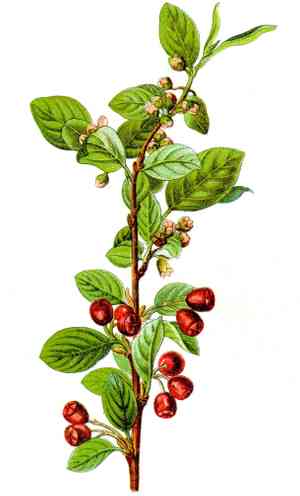
Common cotoneaster(Cotoneaster integerrimus)

Common cotoneaster (Cotoneaster integerrimus)

Also known as: Great orme berry

The common cotoneaster, a member of the Rosaceae family, is a shrub featuring simple, broad leaves that can reach up to 5 cm in length and have pale gray hairs. This plant can grow up to 2 meters tall. In the spring, it produces flowers in clusters of one to four, followed by dark red pome fruits containing two or three seeds.

Attributes of Common cotoneaster

Lifespan
Perennial
Plant Type
Shrub
Plant Height
2 m
Spread
1.2 m to 2.5 m
Leaf Color
Green Blue Gray
Flower Size
3 mm
Flower Color
White Pink

ForwardPlant - Identify plants with a snap

Identify and diagnose plants, get toxicity alerts, and explore safety guides for all types of fungi.

Try for Free

Images of Common cotoneaster

Common cotoneaster(Cotoneaster integerrimus)

Quickly Identify Common cotoneaster

1
Identification can be aided by its small, oval-shaped leaves with entire (smooth) margins, clusters of small white flowers, and bright red berries that appear in the fall.

Scientific Classification of Common cotoneaster

Phylum
Vascular plants
Class
Dicotyledons
Order
Rosales
Family
Rose
Genus
Cotoneaster
Species
Common cotoneaster

Planting and Growing of Common cotoneaster

Care Difficulty
Easy
Watering Schedule
Every 3 days
Sunlight Requirements
Full sun
Sunshine Duration
4-6 hours
Ideal Temperature
60-75℉
Soil Type
Potting Mix, Peat Mix
Soil pH
6.5-7.5
Fertilizer Type
Balanced
Pruning Season
Spring, Summer
Pruning Area
Branches, Leaves
Pruning Frequency
2 times a year
Repotting Season
Spring
Pot Type
Plastic, Ceramic

water icon How to Water Common cotoneaster?

Cotoneaster integerrimus requires moderate watering, approximately 250 milliliters at a time. It's crucial to ensure that the soil is moist but not waterlogged, allowing water to percolate evenly without pooling at the base, which encourages better root absorption.
What are the symptoms of an underwatered Common cotoneaster?
What should I do if my Common cotoneaster is not getting enough water?
What are the symptoms of an overwatered Common cotoneaster?
How to save an overwatered Common cotoneaster?

sunlight icon What Are the Sunlight Requirements for Common cotoneaster?

Sunlight Requirements: Full sun, Partial sun
Duration of light: 4 to 6 hours
Ideally, provide Cotoneaster integerrimus with partial to full sun, balancing exposure for healthy leaf colorations and berry production.
What is the best location for Cotoneaster integerrimus?
How to ensure Cotoneaster integerrimus receives adequate sunlight?
What are the tangible benefits of ideal light conditions for Cotoneaster integerrimus?
More About Sunlight Requirements Techniques

temperature icon What Is the Ideal Temperature Range for Common cotoneaster?

Ideal Temperature: 60 ~ 75℉
Cotoneaster integerrimus thrives in temperatures ranging from 60°F to 75°F. This range provides the optimal conditions for growth, ensuring that the plant has sufficient warmth to support metabolic processes while maintaining moisture balance.

soil icon What Soil is Best for Common cotoneaster?

Soil type: Sandy soil, Loam, Clay soil, Calcareous soil, Sandy loam
Soil PH: 6.5 ~ 7.5
Cotoneaster integerrimus thrives in soil that offers good drainage. This prevents waterlogging which can lead to root rot, ensuring the roots receive adequate oxygen necessary for healthy growth. This plant benefits from soil enriched with essential nutrients. Fertile soil supports vigorous growth and flowering, making the plant more resilient to pests and diseases. Cotoneaster integerrimus prefers neutral to slightly alkaline pH levels, ranging between 6.5 to 7.5. Such conditions optimize the availability of essential nutrients and enhance overall plant vitality.

fertilize icon How to Fertilize Common cotoneaster?

Fertilizer type: Balanced
For Cotoneaster integerrimus, a balanced fertilizer such as 10-10-10 NPK is recommended. When using liquid fertilizer, dilute it to half the strength suggested on the label. For slow-release fertilizers, use approximately 30 grams per plant annually.

prune icon How to Prune Common cotoneaster?

Pruning Time: Spring, Autumn
Begin by sterilizing your tools to prevent any spread of disease. Identify and remove any dead, damaged, or diseased branches, cutting back to the main stem or nearest healthy outward-facing bud. Next, thin out crowded sections to improve air circulation, which can prevent fungal problems. Focus on retaining the natural shape of the plant by removing branches that disrupt its aesthetic form. After addressing health issues, you can shape Cotoneaster integerrimus to fit your landscape design. While it naturally grows into an attractive form, you might want to keep it compact for a hedge effect or encourage it to spread for ground cover. Trim back extended branches slightly to maintain a balanced appearance, but ensure to preserve the plant’s natural arching habit for visual appeal. More About Pruning Techniques

propagate icon How to Propagate Common cotoneaster plant?

Propagate Time: Spring, Early summer, Autumn
1
Sow the seeds evenly across the surface of the seed tray filled with seed-starting mix. Cover them lightly with a thin layer of the mix, water gently, and maintain a warm and humid environment to encourage germination.
2
Select healthy, non-flowering stems and cut them to lengths of 4-6 inches. Remove any leaves from the bottom half of the cutting, and dip the cut end in rooting hormone before planting in a potting mix.
3
Regularly check for root development by gently tugging on the cuttings. Once resistance is felt, it indicates that roots have formed, and the cutting can be transplanted to a larger pot.
More About Propagating Techniques

repot icon How to Repot Common cotoneaster plant?

Repotting frequency: Every 2-3 years
1
Watch for signals such as roots emerging from drainage holes, soil compacting, or slower growth. These indicate the plant needs more space. Ideally, repot when these signs appear, favoring the gentle transitional periods of spring or autumn.
2
Choose a pot that is one size larger than the current one with good drainage holes. This gives room for growth, prevents waterlogging, and encourages healthy root development. Materials like terracotta are good for aeration but need more watering consideration.
3
A well-draining mix with a balance of loam, sand, and organic matter ensures that the plant's roots receive adequate air circulation and avoid rot. Good drainage is vital for the plant's health.

ForwardPlant - Identify plants with a snap

Find the best spots for them to optimize their health, simply using your phone.

Try for Free

Toxicity of Common cotoneaster

Is Common cotoneaster toxic to cat?

The common cotoneaster exhibits mild toxicity to felines. If consumed in significant amounts, its fruits or leaves can pose a threat to a cat's health. After ingesting portions of common cotoneaster, a cat may show signs of physical discomfort or illness. While the precise toxic substances are not specified, the plant represents a potential hazard, and pet owners must prevent access to its parts for their cats. Should poisoning be suspected, prompt veterinary intervention is essential to ensure the cat's health is maintained effectively.

Is Common cotoneaster toxic to dog?

The common cotoneaster presents a mild toxicity risk to dogs. If canines ingest significant quantities of its fruits or leaves, they may experience poisoning. Symptoms of poisoning can differ but may include gastrointestinal disturbances, such as vomiting and diarrhea, as well as possible lethargy or other distress signals. It is vital for dog owners to keep a close watch on their pets and restrict their access to common cotoneaster, particularly during the fruiting season when the allure of the berries is greatest. Should a dog be suspected of having consumed parts of common cotoneaster, seeking immediate veterinary care is crucial to ensure proper treatment and care.

Identify toxic plants for your safety

Learn which plants are harmful to you and your pets, and make informed choices for a safer home!

Try for Free
WARNING
The judgment on toxicity and danger is for reference only. We DO NOT GUARANTEE any accuracy of such judgment. Therefore, you SHALL NOT rely on such judgment. It is IMPORTANT TO SEEK PROFESSIONAL ADVICE in advance when necessary.
More About Toxic Techniques