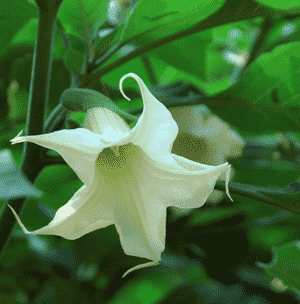
Angel's trumpet(Brugmansia arborea)

Angel's trumpet (Brugmansia arborea)

Also known as: Tree Datura, Angel's Trumpet, Machrani

Angel's trumpet (Brugmansia arborea) produces highly fragrant flowers and flourishes in soil that is moist yet well-draining. A rich, loamy soil with good fertility and a slightly acidic to neutral pH (6.0 to 7.0) is ideal. Incorporating organic matter like compost can enhance the soil's moisture retention and nutrient levels.

Attributes of Angel's trumpet

Lifespan
Perennial
Plant Type
Tree, Shrub
Plant Height
1 m to 2 m
Spread
3 m to 4.5 m
Leaf Color
Green
Flower Size
2 cm to 2.5 cm
Flower Color
White

ForwardPlant - Identify plants with a snap

Identify and diagnose plants, get toxicity alerts, and explore safety guides for all types of fungi.

Try for Free

Images of Angel's trumpet

Angel's trumpet(Brugmansia arborea)

Quickly Identify Angel's trumpet

1
Identify Brugmansia arborea by looking for its large, pendulous trumpet-shaped flowers, which can be white, yellow, or peach. The plant often has a woody stem and large, dull green leaves that are alternately arranged.

Scientific Classification of Angel's trumpet

Phylum
Vascular plants
Class
Dicotyledons
Order
Solanales
Family
Nightshade
Genus
Angel's trumpets
Species
Angel's trumpet

Planting and Growing of Angel's trumpet

Care Difficulty
Hard
Watering Schedule
Every 4 days
Sunlight Requirements
Full sun
Sunshine Duration
8-12 hours
Ideal Temperature
60-75℉
Soil Type
Potting Mix, Peat Mix
Soil pH
6.5-7.5
Fertilizer Type
Balanced
Pruning Season
Spring, Summer
Pruning Area
Branches, Leaves
Pruning Frequency
2 times a year
Repotting Season
Spring
Pot Type
Plastic, Ceramic

water icon How to Water Angel's trumpet?

Brugmansia arborea prefers its soil to be kept consistently moist but not waterlogged. When watering, aim to apply approximately 1000 ml of water, ensuring the top inch of soil feels damp yet well-drained. Soggy conditions can lead to root rot, so moderate moisture is key. Make sure excess water can freely drain out.
What are the symptoms of an underwatered Angel's trumpet?
What should I do if my Angel's trumpet is not getting enough water?
What are the symptoms of an overwatered Angel's trumpet?
How to save an overwatered Angel's trumpet?

sunlight icon What Are the Sunlight Requirements for Angel's trumpet?

Sunlight Requirements: Full sun, Partial sun
Duration of light: 4-6 hours
Achieving full to partial sunlight exposure, approximately 4-6 hours daily, empowers the Brugmansia arborea to bloom profusely and maintain robust health, fostering its resistance to diseases and environmental stressors.
What is the optimal lighting for Brugmansia arborea?
How can I ensure adequate lighting for my Brugmansia arborea?
What benefits does ideal lighting bring to Brugmansia arborea?
More About Sunlight Requirements Techniques

temperature icon What Is the Ideal Temperature Range for Angel's trumpet?

Ideal Temperature: 60 ~ 75℉
The ideal temperature range for growing Brugmansia arborea is between 60°F and 75°F. Temperatures in this range promote optimal growth and blooming, as they provide a favorable environment for the plant's metabolic processes. Maintaining this range helps ensure that the plant remains healthy and stress-free.

soil icon What Soil is Best for Angel's trumpet?

Soil type: Loam, Sandy loam
Soil PH: 6.5 ~ 7.5
Brugmansia arborea thrives in well-drained soil that prevents waterlogging. Proper drainage ensures the roots have access to oxygen, promoting healthy growth and reducing the risk of root rot. A soil rich in organic matter provides essential nutrients that sustain Brugmansia arborea’s vibrant blooms. Nutrients like nitrogen, phosphorus, and potassium contribute to vigorous growth and floral abundance. While drainage is essential, the soil should also retain enough moisture to keep the plant hydrated. Consistent moisture availability helps maintain the lush appearance of Brugmansia arborea.

fertilize icon How to Fertilize Angel's trumpet?

Fertilizer type: Balanced
For Brugmansia arborea, a balanced liquid fertilizer should be diluted to half-strength before application. Apply approximately 200 ml per plant to avoid nutrient burn while ensuring the plant gets adequate nutrients for healthy growth.

prune icon How to Prune Angel's trumpet?

Pruning Time: Spring, Summer, Autumn
Begin by identifying and removing any dead, damaged, or diseased branches. Use sharp, clean pruners to cut these parts back to the main branch or trunk, enhancing the plant's overall health and appearance. Trim back overgrown branches to maintain a desired shape and size. Encouraging a balanced structure ensures that sunlight penetrates through the foliage, promoting a full and vibrant growth. To foster new blooms, selectively prune branches that have finished flowering. Cutting above a leaf node facilitates robust growth, boosting the plant's floral productivity and creating a lush and blooming appearance. More About Pruning Techniques

propagate icon How to Propagate Angel's trumpet plant?

Propagate Time: Early spring, Spring, Late spring
1
Collect seeds from mature Brugmansia arborea fruit. Ensure seeds are fully developed for optimal germination. Clean and dry seeds before storing them in a cool, dry place.
2
Select healthy stems for cuttings, approximately 4-6 inches long. Remove any lower leaves to minimize moisture loss and encourage root development.
3
Prepare a humid environment with adequate light for rooting. This can be achieved using a greenhouse or a makeshift propagation chamber with plastic covers.
More About Propagating Techniques

repot icon How to Repot Angel's trumpet plant?

Repotting frequency: Every 2-3 years
1
Ideal repotting signs for Brugmansia arborea include roots appearing through the drainage holes or the plant looking top-heavy. If it seems to be drying out more quickly than usual, it’s time to consider repotting, which is most beneficial when done during active growth periods in spring or early summer.
2
Select a pot that’s one size larger with excellent drainage holes. It’s best to use a clay or ceramic pot as it provides stability for the plant’s top-heavy nature and allows air exchange through the pot surface, which is beneficial for the root health of Brugmansia arborea.
3
Opt for a soil mix that includes peat, perlite, and sand to ensure proper drainage and aeration. This blend supports the plant by preventing root rot and providing essential nutrients while retaining sufficient moisture around the roots.
More About Repotting Techniques

ForwardPlant - Identify plants with a snap

Find the best spots for them to optimize their health, simply using your phone.

Try for Free

Toxicity of Angel's trumpet

Is Angel's trumpet toxic to humans?

Angel's trumpet poisoning is most commonly associated with the unintentional consumption of the plant. Every part of angel's trumpet is harmful to humans when ingested, with the leaves and seeds considered the most dangerous. Eating this plant can lead to fatality or severe health complications. Symptoms of poisoning may encompass muscle paralysis, weakness, blurred vision, disorientation, an accelerated heart rate, dry mouth, constipation, tremors, migraines, impaired coordination, hallucinations, and delirium. It is often encountered as a cultivated ornamental species in warmer climates, which necessitates caution among gardeners. Given its potential closeness to residential areas, vigilance around children is also crucial.

Is Angel's trumpet toxic to cat?

Angel's trumpet poses a significant toxicity hazard for cats, as every part of this plant is harmful if consumed. Cats may fall victim to poisoning by nibbling on any section of angel's trumpet, which could easily be confused with harmless plants. Symptoms of poisoning can manifest as changes in behavior, including increased restlessness or unusual lethargy, breathing difficulties, dilated pupils, an elevated heart rate, and potentially deadly consequences if not treated swiftly. The toxic compounds present in angel's trumpet encompass alkaloids like atropine, scopolamine, and hyoscyamine, necessitating an urgent trip to a veterinary clinic for effective management of the poisoning.

Is Angel's trumpet toxic to dog?

Angel's trumpet presents a significant toxicity threat to dogs, making it essential for pet owners to recognize the hazards this plant entails. If a dog accidentally consumes any portion of angel's trumpet, it can suffer poisoning since the entire plant is harmful. Symptoms such as dilated pupils, muscle weakness, breathing difficulties, irregular heart rhythms, and in severe cases, seizures or coma may occur following ingestion due to its high toxicity. The alkaloids present in angel's trumpet, including atropine, scopolamine, and hyoscyamine, are responsible for these detrimental effects. Immediate veterinary assistance is critical if a dog is suspected of having ingested angel's trumpet to manage the poisoning and enhance the probability of recovery.

Identify toxic plants for your safety

Learn which plants are harmful to you and your pets, and make informed choices for a safer home!

Try for Free
WARNING
The judgment on toxicity and danger is for reference only. We DO NOT GUARANTEE any accuracy of such judgment. Therefore, you SHALL NOT rely on such judgment. It is IMPORTANT TO SEEK PROFESSIONAL ADVICE in advance when necessary.
More About Toxic Techniques

