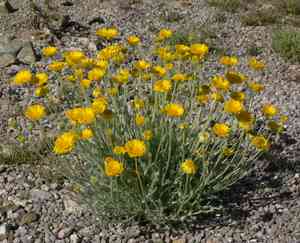
Desert Marigold (Baileya multiradiata)
Also known as: Paper Daisy
Desert Marigold (Baileya multiradiata) is a biennial wildflower that can reach up to 46 cm in height. It produces bright yellow, daisy-like flowers from spring to fall, which have a sweet aroma and attract butterflies. Notably, this plant is toxic to livestock. Desert Marigold thrives in full sun or partial shade, is drought-tolerant, and can adapt to various soil types.
In This Article
Attributes of Desert Marigold
Lifespan
Perennial, Annual, Biennial
Plant Type
Herb
Plant Height
15 cm to 46 cm
Spread
15 cm to 23 cm
Leaf Color
Silvery-gray
Flower Size
2.5 cm to 5 cm
Flower Color
Yellow
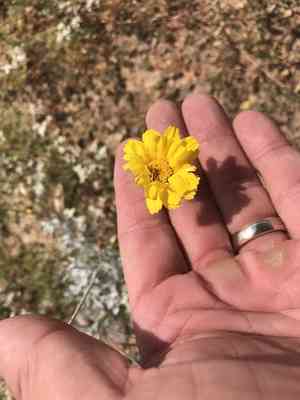
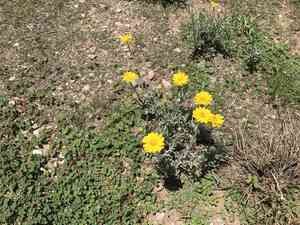
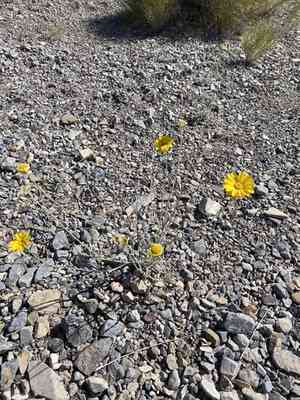
Images of Desert Marigold
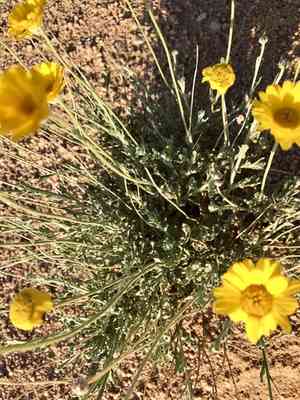
Quickly Identify Desert Marigold
1
Desert Marigold can be identified by its bright yellow, daisy-like flowers, silvery-gray leaves, and a stout, stiff stem. The flowers have numerous yellow ray florets and a central disc of yellow florets.
Scientific Classification of Desert Marigold
Phylum
Vascular plants
Class
Dicotyledons
Order
Asterales
Family
Daisy
Genus
Desert marigold
Species
Desert Marigold
Planting and Growing of Desert Marigold
Care Difficulty
Easy
Watering Schedule
Every 2 days
Sunlight Requirements
Full sun
Sunshine Duration
4-6 hours
Ideal Temperature
68-86℉
Soil Type
Potting Mix, Peat Mix
Soil pH
6.5-7.5
Fertilizer Type
Balanced
Pruning Season
Spring, Summer
Pruning Area
Branches, Leaves
Pruning Frequency
2 times a year
Repotting Season
Spring
Pot Type
Plastic, Ceramic
 How to Water Desert Marigold?
The exact watering volume for Baileya multiradiata should be around 250 ml per session. This amount ensures that the soil is moist but not waterlogged, which is crucial for preventing root rot. The watering principle to follow is to make sure the soil is dry to the touch at the top before watering again.
What are the symptoms of an underwatered Desert Marigold?
›
What should I do if my Desert Marigold is not getting enough water?
›
What are the symptoms of an overwatered Desert Marigold?
›
How to save an overwatered Desert Marigold?
›
 What Are the Sunlight Requirements for Desert Marigold?
Baileya multiradiata thrives in full sun conditions, which foster robust and healthy growth. Adequate sunlight ensures it maintains strong photosynthesis, crucial for optimal flowering and foliage health.
More About Sunlight Requirements Techniques→
Why is full sun ideal for Baileya multiradiata?
›
Solutions to achieve ideal lighting for Baileya multiradiata?
›
Effects of ideal lighting on Baileya multiradiata?
›
 What Is the Ideal Temperature Range for Desert Marigold?
The ideal temperature range for growing Baileya multiradiata lies between 68°F and 86°F. This range provides optimal conditions for its metabolic activities, such as photosynthesis and nutrient absorption, which are critical for growth and flowering. Maintaining consistent temperatures within this range will encourage robust plant development and flowering efficiency. Outside this range, the plant might experience stress that could lead to stunted growth and lower resistance to pest and diseases.
 What Soil is Best for Desert Marigold?
Baileya multiradiata thrives best in well-drained soils that allow water to quickly pass through. This prevents root rot and other moisture-related issues, ensuring the plant grows healthily in its natural arid environment. This plant is naturally adapted to soil conditions with low nutrient availability, meaning it doesn't require rich, fertile soil to prosper. This can be advantageous in soils where other plants might struggle due to low nutrient levels. Baileya multiradiata prefers dry soils, reflecting its adaptations to desert climates. Maintaining dry soil conditions helps to mimic its natural habitat and supports the plant's overall vigor.
 How to Fertilize Desert Marigold?
Baileya multiradiata benefits from a balanced fertilizer. For liquid feed, mix according to package instructions and apply about 1/4 cup per plant. For slow-release fertilizer, use approximately one tablespoon per plant, mixed into the soil at a shallow depth.
 How to Prune Desert Marigold?
Before pruning, carefully examine your Baileya multiradiata to identify any dead or damaged leaves and stems. These should be removed first to prevent disease and encourage more robust growth. To maintain a pleasing shape and manageable size, carefully trim the outer edges of the plant. Prune stems back to a point where there is a healthy leaf node to promote fuller growth. To encourage Baileya multiradiata to bloom abundantly, regularly deadhead spent flowers. Cut the stem back to just above a leaf or bud, which will redirect energy to form new buds.
More About Pruning Techniques→
 How to Propagate Desert Marigold plant?
1
Begin by preparing your planting tray with a light, well-draining potting mix. Moisten the mix slightly to create a comfortable medium for seeds to germinate. Scatter the seeds evenly across the surface and lightly cover with a thin layer of soil.
2
Select a healthy, non-flowering stem and cut a 4-6 inch section just below a leaf node. Remove the lower leaves to expose the stem. This helps in root formation and reduces the risk of rot by minimizing leaf-soil contact.
3
Dip the cut end of the cutting into rooting hormone powder. Plant the cutting into a pot filled with a moist, well-draining potting mix. Ensure the environment is warm and humid to encourage rooting.
 How to Repot Desert Marigold plant?
1
Repot Baileya multiradiata when you notice roots protruding from drainage holes or if growth seems hindered despite adequate light and nutrients. It’s typically best to repot during spring or summer when the plant is actively growing and can quickly adapt to its new environment.
2
Select a pot slightly larger than the current one, preferably with drainage holes to ensure water doesn’t accumulate at the bottom. A pot that is too large can lead to excess soil moisture, which might cause root rot. Clay pots are often beneficial as they allow excess moisture to evaporate.
3
Opt for a well-draining, sandy soil mix to mimic the plant’s natural arid environment. Baileya multiradiata thrives in soil that doesn’t retain too much moisture, reducing the risk of root rot and promoting healthy growth. Adding perlite or coarse sand can improve drainage.
Learn More About Desert Marigold Diseases
Anthracnose
Bacterial Leaf Spot
Bacterial Soft Rot
Bacterial Wilt
Black Spot
Chemical Injury
Crown Gall
Cyst Nematode
Damping-off
Downy Mildew
Drought Stress
Fusarium Wilt
Gray Mold
Leaf Curl
Leaf Spot
Mosaic
Nutrient Deficiency
Nutrient Toxicity
Powdery Mildew
Root Rot
Root-knot Nematode
Rusts
Sooty Mold
Spider Mites
Temperature Stress
Thrips Damage
White Mold



