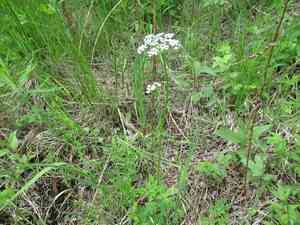
Alpine goutweed (Aegopodium alpestre)
Also known as: Alpine Ground Elder
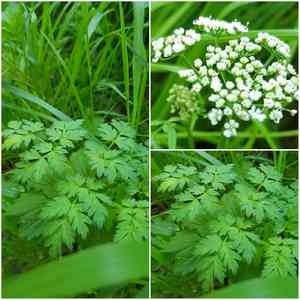
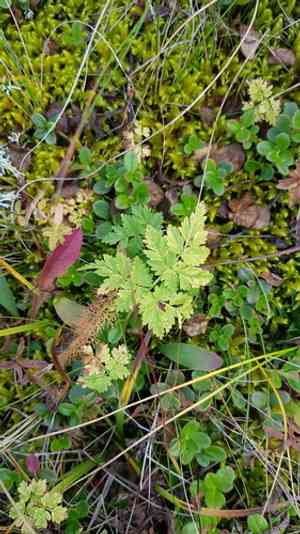
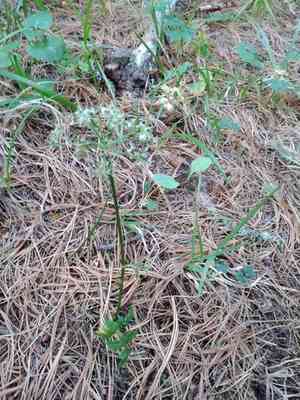
The plant features slender, erect stems that reach heights between 20 and 70 cm, with the upper sections branching out. Leaves are arranged alternately along the stem. The basal and lower stem leaves are divided into two to three segments with coarse serrations along the edges. Upper stem leaves are smaller and more elongated compared to the lower ones, with the petiole bases forming a sheath-like structure. The plant produces small compound inflorescences at the stem tips or branch ends, featuring white, five-petaled flowers without surrounding bracts. The fruit is ovoid, smooth, and lacks the typical oil tubes found in the Apiaceae family.
In This Article
Attributes of Alpine goutweed
Lifespan
Perennial
Plant Type
Herb
Plant Height
30 cm to 1 m
Spread
20-40 cm
Leaf Color
Green
Flower Size
5 mm to 1 cm
Flower Color
White
Images of Alpine goutweed
Quickly Identify Alpine goutweed
1
This plant can be identified by its compound leaves, which are divided into multiple leaflets and its white, umbel-shaped flowers. The leaves have a distinct, toothed margin, and the plant typically grows in clusters.
Scientific Classification of Alpine goutweed
Phylum
Vascular plants
Class
Dicotyledons
Order
Carrots, ivies and allies
Family
Umbellifers
Genus
Goutweeds
Species
Alpine goutweed
Planting and Growing of Alpine goutweed
Care Difficulty
Easy
Watering Schedule
Every 3 days
Sunlight Requirements
Partial sun
Sunshine Duration
4-8 hours
Ideal Temperature
60-75℉
Soil Type
Potting Mix, Peat Mix
Soil pH
6.5-7.5
Fertilizer Type
Balanced
Pruning Season
Spring, Summer
Pruning Area
Branches, Leaves
Pruning Frequency
2 times a year
Repotting Season
Spring
Pot Type
Plastic, Ceramic
 How to Water Alpine goutweed?
Aegopodium alpestre requires a moderate watering approach, adhering to its natural alpine habitat. Water until the topsoil is slightly moist, avoiding both dryness and waterlogging. A good rule is to ensure that each watering cycle provides the plant with approximately 250 ml to maintain adequate hydration without drowning its roots.
What are the symptoms of an underwatered Alpine goutweed?
›
What should I do if my Alpine goutweed is not getting enough water?
›
What are the symptoms of an overwatered Alpine goutweed?
›
How to save an overwatered Alpine goutweed?
›
 What Are the Sunlight Requirements for Alpine goutweed?
Aegopodium alpestre performs well under partial sun to full shade conditions, usually requiring 3 to 6 hours of indirect sunlight. Proper lighting promotes dense, healthy foliage and vibrant growth habits.
What type of sunlight does Aegopodium alpestre prefer?
›
How can one achieve ideal light conditions for this plant?
›
What benefits does the ideal lighting provide for Aegopodium alpestre?
›
 What Is the Ideal Temperature Range for Alpine goutweed?
Ideal temperatures for Aegopodium alpestre range between 60°F and 75°F. This range supports optimal growth and ensures the plant's metabolic processes run smoothly. It allows the plant to photosynthesize efficiently, absorb nutrients, and maintain a strong immune system. In this range, the plant can thrive and exhibit its best health and vigor.
 What Soil is Best for Alpine goutweed?
Aegopodium alpestre thrives in well-drained soil, which prevents the roots from sitting in water, thus avoiding root rot. This condition ensures healthy growth and vigorous plant development. The plant benefits from nutrient-rich soil, which provides the essential minerals for its foliage and overall health. Such a medium supports more vibrant leaves and a more resilient plant. Moderate moisture levels in the soil are crucial, as extreme dryness can stunt growth, while overwatering can lead to decay. Proper hydration ensures the plant maintains its lush appearance.
 How to Fertilize Alpine goutweed?
For Aegopodium alpestre, the general recommendation is to use a balanced fertilizer, such as a 10-10-10 NPK formula. In the growing season, apply at a rate of about 1 tablespoon (approximately 15 grams) per square meter, ensuring even distribution over the soil surface.
 How to Prune Alpine goutweed?
Before you start pruning Aegopodium alpestre, ensure that your tools are sharp and clean. Use a pair of clean scissors or garden shears to make precise cuts. This helps to prevent any disease transmission and ensures clean cuts that promote better healing and growth. Begin by removing any dead or damaged leaves, cutting close to the base. Focus on the older, leggy stems and cut them back to encourage bushier growth. Trim to maintain the desired shape and size, ensuring not to remove more than one-third of the plant at once to avoid stress.
More About Pruning Techniques→
 How to Propagate Alpine goutweed plant?
1
Collect ripe seeds from Aegopodium alpestre and clean them to remove any surrounding pulp. Allow the seeds to dry out for a day or two before planting.
2
Select healthy stems from the parent plant and cut 4-6 inch sections below a node. Remove the lower leaves to ensure the cutting focuses on root development.
3
Carefully dig up the parent plant and separate it into smaller sections, ensuring each section has a portion of the root system before replanting.
 How to Repot Alpine goutweed plant?
1
Aegopodium alpestre shows signs of needing repotting when its roots start growing out of the drainage holes, or if the growth slows despite proper care. Spring and autumn are the ideal seasons as milder temperatures help minimize stress on the plant.
2
Choose a pot that is slightly larger than the current one with good drainage holes. This allows room for root expansion while preventing water logging, crucial for maintaining root health and averting root rot issues.
3
Opt for a well-draining, loamy soil mix which supports healthy growth and prevents water from pooling at the roots. Such soil ensures that nutrients are readily available and water retention is optimal yet safe for the plant.
Learn More About Alpine goutweed Diseases
Anthracnose
Bacterial Leaf Spot
Bacterial Soft Rot
Bacterial Wilt
Crown Gall
Cyst Nematode
Damping-off
Downy Mildew
Fusarium Wilt
Gray Mold
Leaf Spot
Mosaic
Powdery Mildew
Root Rot
Root-knot Nematode
Rusts
Sooty Mold
White Mold
Chemical Injury
Drought Stress
Nutrient Deficiency
Nutrient Toxicity
Spider Mites
Temperature Stress
Thrips Damage



