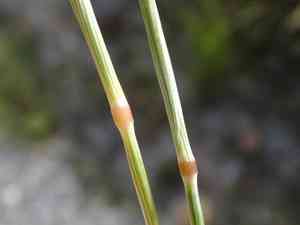
Three-awned goat grass (Aegilops neglecta)
Also known as: Neglected Goatgrass, Mediterranean Goatgrass
Aegilops neglecta, also known as three-awn goatgrass, belongs to the Poaceae family.
In This Article
Attributes of Three-awned goat grass
Lifespan
Annual
Plant Type
Grass
Plant Height
30-80 cm
Spread
Not applicable
Leaf Color
Green
Flower Size
Not applicable
Flower Color
Not applicable
Images of Three-awned goat grass
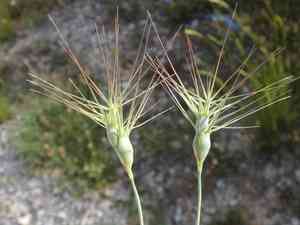
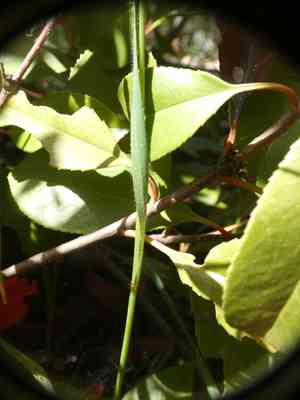
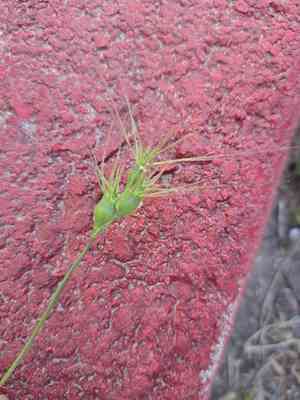
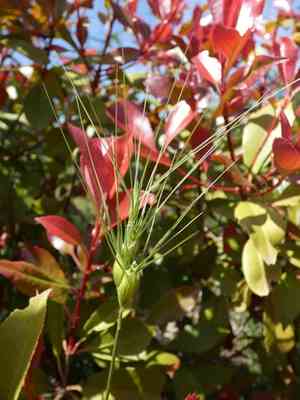
Quickly Identify Three-awned goat grass
1
Aegilops neglecta can be identified by its slender, upright stems and narrow, linear leaves. The inflorescences are composed of spikelets that often appear in a somewhat loose, spike-like arrangement. The spikelets have long awns, which are characteristic of this and related species.
Scientific Classification of Three-awned goat grass
Phylum
Vascular plants
Class
Monocotyledons
Order
Poales
Family
Grass
Genus
Aegilops
Species
Three-awned goat grass
Planting and Growing of Three-awned goat grass
Care Difficulty
Moderate
Watering Schedule
Every 2 days
Sunlight Requirements
Full sun
Sunshine Duration
6-10 hours
Ideal Temperature
59-77℉
Soil Type
Potting Mix, Peat Mix
Soil pH
6.5-7.5
Fertilizer Type
Balanced
Pruning Season
Spring, Summer
Pruning Area
Branches, Leaves
Pruning Frequency
2 times a year
Repotting Season
Spring
Pot Type
Plastic, Ceramic
 How to Water Three-awned goat grass?
For Aegilops neglecta, it's important to provide enough water so that the soil remains consistently moist but not waterlogged. Aim to water the plant until the top inch of soil is damp, ensuring drainage to prevent stagnation.
What are the symptoms of an underwatered Three-awned goat grass?
›
What should I do if my Three-awned goat grass is not getting enough water?
›
What are the symptoms of an overwatered Three-awned goat grass?
›
How to save an overwatered Three-awned goat grass?
›
 What Are the Sunlight Requirements for Three-awned goat grass?
For Aegilops neglecta, ideal lighting includes full sun exposure for optimal energy absorption, resulting in robust growth, adaptable ecological fitness, and increased seed viability.
How much light does Aegilops neglecta require?
›
How to optimize the lighting conditions for Aegilops neglecta?
›
What are the benefits of providing ideal lighting conditions for Aegilops neglecta?
›
 What Is the Ideal Temperature Range for Three-awned goat grass?
Aegilops neglecta thrives best when grown in temperatures ranging from 59°F to 77°F. This range provides an ideal environment for photosynthesis, ensuring that the plant can efficiently convert sunlight into the energy it needs to grow. Keeping the plant within this temperature window is crucial for its overall vigor and health.
 What Soil is Best for Three-awned goat grass?
Aegilops neglecta thrives in well-draining soil conditions because it prevents waterlogging. This helps the roots access the necessary oxygen and nutrients without being submerged in excess water, which can lead to root rot. This plant benefits from fertile soils that are rich in essential nutrients. A fertile substrate supports vigorous growth, enhancing the plant's overall health and increasing its resistance to pests and diseases. Aegilops neglecta prefers soils with a neutral to slightly alkaline pH level. Such conditions optimize nutrient absorption and ensure that the plant can efficiently process available minerals.
 How to Fertilize Three-awned goat grass?
Aegilops neglecta benefits from balanced fertilization, where approximately 1 to 2 tablespoons of liquid fertilizer are diluted in one gallon of water. For slow-release fertilizers, apply around 1/4 cup per square foot in the active growing phase to ensure it receives consistent nutrients without overwhelming the soil.
 How to Prune Three-awned goat grass?
Use sharp, clean shears or scissors to avoid damaging the stem. A clean cut minimizes the risk of disease and encourages healthy regrowth. Look for spent flowers and brown or wilting stems. Cut just above a healthy node or branching point to ensure the plant's energy is directed towards growth. Make sure to cut at a 45-degree angle to allow water to run off, reducing the risk of rot. Avoid cutting too close to a node to prevent damage to the dormant buds. After pruning, water the plant thoroughly and consider adding a light fertilizer to encourage recovery and growth. Monitor for any signs of stress or disease.
More About Pruning Techniques→
 How to Propagate Three-awned goat grass plant?
1
Fill the seed tray with a well-draining soil mix, ensuring that the soil is evenly distributed and slightly compacted to support the seeds.
2
Scatter the Aegilops neglecta seeds evenly on the surface of the soil, lightly pressing them in to ensure contact. Do not bury the seeds too deeply as they require light to germinate.
3
After sowing, gently water the soil to keep it moist but not waterlogged. Cover the seed tray with a clear plastic lid or a plastic wrap to maintain humidity and warmth.
 How to Repot Three-awned goat grass plant?
1
Aegilops neglecta signals its need for repotting through visible root growth at the drainage holes or signs of constrained growth. When you see roots emerging from the pot's bottom or notice stunted growth despite adequate care, it's time to consider repotting.
2
Select a pot that is 2-3 inches larger in diameter than the current one, ensuring it offers sufficient room for root expansion. Opt for pots with good drainage holes to prevent waterlogging, which benefits root health and promotes vigorous growth.
3
For Aegilops neglecta, choose a well-draining loamy mix that mimics its natural habitat. This type of soil holds necessary moisture without being overly soggy, allowing for optimal root aeration and reducing risks of root rot.
Learn More About Three-awned goat grass Diseases
Anthracnose
Bacterial Leaf Spot
Bacterial Wilt
Cyst Nematode
Damping-off
Downy Mildew
Drought Stress
Fusarium Wilt
Gray Mold
Leaf Spot
Mosaic
Nutrient Deficiency
Nutrient Toxicity
Powdery Mildew
Root Rot
Root-knot Nematode
Rusts
Sooty Mold
Spider Mites
Temperature Stress
Thrips Damage
White Mold
Chemical Injury



